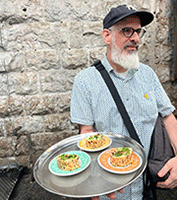
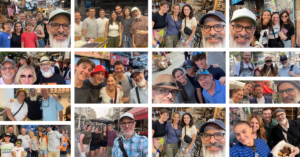
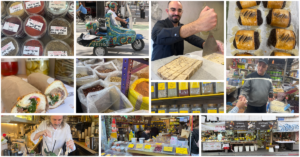
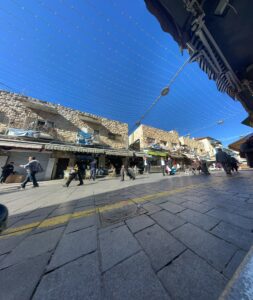
As someone who leads private food tours through Mahane Yehuda multiple times a week, I get asked the same question constantly: “What should I eat at the shuk?” Here’s the honest answer – the best food at Mahane Yehuda isn’t always where the crowds are. These are the spots I bring my guests to, and the ones I keep coming back to on my own.
I’ve included 11 places below – from Moroccan mufleta to Bukharian samsa to the only Turkish doner in Jerusalem. Most of them are inside the market or within a two-minute walk. Each one tells a different story about how food got to Jerusalem, and that’s what makes eating your way through Mahane Yehuda so much more than just lunch.
Nuna
Nuna – Mufleta (נונה מופלטה)
Address: HaTut Street 3, Jerusalem, Mahane Yehuda Market
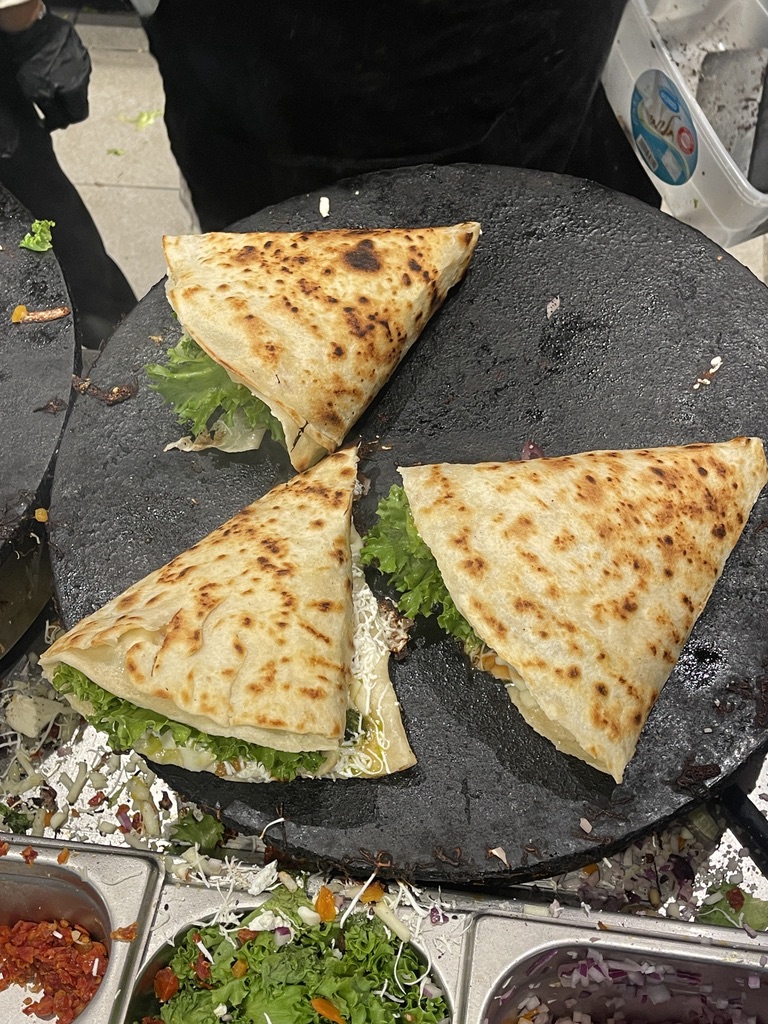
If you’ve never heard of mufleta, you’re not alone – most tourists haven’t. It’s a thin Moroccan pancake traditionally made during Mimouna, the festive celebration that marks the end of Passover. Chef Itzik Levy named this stall after his grandmother, who taught him to make mufleta as a kid, and when he opened Nuna in 2023, he turned a once-a-year tradition into an everyday street food experience.
The classic version comes with butter and honey, which is how most Moroccan families serve it during Mimouna, but the menu goes well beyond tradition. You’ll find versions stuffed with Bulgarian cheese and jam, roasted vegetables layered with mozzarella and feta, and other savory combinations that make mufleta work as a proper meal rather than just a sweet snack. Every one is cooked fresh on a griddle right in front of you – you can watch the dough stretch paper-thin before it hits the heat. Nuna holds kosher certification from Badatz Mehadrin Yerushalayim, and it’s become one of my favorite stops for showing guests a piece of Moroccan-Jewish food culture that most visitors would walk right past.
Knafe Turki Jerusalem (Cafe Turki)
Cafe Turki / Knafe Turki Jerusalem (כנאפה טורקי ירושלים)
Address: Ha’Egoz Street area, Mahane Yehuda Market, Jerusalem
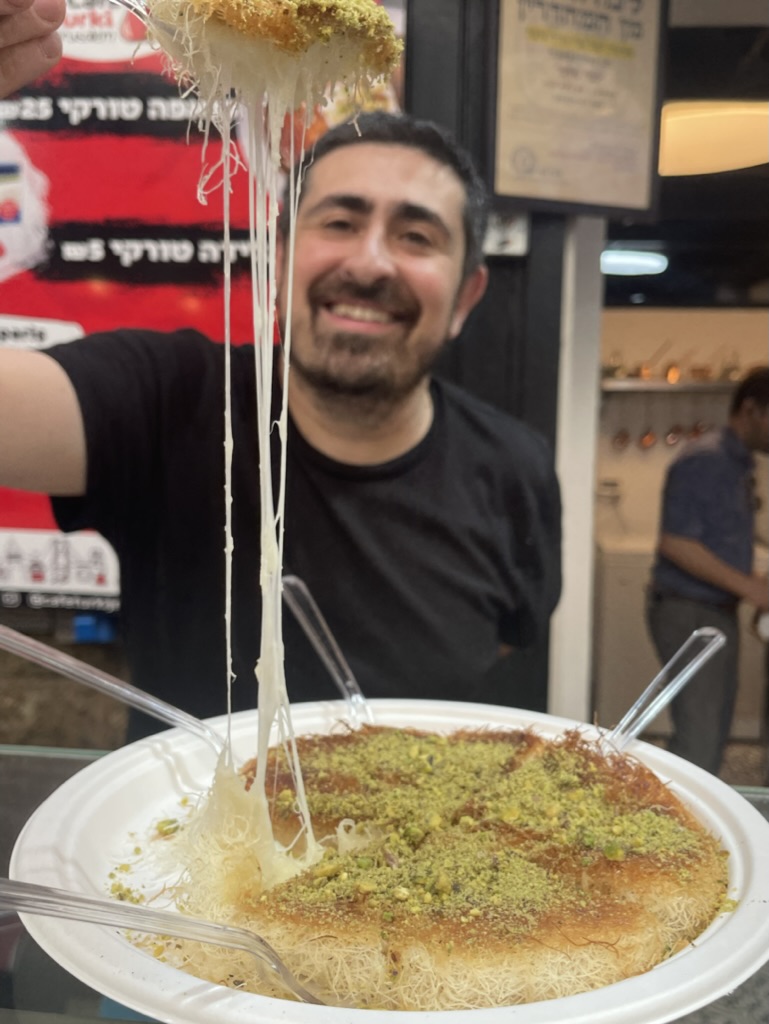
Sam moved to Jerusalem from Istanbul and brought his family’s approach to knafeh with him. If you’ve tried the Arab-style knafeh that’s common around the Old City, you’ll notice the Turkish version is a different experience altogether. Sam uses real Turkish butter and Nabulsi cheese, and you can tell immediately.
Knafeh, for the uninitiated, is a Middle Eastern dessert built from shredded kadaif pastry, soaked in sweet syrup, and layered over melted cheese. It sounds strange if you haven’t had it, but trust me, it works. The sweet-salty combination is addictive. Cafe Turki also serves Turkish delight, strong Turkish coffee, and cheese borekas done in the Turkish style. If you’re lucky, Sam will be making water borekas that day – a flaky, almost translucent pastry that’s worth timing your visit around. Kosher knafeh has only been a thing in the shuk since around 2017, but it’s gone from novelty to mainstay fast. Sam’s version stands out because he imports his butter from Turkey and won’t substitute on the cheese – he wants it to taste like what he grew up eating in Istanbul.
Duvshanit Kadeh
Duvshanit Cafe & Bakery (דובשנית)
Address: 22 Mahane Yehuda Street, Jerusalem (Market location); Main location: 42 HaPalmach Street, Old Katamon, Jerusalem
Duvshanit has been a Jerusalem institution since 1970, when Yossi Zarifi, an Iraqi-Jewish immigrant from Baghdad, opened a bakery and cafe on HaPalmach Street in the Old Katamon neighborhood. He’d learned the craft working at another Jerusalem cafe called Cafe Na’ava, and when that place closed, he struck out on his own. He originally wanted to name it “Egozit,” but there was already a cafe with that name in Jerusalem, so he went with “Duvshanit” instead. The logo – a baker holding a babka – has been there from the start.
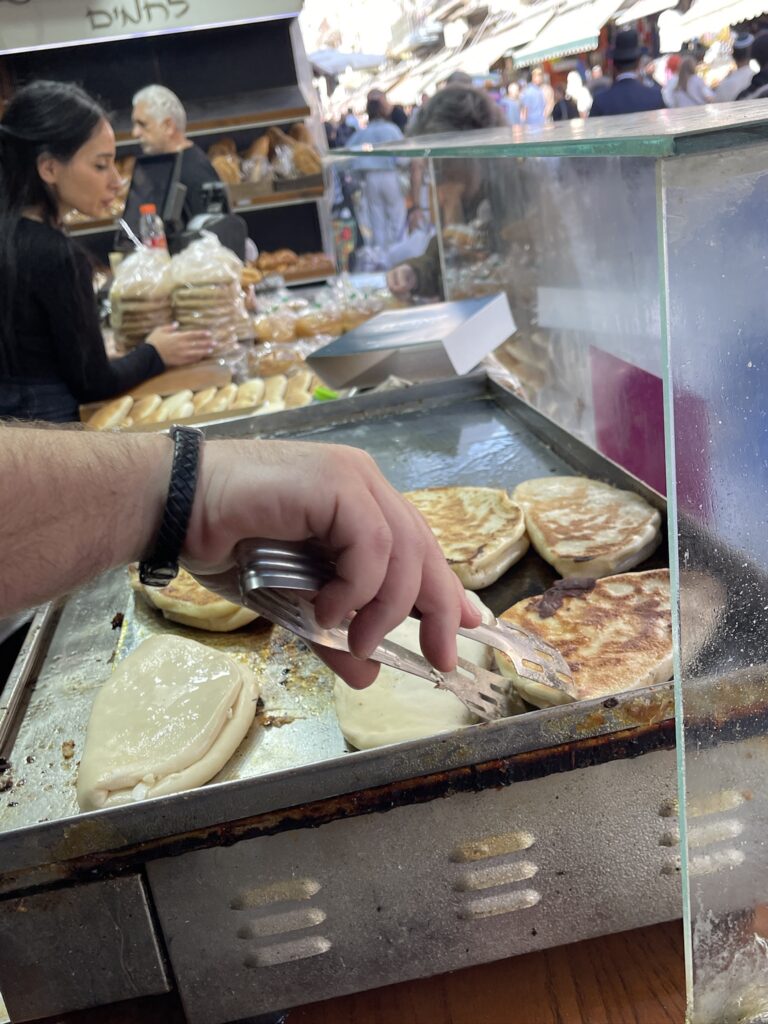
The thing to order at the shuk location is the kadeh. If you haven’t had one, think of it as Kurdish grilled cheese: a thin flatbread pan-fried and stuffed with cheese. It’s a traditional Kurdish-Jewish pastry that families would make for Shavuot, the holiday when dairy takes center stage, and at Duvshanit you can get it year-round. Beyond kadeh, the display case is packed with babka, bourekas, sufganiyot, and challah, especially on Fridays when the pre-Shabbat rush turns the narrow counter into controlled chaos.
The Zarifi family has kept this place running for over fifty years. Yossi’s son Nuri and daughter Sigalit took over the business, and the recipes haven’t changed. The Old Katamon location on HaPalmach became a neighborhood gathering spot over the decades – Golda Meir was a regular who came every Monday for a snail cake and coffee, and the cafe has hosted everyone from prime ministers to, reportedly, a standing table for Mossad agents. The market outpost is a smaller operation – barely more than a glass case and a coffee station – but it delivers the same baked goods that have made Duvshanit a household name in Jerusalem.
Mordoch (Morduch)
Mordoch Restaurant (מורדוך) (also spelled Morduch)
Address: 70 Agripas Street (corner of Agripas and H’armonim Streets), Jerusalem
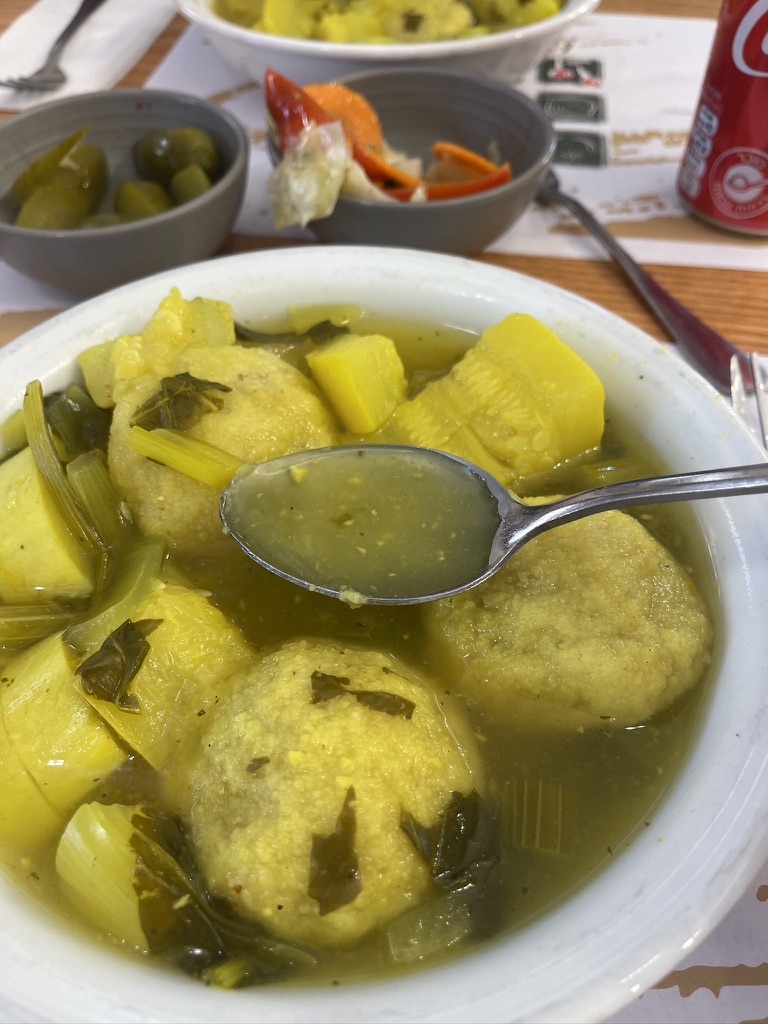
Mordoch is one of those places that doesn’t need a sign to draw you in – the smell does all the work. The Agai family has been running this Iraqi-Kurdish restaurant since August 1982, when Mordechai “Morduch” Agai and his son opened up in one of the alleys near Mahane Yehuda. They didn’t even have a proper menu at first; they just cooked whatever was fresh from the market that morning. After Mordechai passed away, his son Yitzhak took over, and today Yitzhak runs the place alongside his son Mordy, who grew up in the restaurant. They still cook everything by hand from scratch – nothing frozen, barely anything machine-processed. On Fridays, their busiest day, the entire extended family is around to lend a hand.
Walk in and you’ll see the kitchen before you see a table: big pots stacked on the stove, each one simmering with a different dish. The kubbeh is the star – dumplings filled with spiced ground beef, served fried or in soup. The soup comes in several styles: adom, which gets its name from its deep red color, and chamusta, meaning “sour” in Aramaic. Beyond kubbeh, the spread includes stuffed grape leaves, Iraqi-style meat dishes, moussaka, and sofrito. Every meal starts with a tray of pickled vegetables and dips brought to the table before you even order.
Mordoch sits just steps from the market entrance on Agripas Street. It’s a working-class lunch spot with no pretense. Under kosher supervision, they also offer vegetarian kubbeh for anyone who doesn’t eat meat. If you want to understand what Mizrahi home cooking in Jerusalem tastes like, this is where I’d send you.
Aka Shawarma
Aka (אקה)
Address: 6 HaShikma Street, Mahane Yehuda Market, Jerusalem
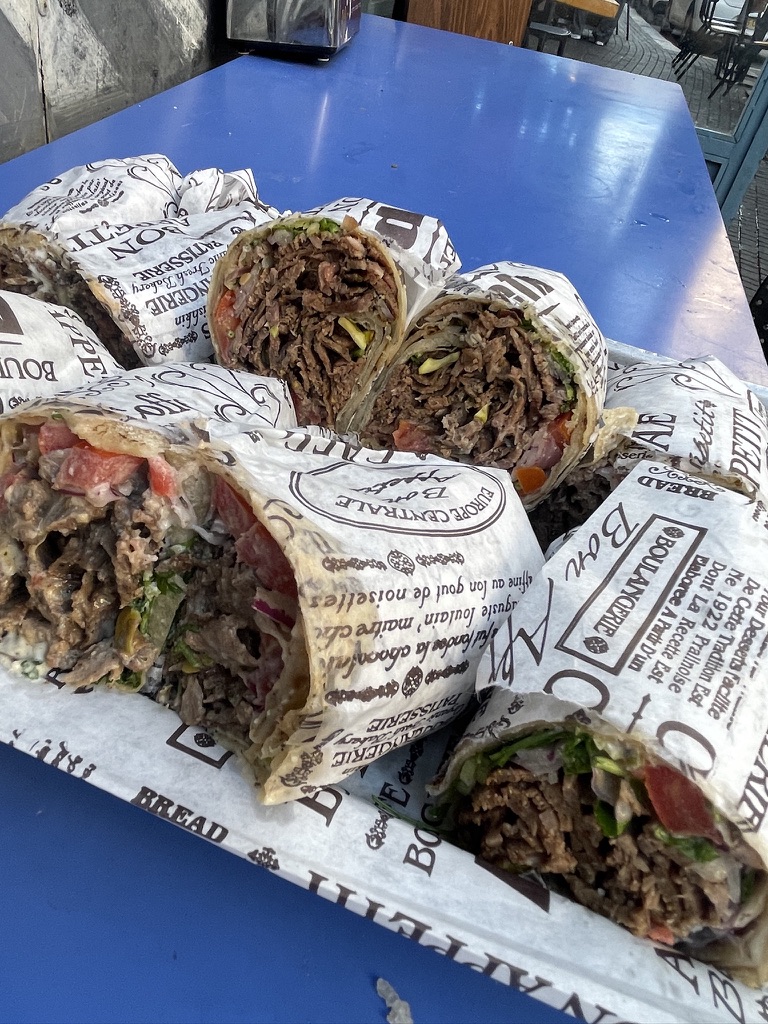
Aka serves the best shawarma in Jerusalem, and I’ll say that without hesitation. Chef Yossi Zwebner and his partner Oren don’t run a typical shawarma stand – they run a restaurant that happens to serve shawarma.
What makes Aka unique is that it’s the only place in Jerusalem serving Turkish-style doner. Both shawarma and doner cook on a vertical spit, but that’s where the similarity ends. Shawarma is built from thin layers of whole meat stacked on top of each other, while doner is made from seasoned ground meat pressed into a dense cylinder. The texture is completely different – tighter, more uniform, with the spices worked through the meat rather than just on the surface. Aka’s doner is made with veal and pistachios, which adds a richness and nuttiness you won’t find at any other shawarma joint in the city. Then there are the potatoes, cooked in goose fat, which have developed a following of their own.
The first thing they do is take the thin lavash and wipe it across the spinning spit, letting the bread soak up the rendered fat before anything else goes on it. Then come a few unique sauces (no hummus or tahini here, which surprises some people). Under kosher supervision, Aka stays open late on Thursdays to catch the market’s busiest night.
Ishtabach
Ishtabach (אישטבח)
Address: 1 HaShikma Street (corner of HaShikma and Beit Ya’akov Street), Mahane Yehuda Market, Jerusalem
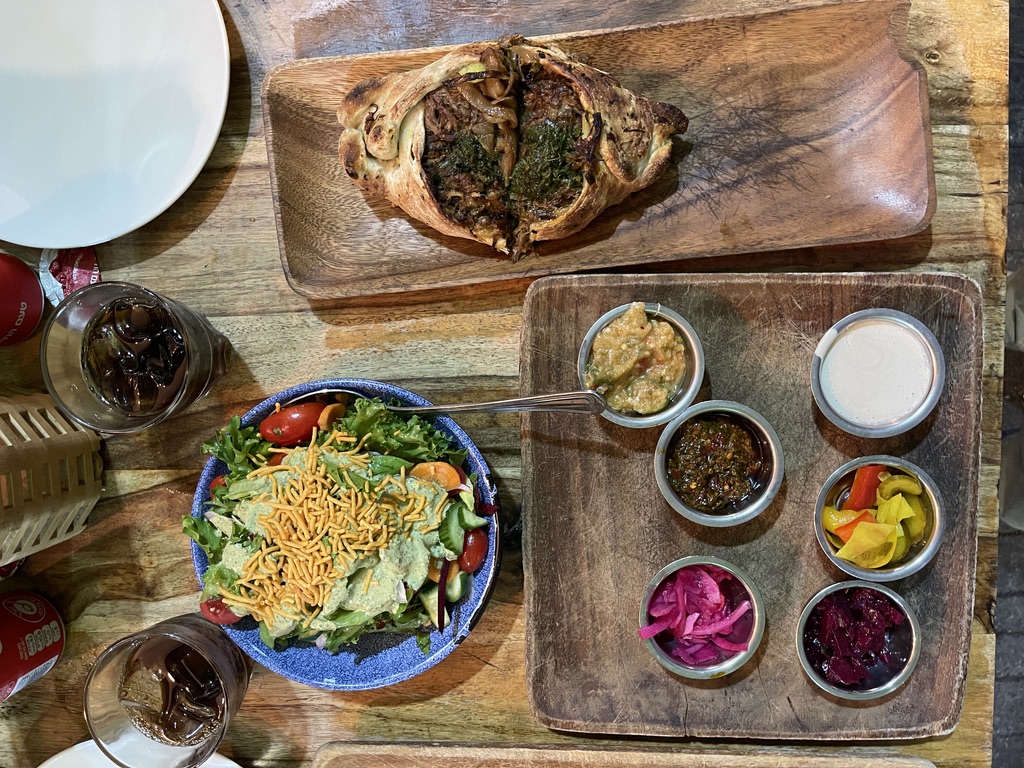
Ishtabach does one thing, and they do it better than anyone: shamburak. It’s a Kurdish-Syrian stuffed pastry, and Chef Oren Sasson-Levy built an entire restaurant around it. He didn’t just open a restaurant around it – he essentially invented the concept of shamburak as street food. The name “Ishtabach” carries a triple meaning: “ish-tabach” (the man is a chef), “yishtabach” (a word from the Kaddish prayer meaning “may He be praised”), and the letters also stand for Oren, Yasmin, Sasson – his family – plus tabach, his profession.
The backstory is extraordinary. Oren spent 20 years cooking in some of Jerusalem’s best kitchens – the King David Hotel, 1868, the Adom group under Chef Michael Katz. Then in June 2011, a serious illness put him in a coma. When he woke up, he described a vision of his grandmother – a woman who couldn’t read or write but knew the book of Psalms by heart. Her message was the shamburak she used to make from leftover Shabbat meat wrapped in dough. After years of recovery, he opened Ishtabach in a tiny 28-square-meter space near the market, and it’s been packed ever since.
Oren is half Kurdish, half Syrian, and his wife Yasmin is Cochini – Indian-Jewish from Cochin. Each shamburak starts as handmade dough shaped into an oval boat. A layer of mashed potato goes down first – this absorbs the meat juices and keeps the bread from getting soggy. Then comes the filling: slow-cooked rib stew, braised cheek, tongue, or other cuts that reflect traditional Kurdish nose-to-tail cooking. The Indian influence comes through in the accompaniments – mango curry, carrot curry, Indian chutney with onion – which Yasmin brings from her Cochini heritage. Everything goes into a taboon oven where you can watch it bake. They also make vegetarian versions, and the potatoes and patatas bravas on the side are worth ordering too. A local tip: if your shamburak comes out a little dry, dip it in tahini.
Under Badatz Mehadrin kosher supervision, the late hours (past midnight on weeknights) make it a great post-drinks stop when the shuk transforms into its nighttime mode.
Want to taste these spots with a local guide? I run private food tours through Mahane Yehuda for couples, families, and small groups. You’ll eat your way through the market with context and stories you won’t get on your own. Check availability for a Mahane Yehuda food tour.
Mordechai (מרדכי) – Bukharian Bakery
Mordechai Bukharian Bakery (מאפייה בוכרית אותנטית מרדכי)
Address: 151 Jaffa Street, Jerusalem
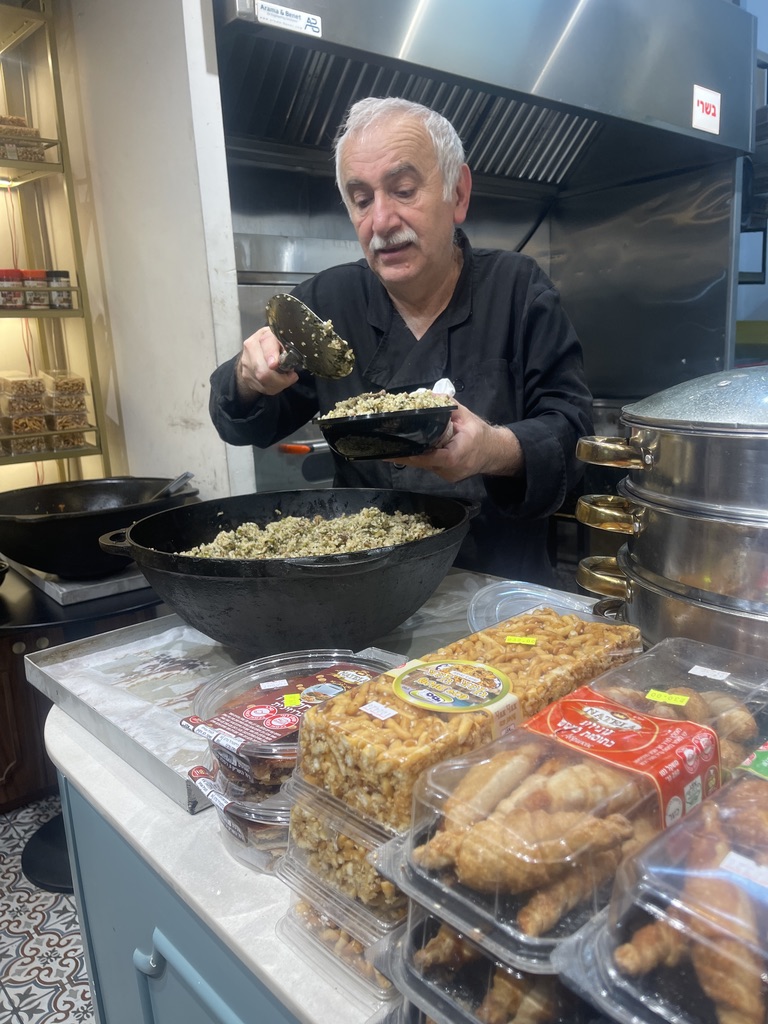
Most visitors to Jerusalem have never tried Bukharian food. The family behind Mordechai immigrated from Uzbekistan in 1986 and brought their baking traditions with them. They started with a bakery and restaurant called “Jerusalem” in Ramla before opening this spot on Jaffa Street, just up the road from the market.
The thing to get here is the samsa – a thin-crusted, crispy pastry filled with beef and onions. The crust is paper-thin, barely there, just enough to hold the meat together while it bakes. It comes out of the oven hot and heavy with filling, and it’s one of the most satisfying cheap eats near the shuk. Beyond samsa, they bake round Bukharian lavash bread in the traditional style and a range of other pastries. Everything is made by hand. They also sell frozen dumplings – dushbara and mantou – for anyone who wants to take something home.
Bukharian Jewish cuisine comes from Uzbekistan and Central Asia, and it’s completely different from anything else you’ll eat in Jerusalem. When Bukharian Jews first arrived in Israel, there was pressure to assimilate and these food traditions got sidelined. Places like Mordechai keep them alive. Under kosher supervision, it’s the kind of bakery you’d never find on your own unless someone pointed you to it.
Joni & Kubaneh
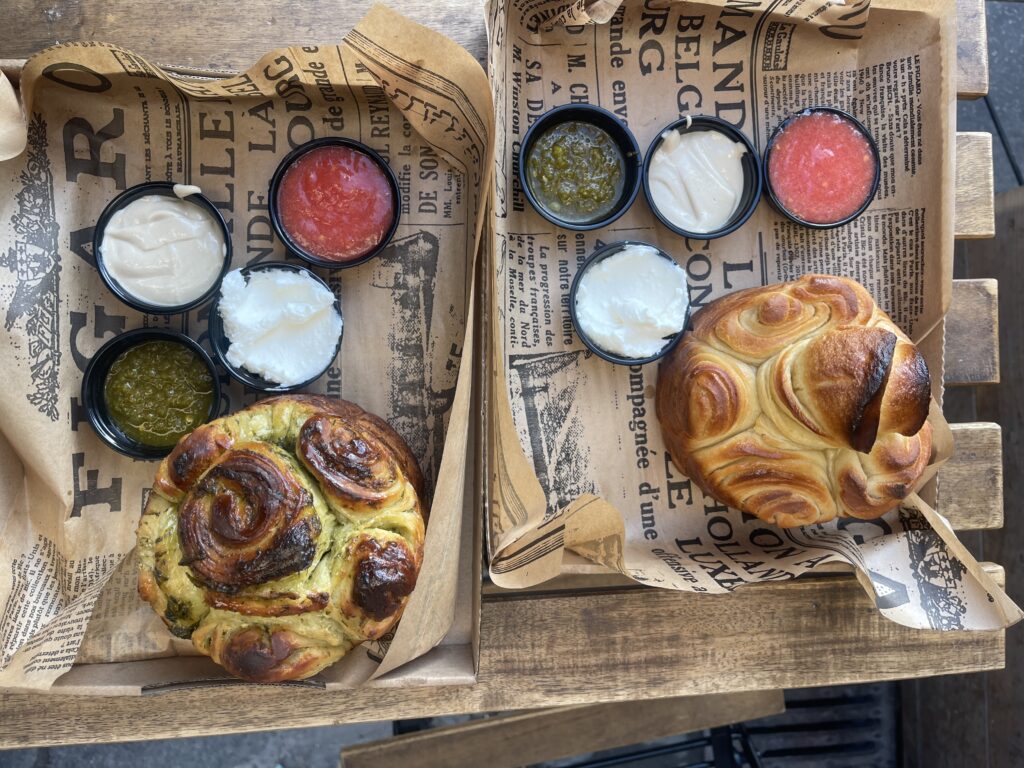
Joni Kubaneh (ג’וני קובנה)
Address: 78 Agripas Street, Mahane Yehuda Market, Jerusalem
Yoni – everyone calls him Joni – lived above the shuk for a decade before he turned his side project into a proper business. He’d been making kubaneh and jachnun at home for years, selling to friends and neighbors, and when demand got out of hand he and his brother Ohad opened this stall. The two of them are up at 4:00 AM putting jachnun in the oven, and when the market opens, one brother rolls dough all day while the other handles customers. It’s one of the best things to happen to the market in recent years.
Kubaneh is a slow-baked Yemeni bread with a buttery, pull-apart texture – think of it as the Yemeni answer to brioche, but denser and richer. At most places you’ll find the classic version and maybe one or two variations. Joni takes it further: there’s kubaneh stuffed with cheddar, a pesto and Bulgarian cheese version, one with cream and truffle, a cinnamon-roll-style “sinbon” kubaneh, and even a Dubai-style version with pistachio cream and kadaif. The jachnun, malawach, and lachuch are all on the menu too, and everything is made fresh on-site – including the schug and the accompanying sauces.
If you’ve never had Yemeni bread before, this is the place to try it. Joni makes all the doughs himself. They also sell frozen jachnun and malawach to take home – great if you’re staying in an apartment with a kitchen. The Thursday hours run until 2:00 AM, which tells you how central this spot has become to the market’s late-night scene.
Patachou Boutique
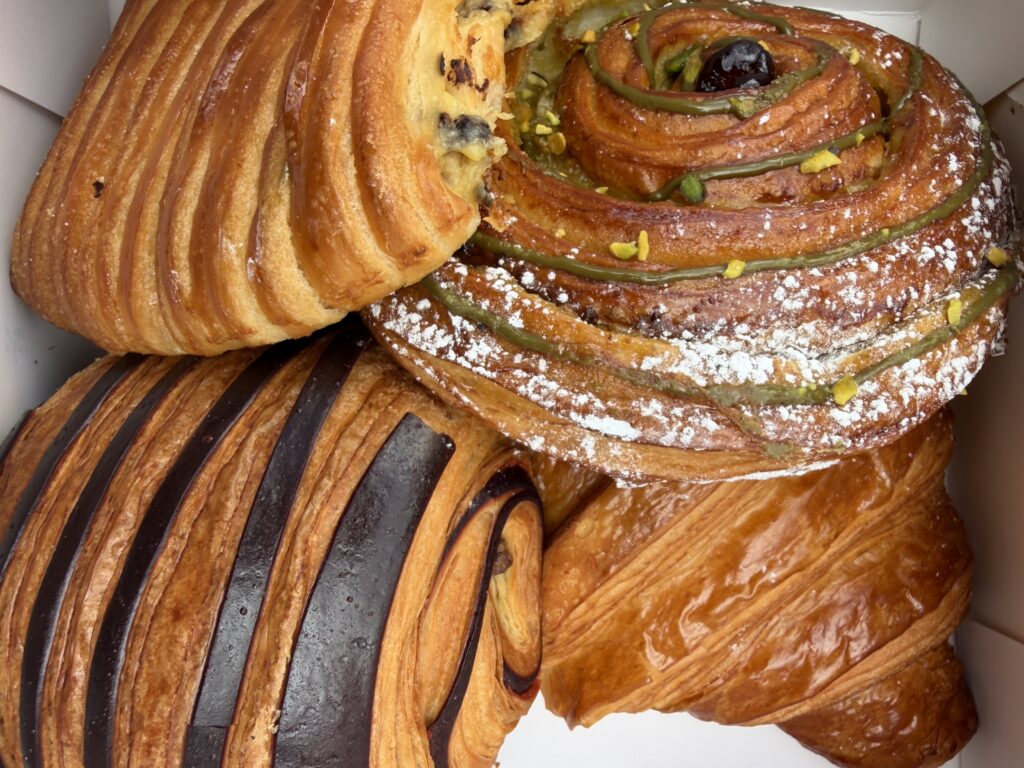
Patachou Boutique (פטאשו בוטיק)
Address: 88 Agripas Street, Jerusalem
Walking into Patachou feels like stepping out of the shuk and into a Parisian patisserie. It sits right on Agripas Street along the market’s southern edge, and the contrast with the chaotic produce stalls a few meters away is part of the charm. The space is minimalist – light browns, warm wood, clean lines – and the pastry case is the centerpiece.
Say what you will about the wave of antisemitism driving French Jews to Israel, but one of the undeniable silver linings is the quality of pastry that French aliyah brought to Jerusalem. Patachou is a perfect example. Patissier Leah Ishi runs a proper French-style patisserie with kosher certification, which is a combination that’s surprisingly hard to find at this level. Her philosophy is all about knowing her ingredients inside and out before she works with them, and it shows.
My favorites here are the canele – those small, caramelized Bordeaux cakes with a crisp, almost burnt exterior and a soft custard center – and the pain suisse, a rectangular pastry made from croissant dough rolled with pastry cream and chocolate chips. The plain croissants and pain au chocolat are excellent too, and there’s a rack that gets constantly refreshed with whatever just came out of the oven. If you happen to be walking by in the evening, everything goes half price before closing – one of the better-kept secrets on Agripas Street.
Infused JLM (Haluta)
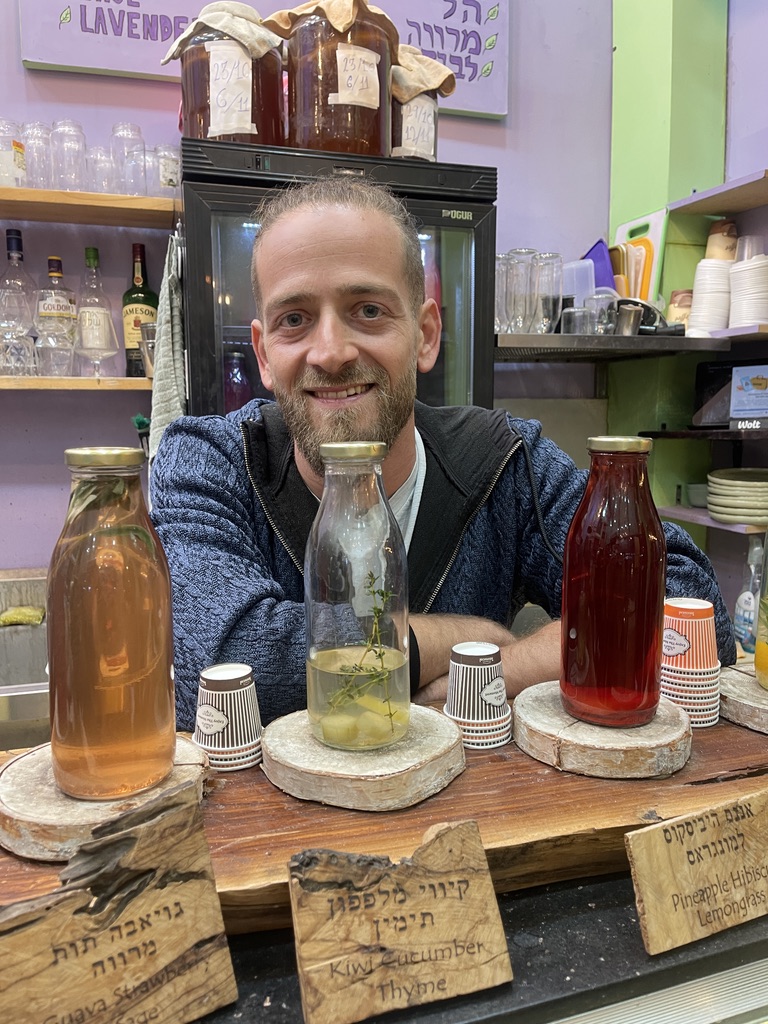
Infused JLM / Haluta (אינפיוזד / חלוטא)
Address: Near Mahane Yehuda Market, Jerusalem
Maor and Diana Shapira met on a Birthright trip – she’s from New York, he’s Israeli – and together they opened a herbal drinks bar in New Orleans before importing the concept to Israel. It’s unlike anything else in the market. The concept is simple: fresh ingredients, heavy on the herbs, served in drinks that actually do something for you. Infused JLM is a different world from your typical juice spot.
Their drinks are built around fresh herbs blended with fruits and natural ingredients, and Maor is happy to walk you through what’s in each one and what it’s supposed to do for you. Beyond drinks, the food menu has its own following – the banana cake with hibiscus cream is worth a detour on its own. They also serve sandwiches, salads, and soups, all following the same fresh herb philosophy. You can try free samples before committing, which I always appreciate. On Thursday nights, they host Haluta Nights – open mic and live jamming outside, even in the dead of winter. It’s become a real scene.
Etrogman
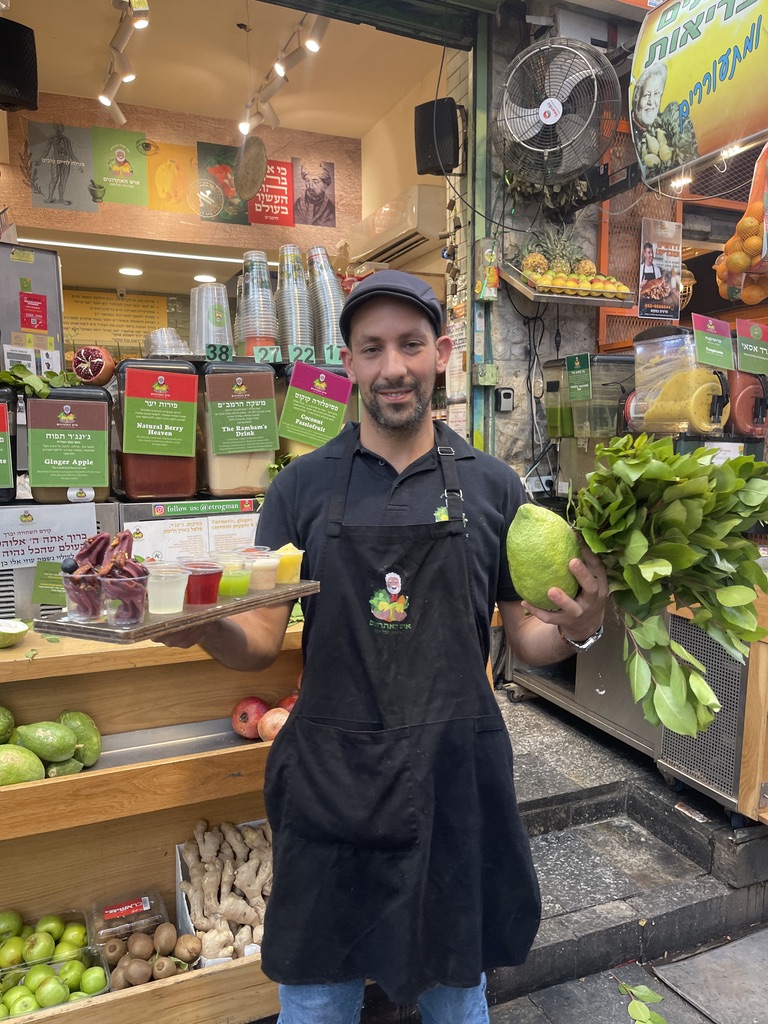
Etrogman / Uzi-Eli (אתרוגמן)
Address: HaEgoz 10, Mahane Yehuda Market, Jerusalem
Etrogman is a shuk institution, and the story goes back three generations. Uzieli Hazai’s grandfather was a holistic healer in Yemen who used the etrog – Citrus medica, to give it its proper name – as a cornerstone of traditional medicine. Uzieli brought that knowledge to Jerusalem and opened his first juice and potion stand in the market close to twenty years ago. His approach was rooted in those Yemenite family traditions and the teachings of Maimonides, the medieval rabbi and physician who wrote extensively about the health properties of the citron. He turned that knowledge into a business: fresh-squeezed drinks, herbal blends, tonics, and eventually a whole line of etrog-based skincare products.
Uzieli passed away at 80, but the family business is now a true operation. His son Or runs the Mahane Yehuda locations, his daughter Ma’ayan manages the stall at the entrance to Tel Aviv’s Carmel Market, and the next generation is already getting involved. The drinks menu ranges from simple etrog juice to elaborate blends with goat milk, passion fruit, ginger, and turmeric. They’ve also branched out: frozen acai bowls, Yemenite arak, and even an etrog-flavored beer sit alongside the original tonics, etrog soap, and skincare products.
Part juice stand, part apothecary. The flavors here are unlike anything you’ve tried before – that’s the whole point. It’s always a conversation starter on my tours, especially when guests learn about the connection between the etrog they might know from Sukkot and its long history as a medicinal fruit.
Visiting Mahane Yehuda: Practical Tips
When to go: Sunday through Thursday is best for food shopping and eating. My honest advice: don’t go on Friday if you want an enjoyable experience. It’s crowded, lines are long, and half the stalls close early for Shabbat. Some people like that chaotic pre-Shabbat energy, so you do you – but for actually eating well, midweek is the move. Saturday the market is closed. Thursday nights the shuk transforms into a bar and nightlife scene.
Getting there: The market runs between Agripas Street and Jaffa Street. The Jerusalem Light Rail stops at Mahane Yehuda station, which drops you right at the Jaffa Street entrance. From the Old City, it’s about a 20-minute walk or a quick taxi ride.
How long to budget: If you’re eating your way through, plan for 2-3 hours minimum. Rushing the shuk defeats the purpose.
Kosher notes: All the spots in this guide hold kosher certification, but standards vary – some are Badatz Mehadrin, others are Rabbanut Yerushalayim or Tzohar. If you keep strict kosher, check the specific certification at each place.
Budget: Most items run 20-70 NIS. The shuk is not an expensive place to eat.
Frequently Asked Questions
What is the best food to eat at Mahane Yehuda Market?
The best food at Mahane Yehuda depends on what you’re after. For street food, start with Joni’s kubaneh or Nuna’s mufleta. For something hearty, Mordoch’s kubbeh soup or Aka’s Turkish doner are hard to beat. For something sweet, Cafe Turki’s knafeh or Patachou’s French pastries are the move. The beauty of the shuk is the range – you can eat Moroccan, Iraqi, Kurdish, Yemeni, Turkish, Bukharian, and French food within a five-minute walk.
Is the food at Mahane Yehuda Market kosher?
Yes. The vast majority of food vendors in Mahane Yehuda hold kosher certification. The level of certification varies – some hold Badatz Mehadrin (the strictest), while others hold Rabbanut Yerushalayim or Tzohar supervision. All 11 spots in this guide are kosher certified. If you keep strict kosher, it’s worth checking the specific certification displayed at each stall.
What are the best times to visit Mahane Yehuda Market?
Sunday through Thursday during morning and lunchtime hours is ideal. Fridays are packed – the whole city is shopping for Shabbat, lines are long, and many stalls close by early afternoon. I don’t recommend it unless you specifically want to experience the pre-Shabbat chaos, which some people do. The market is closed on Saturday. Thursday nights are a completely different scene, with bars opening and the market turning into Jerusalem’s best nightlife spot.
How much does food cost at Mahane Yehuda?
Cheap. Most items run 20-70 NIS, and you can eat your way through the entire market without spending what you’d drop on a single restaurant meal.
Can I take a guided food tour of Mahane Yehuda?
Yes – I run private Mahane Yehuda food tours for couples, families, and small groups. The tour covers many of the spots in this guide, plus the stories, history, and cultural context behind what you’re eating. It’s the difference between eating at the shuk and understanding it.
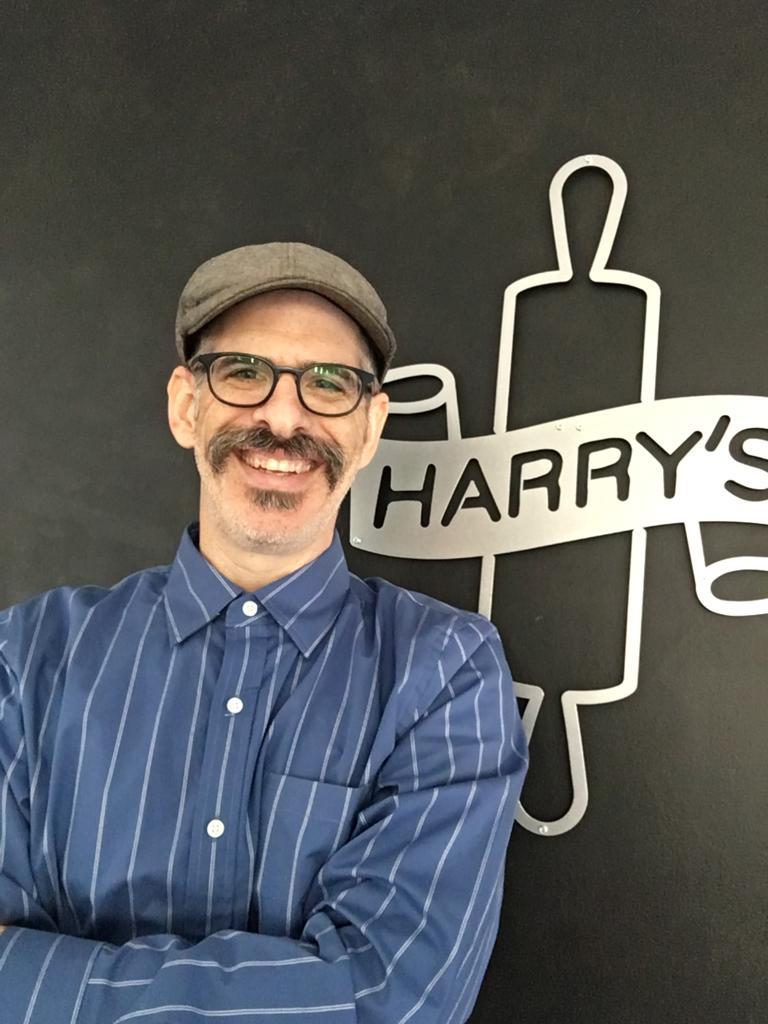
Harry Rubenstein is a pastry chef, food guide, and Jewish food expert based in Israel. A graduate of Bishulim Culinary Institute, he leads private food tours through Mahane Yehuda in Jerusalem and Levinsky Market in Tel Aviv. His writing on Jewish food history appears in The Nosher.
Read more about Harry →