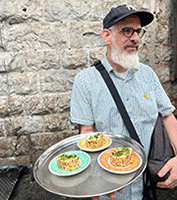
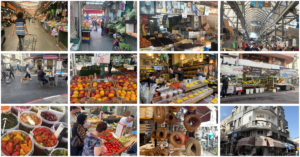
I’ve been leading private food tours in Israel since 2017, and the question I get asked more than anything else is some version of “what’s your tour actually like?” It’s a fair question. There’s a big difference between walking through a market with a dozen strangers and walking through it with just your family and a guide who can actually stop and talk to you.
Every private food tour in Israel I lead explores Mahane Yehuda Market in Jerusalem and Levinsky Market in Tel Aviv.
What a Private Food Tour in Israel Actually Looks Like
A private food tour in Israel is a 2.5-hour guided walk through Mahane Yehuda Market in Jerusalem or Levinsky Market in Tel Aviv with just your group and a local guide. Every stop includes full portions of food and drink, with the history and stories behind each vendor. The route adapts to your interests and dietary needs.
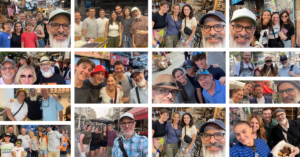
It’s just you, your group, and me. No strangers, no waiting for fourteen people to finish taking photos, no rushing past something interesting because the schedule says it’s time to go.
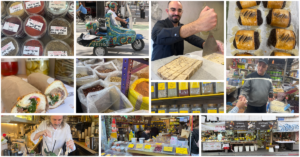
On my Mahane Yehuda tours in Jerusalem, we spend 2.5 hours eating our way through the market. The vendors working there today represent families that have been in these stalls for two, three, sometimes four generations, and at each stop I explain what you’re eating, who made it, where the recipe came from, and why it matters.
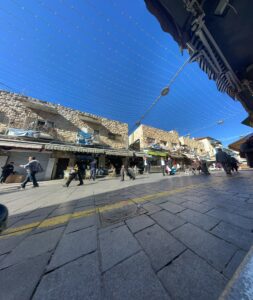
The Levinsky Market tour in Tel Aviv is a completely different setting. Levinsky is a wide, open-air pedestrian market, more neighborhood than tourist destination. It was founded by Greek Jews from Salonika in the 1930s, then shaped by waves of Iranian, Bulgarian, Turkish, Iraqi, and Yemenite immigrants who each brought their own food traditions.
We eat bourekas from bakeries that have been open since the 1920s, taste halva made by hand from freshly ground sesame, try cured fish and pickles at family delis that go back three generations, and walk through spice shops where the owners can tell you the difference between an Iraqi baharat blend and a Moroccan one without looking at the label.

Both tours include all food and drink. You will eat a lot. I tell every guest the same thing before we start: come hungry, pace yourself, and trust me on the order of things.
Why I Only Run Private Tours
A private food tour in Israel creates a fundamentally different experience because vendors engage differently with small groups, sharing stories and tastings that don’t happen when a crowd rolls through. Many of the best market stalls are physically too small for large groups, and the pace adapts to what each guest finds interesting rather than following a rigid schedule.
The personal connection is the part of this job I love the most. Watching someone’s face when they taste something they’ve never had before, or when a vendor’s story clicks and suddenly the food means something different. That doesn’t happen in a crowd.
The vendors open up
In a market like Mahane Yehuda, the vendors are half the experience. These are people who learned to bake from their grandmothers and grew up sleeping above the shop. They can tell you what their family’s bourekas recipe looked like before it crossed the Mediterranean, but they’re not going to have that conversation with fifteen tourists blocking the aisle.
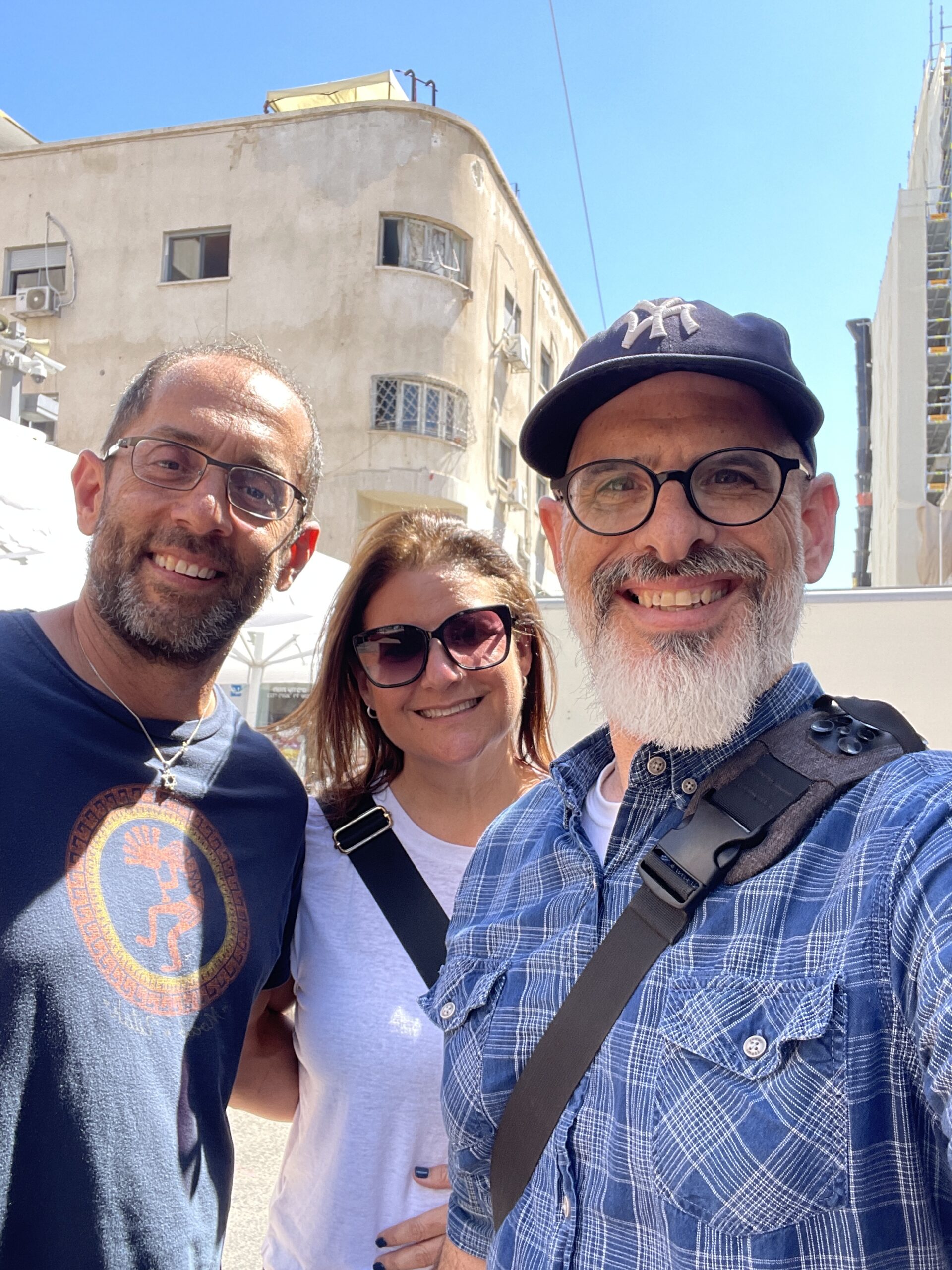
When I walk in with a family of four, the dynamic is completely different. There’s room for a real exchange, and my guests get stories and tastings that don’t happen when a large group rolls through. Some of the best spots in the market are also physically tiny, and with a small private group I can take you into places that simply can’t accommodate a larger tour.

The pace is yours
Some of my guests are serious food people who want to know the technique behind every dish, others are families with kids who need to keep moving, and some are couples who want to linger over Turkish coffee and hear about the history of the market. I adjust to all of that in real time. If you want to spend an extra ten minutes with the Persian spice merchant, we do that. If your six-year-old is done eating and ready to explore, we shift gears.

Dietary needs actually get handled
On a private food tour in Israel, I know about your allergies, your kashrut level, and your preferences before we start, and I plan the route around them. I’ve run tours for guests who keep strictly kosher, guests who are gluten-free, guests who are vegan, and guests who simply don’t eat spicy food. Each of those tours looked different because I built it around the people, not the itinerary.
The food is better
On group tours, the operator negotiates bulk portions in advance, so everyone gets the same small sample plated and ready before the group arrives. I know what I’m serving at each stop, but I also make spontaneous calls along the way. If the baker just pulled something spectacular out of the oven that wasn’t part of the plan, we’re eating it. If a vendor has something seasonal, that goes into the tour.

What to Look For When Choosing a Food Tour
When choosing a food tour in Israel, look for a named guide with real food expertise rather than a generic tour company brand, read reviews for specific moments rather than just star ratings, confirm that all food and drink is included in the price, and ask which specific market the tour covers since each offers a different experience.
Know who your guide actually is
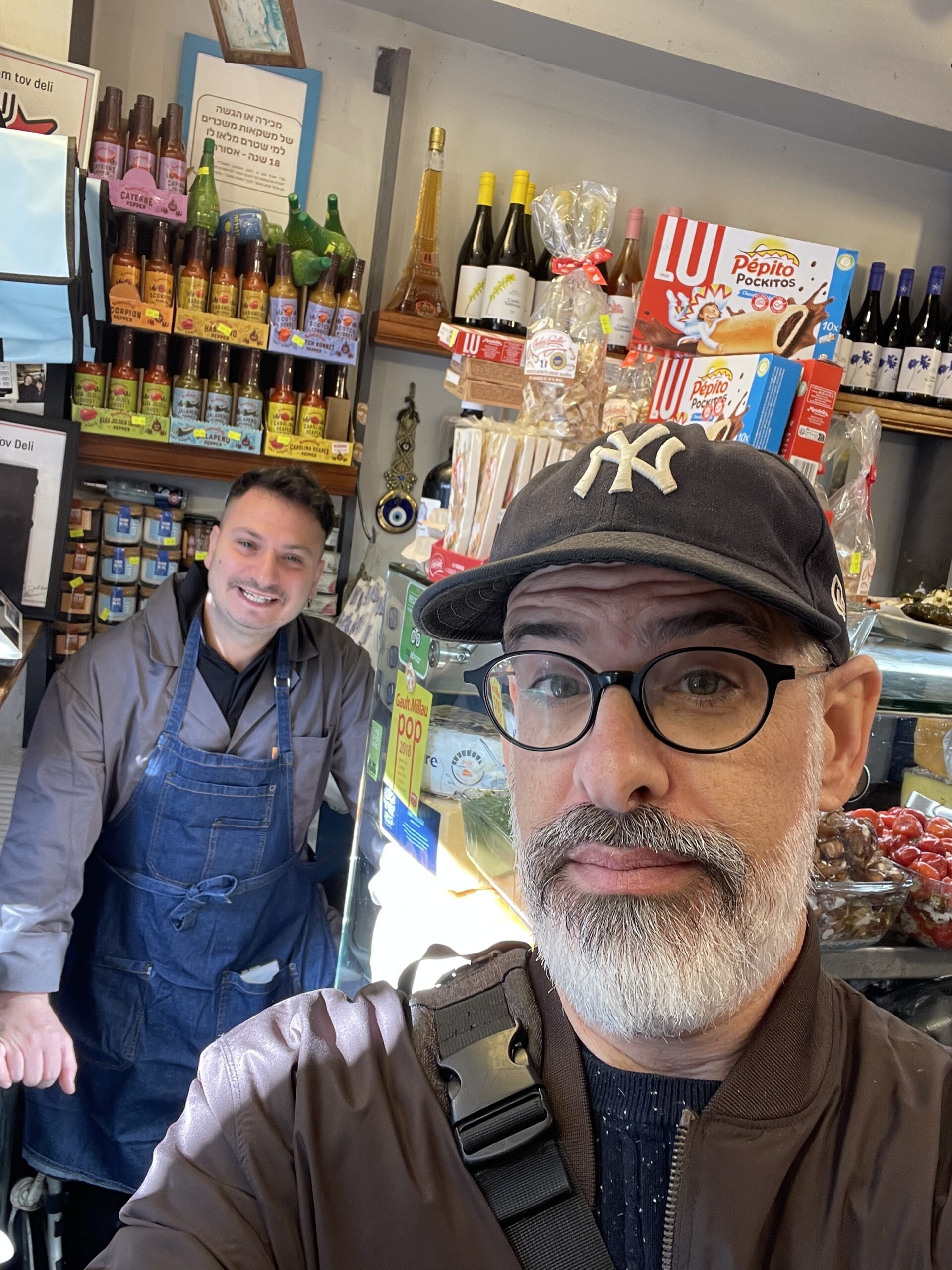
Most tour companies advertise as a brand, and when you show up, you get whichever guide was available that day. When you book with me, you get me. I’m the one who trained in pastry at Bishulim Culinary Institute and studied Arab pastry traditions, who’s been researching the food history of these markets for years, and who knows the vendors by name because I’ve been walking through their stalls every week since 2017. I run private tours exclusively because the quality of that connection is the whole point.
Look for real food knowledge
There’s a big difference between a guide who points at food and says “this is bourekas” and one who can tell you the dough technique came from Ottoman Turkey and why this bakery’s version is different from the one down the street. I’m a professionally trained pastry chef, and I write about Israeli and Jewish food history for the Times of Israel and The Nosher (the internet’s largest Jewish food website).
I also publish a weekly newsletter on Substack where I go deep on the stories behind the food, things like how a Salonika bourekas recipe ended up in a Tel Aviv bakery, or what a Yemenite spice blend can tell you about a family’s journey to Israel. That research is what I bring to every tour.
Read the reviews carefully
Look at what the reviews actually say, not just the star count. The ones that mention specific moments, a conversation with a vendor, a dish they’d never heard of, a story that stuck with them, those tell you what the tour is really like. My tours have 84 reviews on TripAdvisor, all five stars, and a 5.0 on Google with 14 reviews.
It’s not a tasting tour, it’s a food tour
A lot of tours give you a small sample at each stop and call it a day. My tours are different. All food and drink are included, and you will be eating full portions the entire time. When we walk up to a vendor, you eat. When we sit down at a cafe, you drink. Most of my guests skip lunch and dinner afterward.
Ask which market, not just which city
Jerusalem food tours and Tel Aviv food tours are broad categories. Mahane Yehuda is large, loud, and deeply tied to Jerusalem’s religious and cultural history. Levinsky is compact, immigrant-driven, and rooted in the story of how Sephardic and Mizrahi Jews built southern Tel Aviv. Carmel Market is the biggest in Tel Aviv but more of a general produce market than a food history destination. The right tour depends on what kind of experience you want.
Why Israeli Markets Are Worth It
Israeli markets are worth visiting because they are living archives of the country’s immigration history, where culinary traditions from Turkey, Greece, Iraq, Yemen, Morocco, Iran, and Ethiopia exist side by side. The food reflects over a century of diaspora communities bringing their recipes to a single small country and evolving together.
Israel’s food scene draws on culinary traditions from more than 70 countries of origin (Israel Ministry of Immigration and Absorption), making its markets among the most culinarily diverse in the world. The World Food Travel Association estimates that 53% of leisure travelers worldwide qualify as food travelers who choose destinations partly for culinary experiences. In 2019, Israel welcomed a record 4.55 million international tourists (Israel Ministry of Tourism), with food tours and market visits ranking among the country’s fastest-growing tourism segments.
Israeli food is built from layers of immigration. The bourekas came from Turkey and Greece, the hummus from Lebanon and Syria, the sabich from Iraq, the spice blends from Yemen, Morocco, Iran, and Ethiopia, the kubbeh from Kurdistan. When all of these traditions landed in the same small country within a few decades and started sharing ingredients and techniques, something new emerged. The markets are where you can still see all those layers side by side.
Practical Details
Food tours in Israel run Sunday through Thursday, with the best months being March through June and September through November. Tours cost $480 for up to four adults ($75 per additional person, kids under 8 free), with all food and drink included. Wear comfortable walking shoes and plan for 2.5 hours on your feet.
When to go
Israel’s markets are open Sunday through Thursday. Friday mornings are the busiest time as everyone shops for Shabbat. Markets are closed on Saturdays and on major Jewish holidays. The best months for food tours are March through June and September through November.
What to wear
Comfortable walking shoes. Markets have uneven surfaces, narrow passages, and you’ll be on your feet for 2.5 hours. Sunscreen and a hat in summer, layers in winter (Jerusalem gets cold, Tel Aviv less so).
How to book
$480 for up to four adults, $75 per additional person, kids under 8 free. All food and drink included. Every private food tour in Israel runs Sunday through Thursday.
You can check dates at harrysbaked.com/check-availability, or message me on WhatsApp at 054-795-6759. I respond to every message personally.
Frequently Asked Questions
Is a private food tour worth the price compared to a group tour?
Yes. A private food tour in Israel costs more per person than a group tour, but you get a tailored route, more time at the stops you’re enjoying, and access to vendors and conversations that don’t happen with larger groups.
Are food tours in Israel kosher?
Many vendors in Mahane Yehuda and Levinsky have kosher certification (Rabbanut or mehadrin), and I can build a tour around whatever kashrut level you observe. Let me know when you book.
How much food will I actually eat?
A lot. My guests consistently say they don’t need lunch or dinner afterward. Come hungry.
Can kids join?
Yes. Kids under 8 are free, and I adjust the pace and stops for younger guests. Families are some of my favorite groups to take through the markets.
What’s the difference between a Mahane Yehuda food tour and a Levinsky food tour?
Mahane Yehuda is Jerusalem’s iconic market, larger and more chaotic, with deep roots in the city’s Ashkenazi, Sephardic, and Kurdish food traditions. Levinsky in Tel Aviv is smaller and more intimate, built by Greek, Iranian, and Turkish Jewish immigrants. Many of my guests do both.
Do you offer tours at Carmel Market?
I focus on Levinsky because it has deeper food history and more stories to tell. Carmel is a great general market, but Levinsky is where the immigrant food traditions of Tel Aviv are best preserved. More on that in my guide to Israel’s best markets.
How far in advance should I book?
Don’t wait until the last minute. During peak season (pre-Passover, summer, Sukkot, December/January) I’m often booked months in advance. That said, don’t let that stop you from reaching out, I can sometimes make it work on shorter notice, and it never hurts to ask.
More Reading
- What to Eat at Mahane Yehuda Market
- The Ultimate Guide to Levinsky Market, Tel Aviv
- Kosher Food Tour in Jerusalem
- Best Markets in Israel: A Food Lover’s Guide
- Read reviews on TripAdvisor
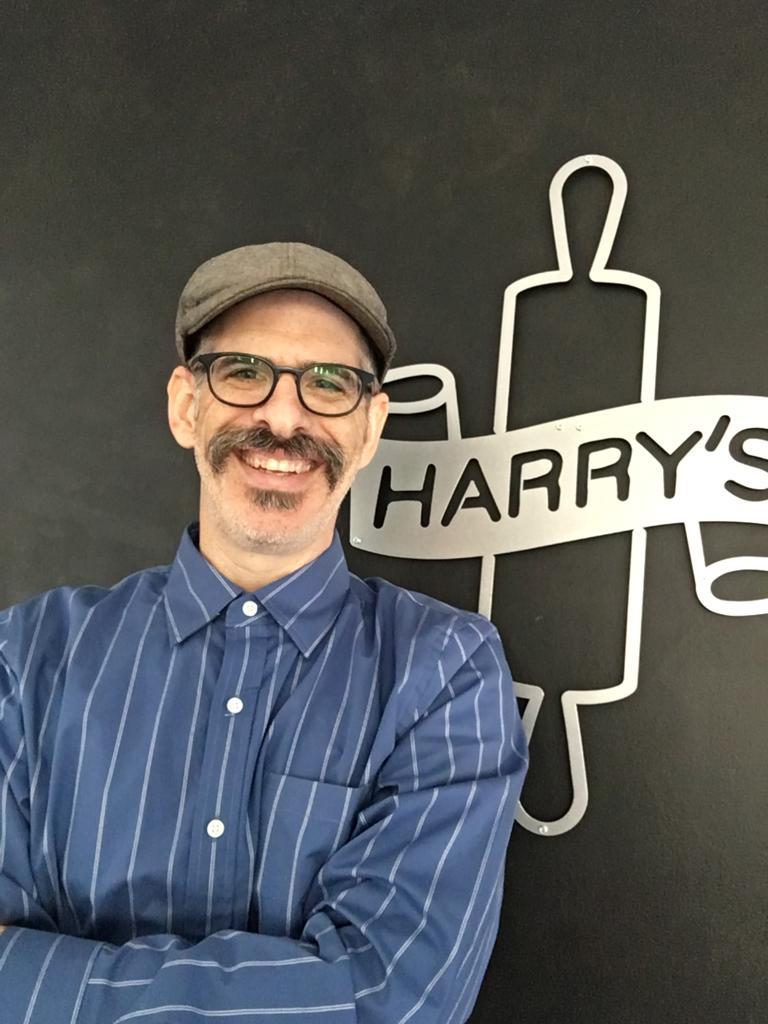
Harry Rubenstein is a pastry chef, food guide, and Jewish food expert based in Israel. A graduate of Bishulim Culinary Institute, he leads private food tours through Mahane Yehuda in Jerusalem and Levinsky Market in Tel Aviv. His writing on Jewish food history appears in The Nosher.
Read more about Harry →