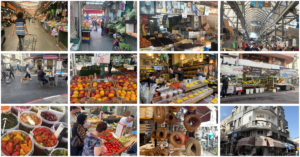
I lead food tours through Mahane Yehuda Market multiple times a week, and the question I get most from observant travelers, before they even ask about the food or the vendors, is some version of: “Can we actually eat everything on the tour?”
Yes. Every stop, every tasting, all of it.
Mahane Yehuda serves a largely observant population, and it has for over a hundred years. The bakeries, the restaurants, the food stalls all hold kosher certification. You’ll see the teudat kashrut framed and hanging at every establishment in the market.
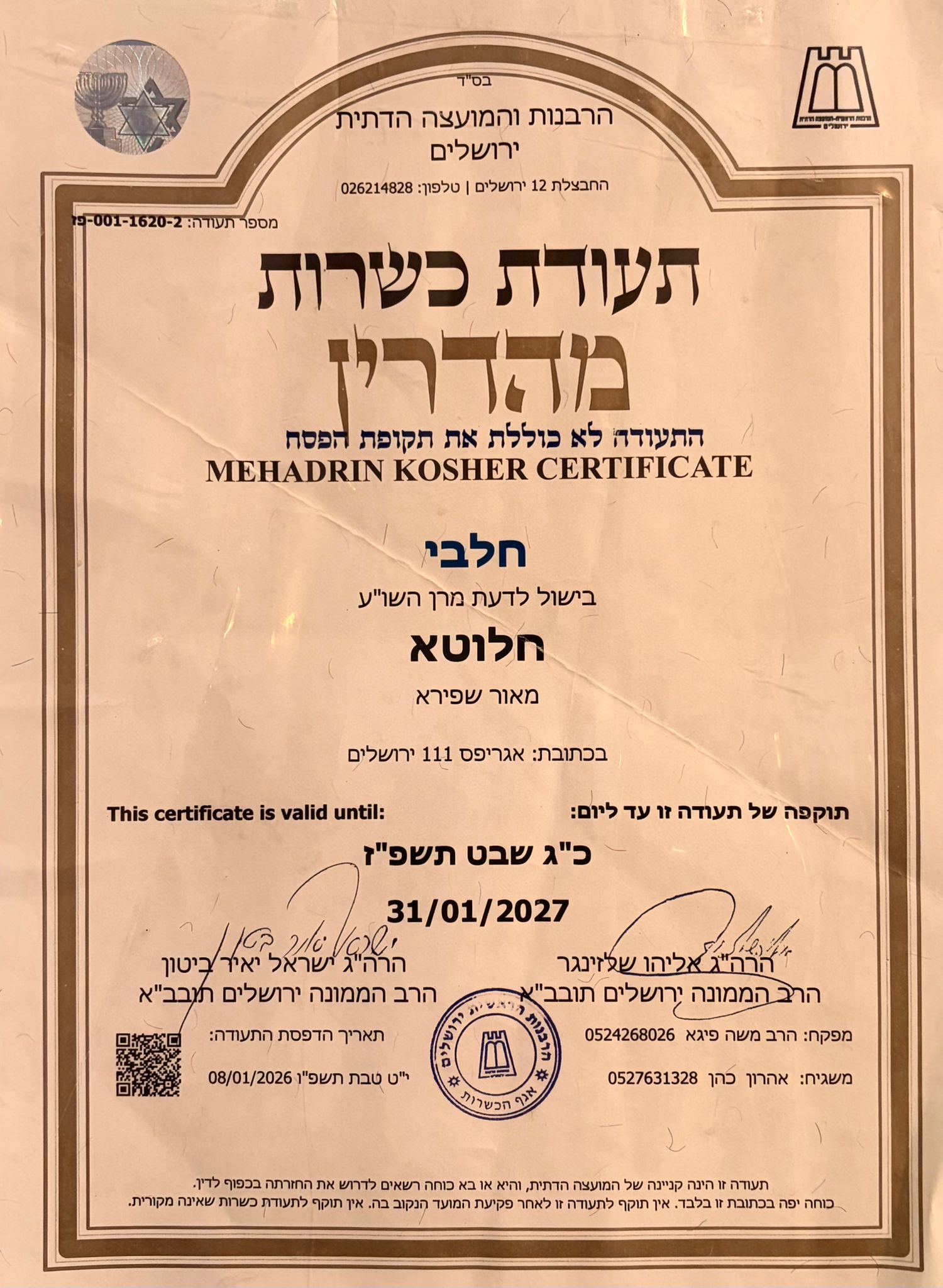
So a kosher food tour in Jerusalem isn’t about finding workarounds or skipping half the market. You walk in, you eat everything, and you hear the stories behind it.
Why the shuk is different
There are food tours in a lot of cities, but what makes Mahane Yehuda unusual isn’t just the food. It’s who made it and how it got here.
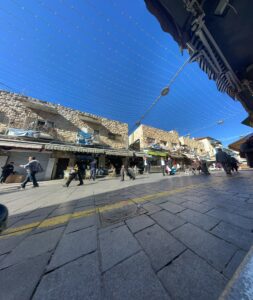
Mahane Yehuda grew out of Jerusalem’s expanding Jewish neighborhoods in the late 1800s, starting as an informal gathering of farmers selling produce on an empty lot near what’s now Jaffa Road. Over the next century, waves of immigration reshaped what was sold there. Iraqi and Kurdish Jews arrived during Operation Ezra and Nehemiah in 1951 to 1952, when roughly 120,000 Jews were airlifted from Iraq. Yemenite Jews came during Operation Magic Carpet in 1949 to 1950, though smaller numbers had been walking overland to Palestine since the 1880s. Moroccan Jews arrived in several waves, some in the early years of statehood, others during Operation Yachin between 1961 and 1964. Georgian Jews came primarily in the 1970s and again after the Soviet Union collapsed in the early 1990s. Turkish and Balkan Sephardim had been in Jerusalem for generations before the state was founded.
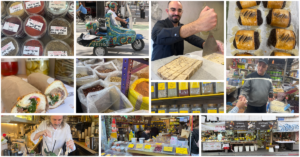
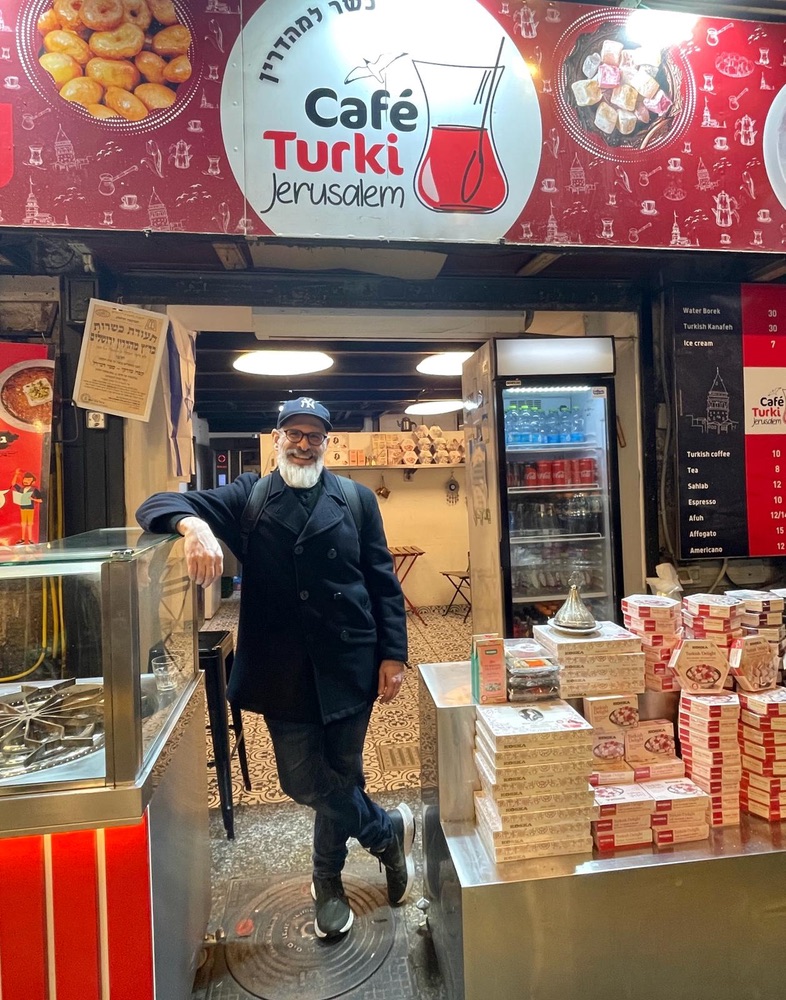
Each community brought its kitchen, and the market absorbed all of it. Kurdish kubbeh shops sit next to Moroccan bakeries. Georgian khachapuri comes out of the oven steps away from a shawarma joint. You can walk ten feet and cross three continents.
And all of it is kosher, not because someone made a business decision, but because the communities that built this market were observant, and the food they brought with them was already made that way.
What you eat
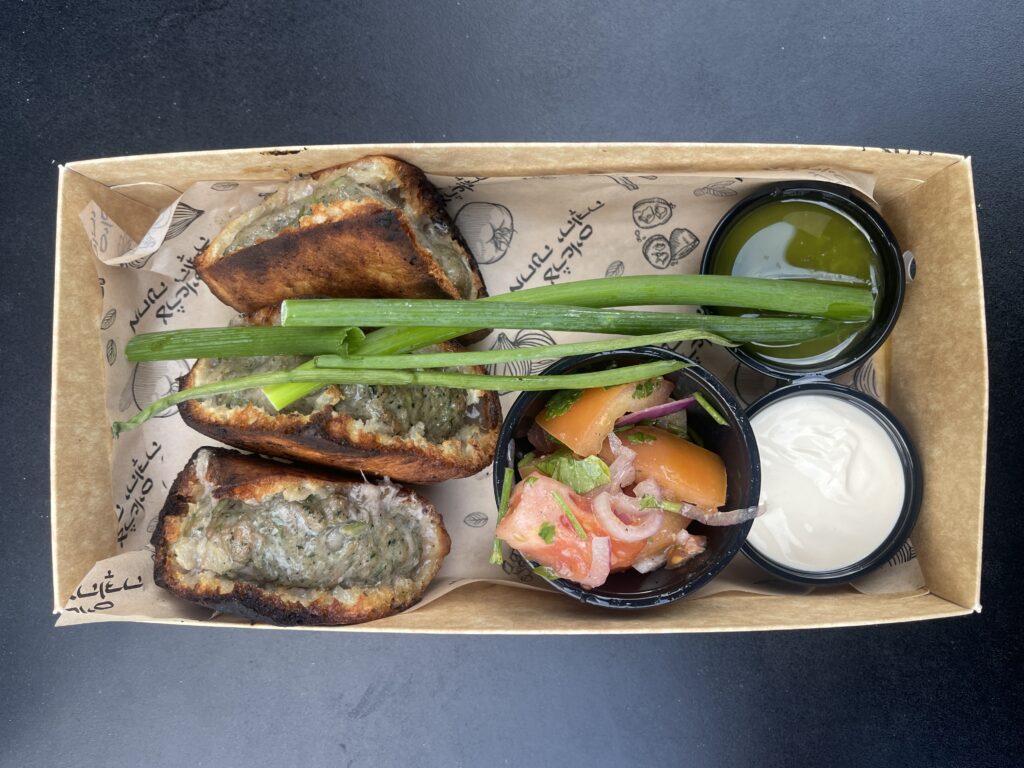
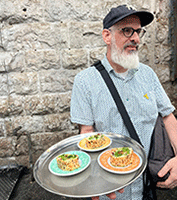
I’m a trained pastry chef, a graduate of Bishulim Culinary Institute, and I’ve spent years studying Jewish food history and writing about it for the Times of Israel and The Nosher. When I walk guests through the shuk I’m not just pointing at stalls. I’m telling you the story behind what you’re eating, who makes it, and how it connects to the community that brought it to Jerusalem.
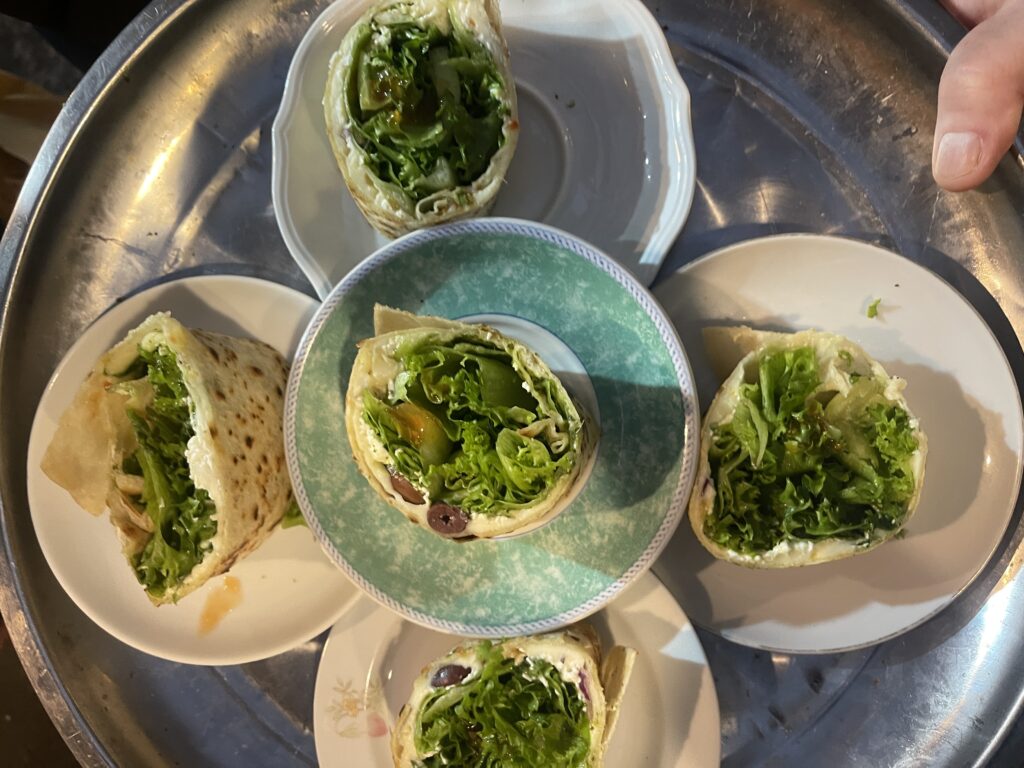
You’ll eat Kurdish kubbeh, Moroccan mufleta, Georgian khachapuri, Turkish bourekas, Iraqi sabich, and a few things you’ve probably never heard of. Every dish has a story, and every story connects to one of the communities that built this market. I wrote up my favorite 11 stops in the shuk if you want the full rundown, but on the tour itself I pick the route based on what’s freshest that morning and what fits the group.
The kashrut question, answered properly
Every stop on my tour is kosher, but “kosher” covers a range, and if you keep a stricter level of observance you’ll want to know the details.
The stops carry different certifications. Some hold Rabbanut, the standard rabbinate certification. Others hold mehadrin, which is the strictest level of supervision. You’ll also see Tzohar certification at some places, a rabbinical organization that provides kosher supervision alongside the rabbinate. It’s also worth knowing that many vendors who hold a Rabbanut certificate still use mehadrin meat. The certification on the wall tells one story, but the sourcing often goes a step further.
I know which stops hold which certification, what meat they source, and where the dairy comes from. If you keep chalav Yisrael, I know where to go. If you eat only mehadrin, I’ll build the tour around that. If you have questions about bishul Yisrael or pas Yisrael at a particular stop, I can answer them or show you the certificate and tell you who the mashgiach is.
This is one of the reasons I only do private tours. On a group tour, everyone eats the same thing at the same places. On a private tour I build the route around your level of observance, so you know exactly what you’re eating before we walk in.
Just tell me when you book and I’ll handle the rest.
A few things worth knowing
The market is fully kosher. Every food vendor in Mahane Yehuda holds certification, and you’ll see the certificates displayed. You don’t need to verify anything on the fly.
Friday is electric but short. Most stalls close between 2:00 and 3:00 p.m. for Shabbat. The pre-Shabbat energy is incredible but the window is small, so if you want a calmer experience, come on a weekday morning.
Shabbat means closed. The shuk is shut on Saturday. Some restaurants on the outer edges reopen Saturday evening after Shabbat ends, but the market itself doesn’t come alive again until Sunday morning.
Weekday mornings are best for a tour. Between 9:00 and 11:00 a.m., Sunday through Thursday. The market is fully stocked, everything is fresh, and you can actually stop and talk to the vendors without being swept along by the crowd.
Beyond the shuk
Mahane Yehuda is the center of gravity for food in Jerusalem, but it’s not the only place worth eating.
Walk north into Mea Shearim and Geula and you’ll find bakeries turning out challah, babka, and rugelach for Shabbat, all mehadrin, the baking traditions pure Ashkenazi, carried to Jerusalem by Hasidic communities generations ago. The Old City’s Jewish Quarter has smaller kosher restaurants and cafés with simpler food in an unforgettable setting. Mamilla and the city center have higher-end kosher sit-down restaurants if you want a proper dinner after a day of market eating. If you’re exploring beyond Jerusalem, I wrote a guide to the best markets in Israel that covers what’s worth visiting around the country.
Jerusalem is probably the easiest city in the world to eat kosher well. You don’t need a special guide to navigate that part. But having someone who knows the food, knows the vendors by name, and can connect what’s on your plate to the history that put it there turns a good meal into something you’ll talk about long after you get home. If you’re also visiting Tel Aviv, I run the same kind of tour through Levinsky Market.
Frequently Asked Questions
Is all the food at Mahane Yehuda Market kosher?
Yes, every food vendor in the shuk holds kosher certification. You’ll see the teudat kashrut displayed at each one. Certifications vary by vendor: some hold Rabbanut (standard rabbinate), others mehadrin (the strictest level), and some carry Tzohar certification. Many vendors with Rabbanut certificates also use mehadrin meat.
Can you accommodate mehadrin, chalav Yisrael, or other specific kashrut requirements?
Absolutely. Tell me your requirements when you book and I’ll build the tour around vendors and dishes that meet your level of observance. I know the certification, the meat sourcing, and the dairy situation at every stop, which is the whole point of doing this as a private tour.
How long is the tour and what does it cost?
Approximately 2.5 hours. $120 per person for a private group of four, with each additional guest at $75. Kids under 8 are free. All food and drink included.
What’s the difference between a guided food tour and going on my own?
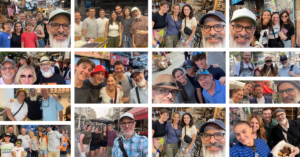
On your own you’ll eat well, the food speaks for itself. But on a tour with me you’ll hear the story behind every dish: who made it, where the recipe came from, how it changed when the family got to Jerusalem. You’ll meet the vendors, go to places most tourists walk right past, and leave understanding the shuk as a community rather than just a market. There’s a reason guests keep coming back and leaving five-star reviews.
When is the best time for a kosher food tour of Mahane Yehuda?
Weekday mornings, Sunday through Thursday, between 9:00 and 11:00 a.m. The market is fully stocked, the bakeries are at their best, and the pace is calmer than the Friday pre-Shabbat rush.
Is the tour family-friendly?
Very much so. Kids love the market because there’s always something colorful, something sizzling, and something sweet.
Where do we meet?
I’ll send you the exact location and my phone number when you book.
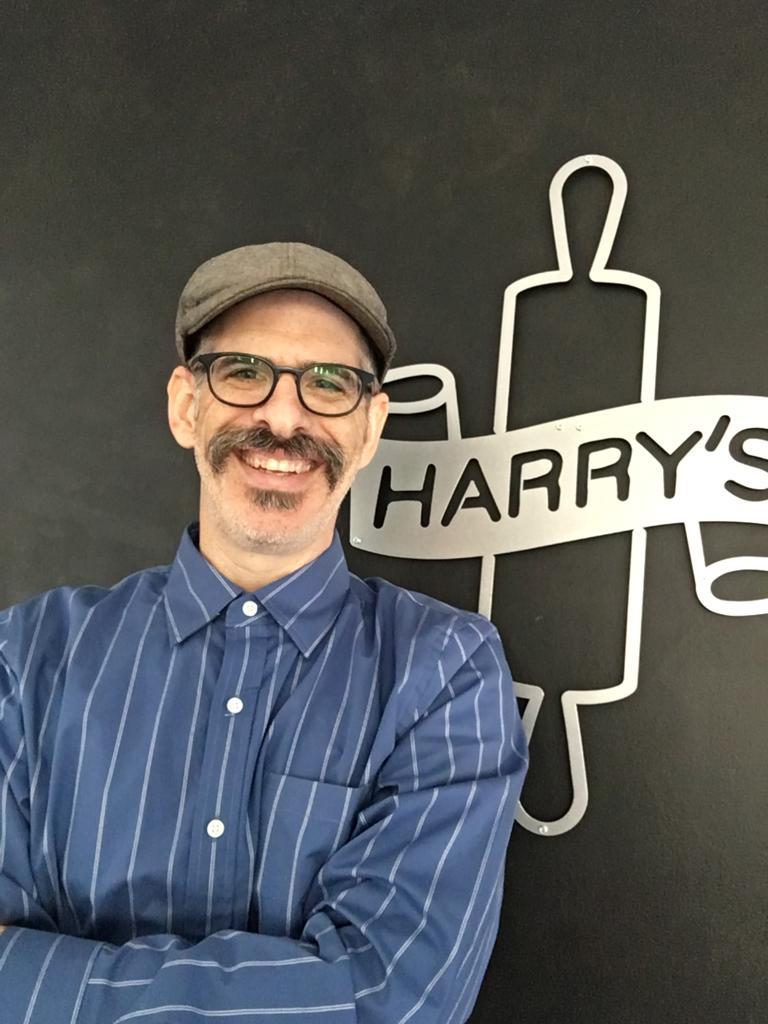
Harry Rubenstein is a pastry chef, food guide, and Jewish food expert based in Israel. A graduate of Bishulim Culinary Institute, he leads private food tours through Mahane Yehuda in Jerusalem and Levinsky Market in Tel Aviv. His writing on Jewish food history appears in The Nosher.
Read more about Harry →