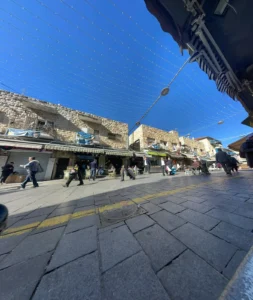
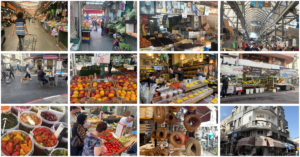
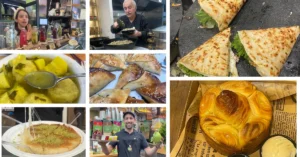
Levinsky Market is Tel Aviv's historic spice and specialty-food market in the Florentin neighborhood, built over the last century by Greek, Balkan, Persian, and Iraqi Jewish immigrants. It's known for bourekas, spice shops, dried fruits and nuts, artisanal gazoz, and family-run delis. Most shops open Sunday through Friday from the morning and close for Shabbat.
| QUICK FACTS | |
| Location | Levinsky Street, Florentin neighborhood, Tel Aviv |
| Founded | 1920s and 1930s, by Sephardic Jewish immigrants from Thessaloniki |
| Size | Several blocks of specialty shops and stalls |
| Hours | Sunday to Thursday 8am to 6pm, Friday 8am to 3pm |
| Best day | Tuesday to Thursday for the widest selection |
| Known for | Spices, dried fruits, Sephardic pastries, Persian nuts, gazoz, halva |
EAT LEVINSKY WITH ME
Levinsky is one of my favorite places to eat in Tel Aviv, full of spice shops and the bakeries the Balkan immigrants brought with them. If you're heading to Tel Aviv, come with me and we'll taste it together.
Book the Levinsky Food TourI’ve been leading private food tours through Levinsky Market since 2017, and it’s the place I keep coming back to when people ask me where to eat in Tel Aviv. Not because it’s the biggest market or the most famous (that’s Carmel Market, a few blocks north), but because Levinsky is where the stories are. Almost every shop in this market was opened by someone who arrived in Israel from somewhere else and brought their kitchen with them. Greek Jews from Salonika, Persian Jews from Tehran, Bulgarian families, Turkish bakers, Yemenite cooks, Bukharian bread makers. The market is five blocks long and about eighty years of immigration history deep.
This guide covers everything you need to know before you visit: what to eat, where to find it, and the stories behind the food that make Levinsky unlike any market you’ve been to.
Salonika (Thessaloniki) was home to approximately 56,000 Jews in the early twentieth century, the largest Sephardic community in the world. Following the 1979 Iranian Revolution, an estimated 30,000 to 40,000 Iranian Jews immigrated to Israel, many settling in the neighborhoods around Levinsky and establishing the Persian restaurants and spice shops that still define part of the market. Cafe Atlas, founded in 1924 by Salonika immigrants, is the oldest continuously operating business in the market, and Puni Bakery, founded in 1922, is one of the oldest bakeries in Israel. Tel Aviv draws roughly 2.5 million international visitors annually, and Levinsky is increasingly recognized as one of the city’s essential food destinations.
In This Guide
- A Quick History
- What to Eat — Bourekas, HoMotzi, Sabich, Halva, Spice Shops, Nuts, Yom Tov, Lupo, Chaim Raphael, Gita, HaKatan, Sender, Persian Food, Banh Mi, Gazoz, Coffee, Cafe Kaymak, Matti
- The Florentin Neighborhood
- Practical Information
- FAQ
A Quick History
Levinsky Market was built by Jewish immigrants from Salonika (Thessaloniki) who settled in southern Tel Aviv’s Florentin neighborhood in the 1920s and 1930s, bringing bourekas, spices, and specialty food traditions from the Ottoman Balkans. The street is named after Elhanan Leib Levinsky, a Jewish-Russian writer and early Zionist, and the surrounding neighborhood was designed by architect Yosef Tishler as a menorah-shaped street plan.
Levinsky Market grew out of the Florentin neighborhood of southern Tel Aviv, named after David Florentin, a Greek-Jewish journalist and Zionist leader from Salonika who helped purchase the land in the 1920s. The street itself is named after Elhanan Leib Levinsky, a Jewish-Russian writer and early Zionist thinker. The street was actually part of a larger piece of urban planning: architect Yosef Tishler designed the surrounding Neve Sha’anan neighborhood in the 1920s as a street pattern shaped like a nine-branched menorah, with Levinsky Street positioned as the central axis, the shamash (attendant candle), and narrower streets radiating outward like the candelabra’s branches.
The neighborhood’s character was set early. Greek-speaking Sephardic Jews from Salonika (Thessaloniki) were among the first to settle here in the 1930s, and they brought the food traditions of the Ottoman Balkans with them: bourekas, spices, dried fruits, cured meats, and the kind of small-scale specialty food shops that had defined their communities back in Greece. I wrote a longer piece about that Salonika-to-Tel Aviv story if you want the full history.
In its earliest years, the market was actually illegal. Vendors got ticketed by municipal inspectors, so they devised an ingenious workaround: since all the inspectors finished at 4:00 PM and went home, the market opened at 4:01. The stands would appear the moment enforcement disappeared, and the whole thing thrived in the twilight hours. Even the Eliyahu HaNavi Synagogue at Levinsky 44 reflects it: a workers’ synagogue that closes on Shabbat because it only serves the merchants, and when the market closes, the congregation disappears.
The municipality tried three separate times to contain the market inside covered buildings, and failed every time. The first attempt in the 1930s went nowhere. A covered market was built on Aliyah Street in 1939, but the street vendors kept selling outside. Then in 1964 the city built a dedicated indoor market right on Levinsky Street, moved the vendors in by force, and watched as business collapsed within three years. A 1967 survey identified the fatal flaw: “One condition for a market’s existence is being open.” The building was demolished in the late 1980s, and the street market reasserted itself exactly as it always had.
After the state was founded in 1948, waves of immigration reshaped the market. Persian Jews arrived and opened spice shops with flavors and blends that were entirely new to the neighborhood. Bulgarian families brought their cheeses and charcuterie. Iraqi and Yemenite Jews added their own food traditions to the mix. By the 1960s and 1970s, Levinsky Market had become what it still is today: a narrow, dense, slightly chaotic collection of specialty food shops, bakeries, delis, and restaurants where five or six different culinary traditions operate within a few meters of each other.
For the full story, read my essay on the history of Levinsky Market.
What to Eat at Levinsky Market
Levinsky Market offers bourekas from century-old bakeries, handmade halva, Persian stews, Turkish delis, Iraqi sabich, Vietnamese banh mi, artisanal gazoz drinks, cured fish, spice shops with generations of knowledge, and some of Tel Aviv’s best coffee. The market is organized by specialty rather than a single food hall, and the best approach is to wander and eat as you go.
I’ve organized this by category rather than a numbered list because Levinsky isn’t a place you tick off in order. You wander, you eat, you wander some more.
Bourekas
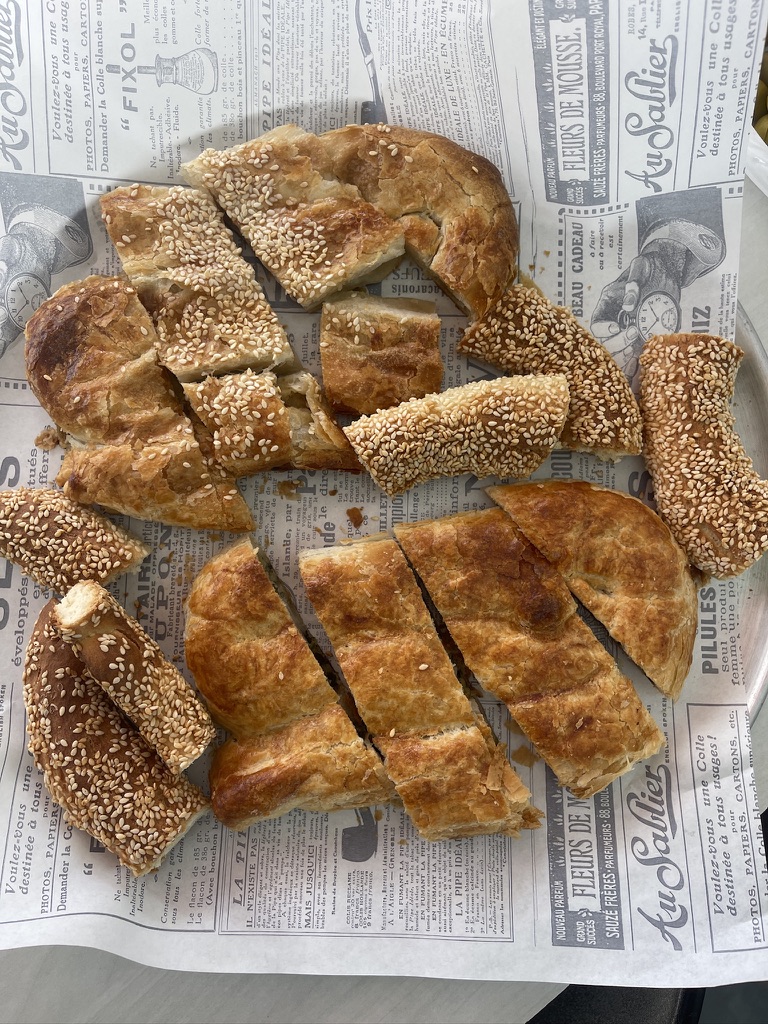
Levinsky has three legendary bourekas spots, all within a few minutes’ walk of each other: Penso, Puni, and Bourekas Shel Ima. Each one has a different style and a different story, and on my tours we usually hit more than one so guests can taste the differences side by side.
Penso is the one I take every tour group to. The family’s fame started in Istanbul, where the Penso name was synonymous with bourekas, and fourth-generation baker Yochai Penso says the older generation in Istanbul’s historic quarters still remembers. Yeshayahu Penso immigrated from Turkey in the 1940s, first opening a bakery in Jerusalem’s Mahane Yehuda Market before moving to Levinsky in the 1950s. In the early days, the family sold their bourekas from a mobile cart, keeping them warm over charcoal, a method brought directly from Turkey. The transition to a permanent shop at 43 Levinsky Street came around 1965. They still use a hand-stretched phyllo-style dough that’s thinner and more delicate than what you’ll find at most Israeli bakeries, and when it comes out of the oven the layers shatter. The kashkaval cheese boureka is the signature, made with a semi-hard Turkish cheese that’s salty and sharp and melts beautifully inside that thin crust.
Penso (פנסו)
Address: Levinsky Street 43, Tel Aviv
Puni actually predates the market itself. Polish immigrants Avraham and Fruma Puni founded the bakery in 1922 in Jaffa, making it one of the oldest bakeries in the country, and when they moved to the Florentin neighborhood in the late 1920s, they encountered a customer base they hadn’t expected. Their neighborhood was largely Sephardic, Greek and Turkish Jews from the Salonika migration, and these customers wanted bourekas, not the European cakes the Punis had trained in. So through close input from their customers, they learned the art of working with yufka dough and adapted their Polish baking expertise to Balkan tastes. It’s one of the best one-line summaries of Israeli food you’ll find: a Polish bakery that taught itself to make bourekas because that’s what the neighborhood wanted. The dough is denser and more bread-like, closer to the Eastern European baking tradition the bakery grew out of, and today the fourth generation still consults the original handwritten recipe book from founders Avraham and Moshe Puni. No frills, hasn’t changed in decades, and doesn’t need to.
Puni (פוני)
Address: HaAliya Street 24, Tel Aviv
Bourekas Shel Ima means “Mom’s Bourekas.” Generous fillings, classic Israeli puff pastry, and a neighborhood crowd that keeps coming back.
Bourekas Shel Ima (בורקס של אמא)
Address: Levinsky Street 46, Tel Aviv
The way Israelis eat bourekas matters as much as the bourekas themselves. You order yours hot from the oven, grab a hard-boiled haminado egg, pile on pickled cucumbers and grated tomato, add a spoonful of schug if you like heat, and tear into everything together. No fork needed. Friday mornings are when this ritual reaches its peak, with lines forming by 9 AM.
I wrote a complete guide to the three bourekas bakeries with the full history and what to order at each one.
HoMotzi Lehem
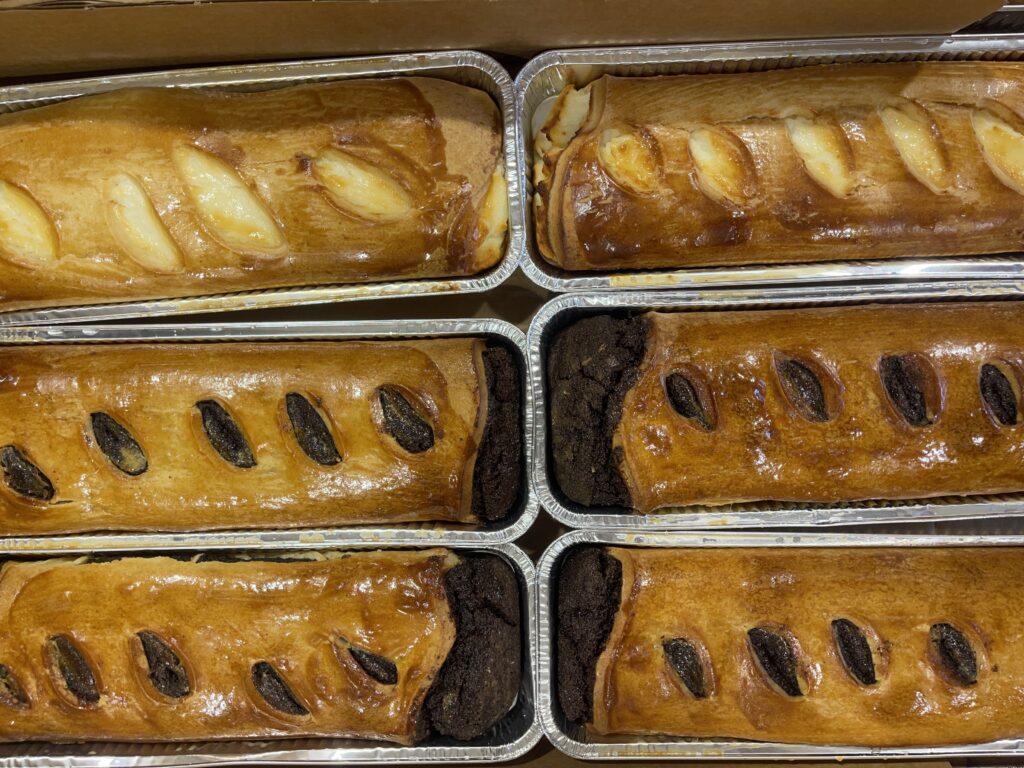
HoMotzi Lehem at Levinsky 40 is run by sisters Maya’an and Osher, who are as welcoming and funny as the baked goods are good. Their presberger poppy cake is incredible, dense and rich with a thick poppy seed filling, and the chocolate babka is one of the best in Tel Aviv. It’s hard to walk past without buying something.
HaMotzi Lehem (המוציא לחם)
Address: Levinsky Street 40, Tel Aviv
Sabich
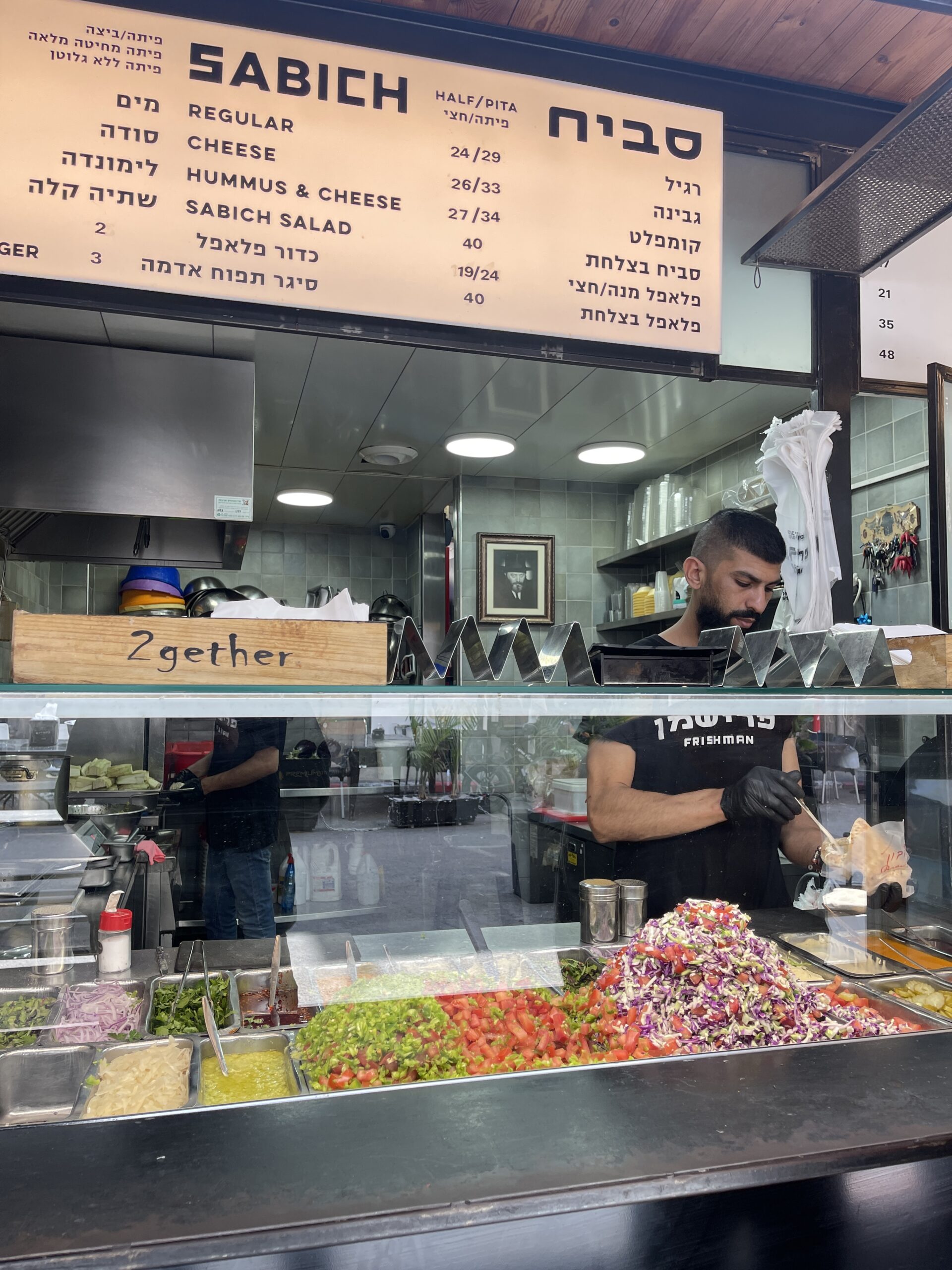
Sabich is an Iraqi-Jewish sandwich: fried eggplant, hard-boiled egg, tahini, amba (a tangy mango pickle condiment), fresh vegetables, and sometimes potato, all stuffed into a pita. Iraqi Jews originally ate it on Shabbat morning, and now it’s everywhere in Tel Aviv.
Sabich Frishman has a location right on Levinsky Street.
Sabich Frishman (סביח פרישמן)
Address: Levinsky Street, Tel Aviv
Halva
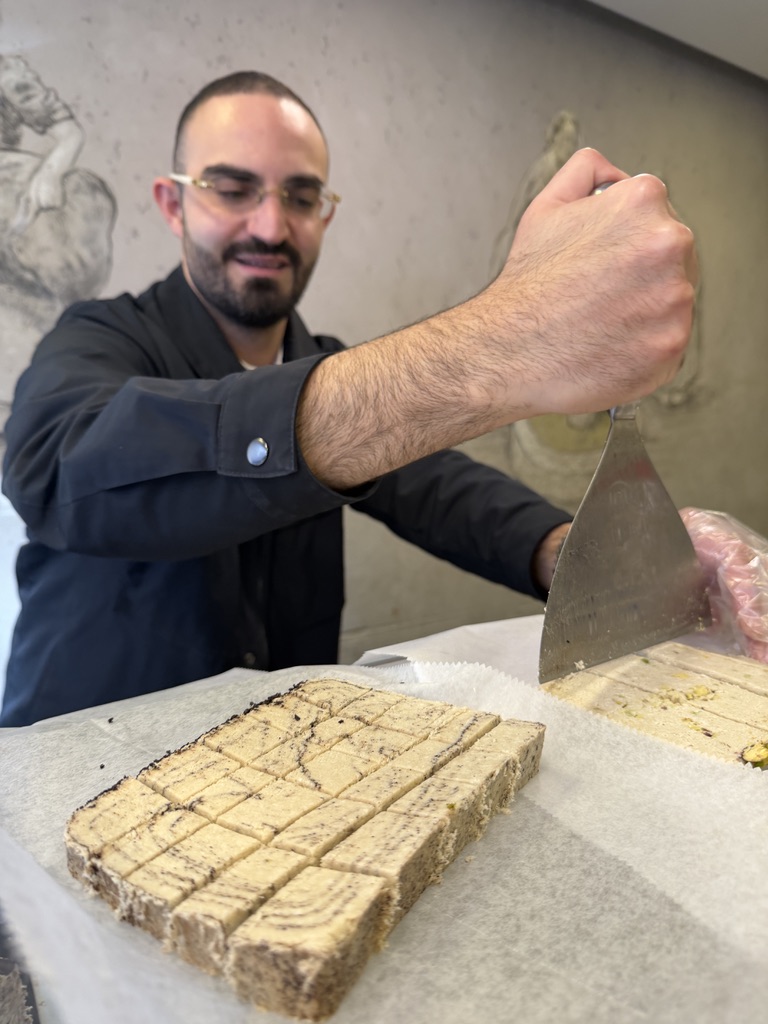
Magic Halva (Kesem HaHalva) is a family-owned business making quality small-batch halva by hand, grinding the sesame seeds manually instead of using machines. The result is soft, slightly chewy halva in dozens of flavors, from vanilla and chocolate to pistachio and coffee. Israeli halvah is made from sesame seeds without wheat flour or dairy, which makes it pareve, and the texture is dense, crumbly, and much richer than most people expect. Buy a slab, bring it home, and it’ll last longer than you think (assuming you don’t eat it on the walk back to your hotel).
Magic Halva / Kesem HaHalva (קסם החלווה)
Address: Levinsky Street 48, Tel Aviv
Spice Shops
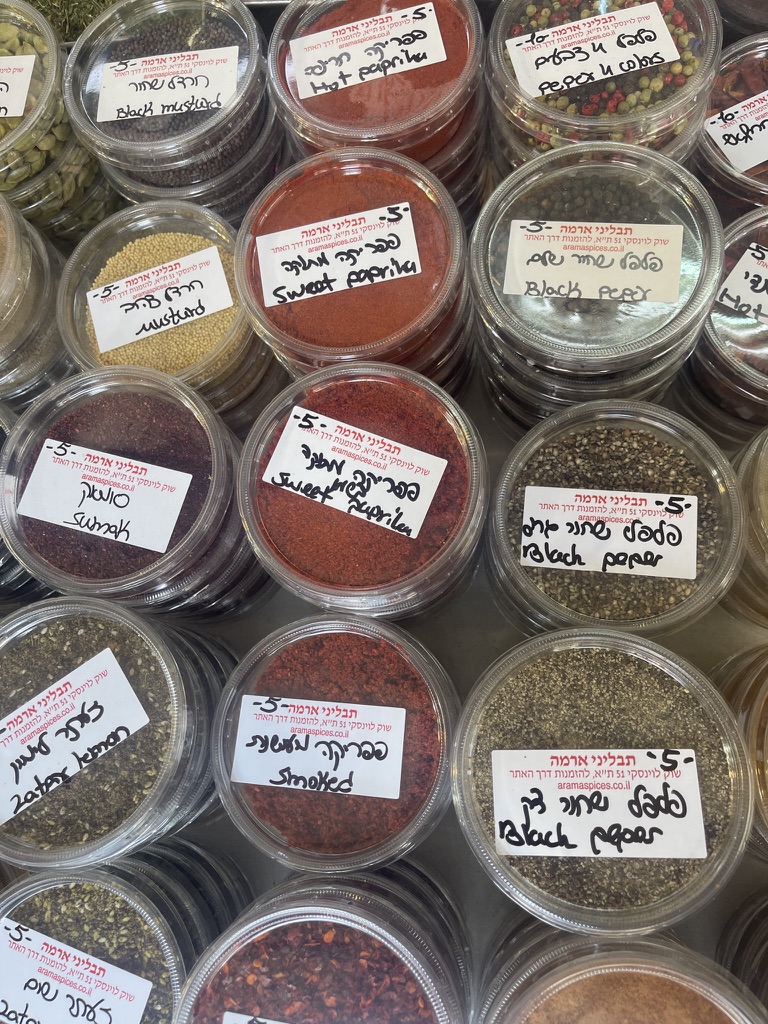
Levinsky is known as Tel Aviv’s spice market, and once you’ve walked the main stretch you’ll understand why. The shops line both sides of the street, bins overflowing with dried fruits, nuts, and spice blends in every color: green za’atar, deep red baharat, golden turmeric, dusty pink sumac. What makes these shops special isn’t just the product but the knowledge behind the counter. Many of these spice sellers are second and third generation, and they can tell you which za’atar blend works best for a specific dish, which baharat mix is Iraqi versus Moroccan, and how to use hawayij (the Yemenite spice blend) in your coffee versus your soup. They’ll let you taste anything you’re curious about.
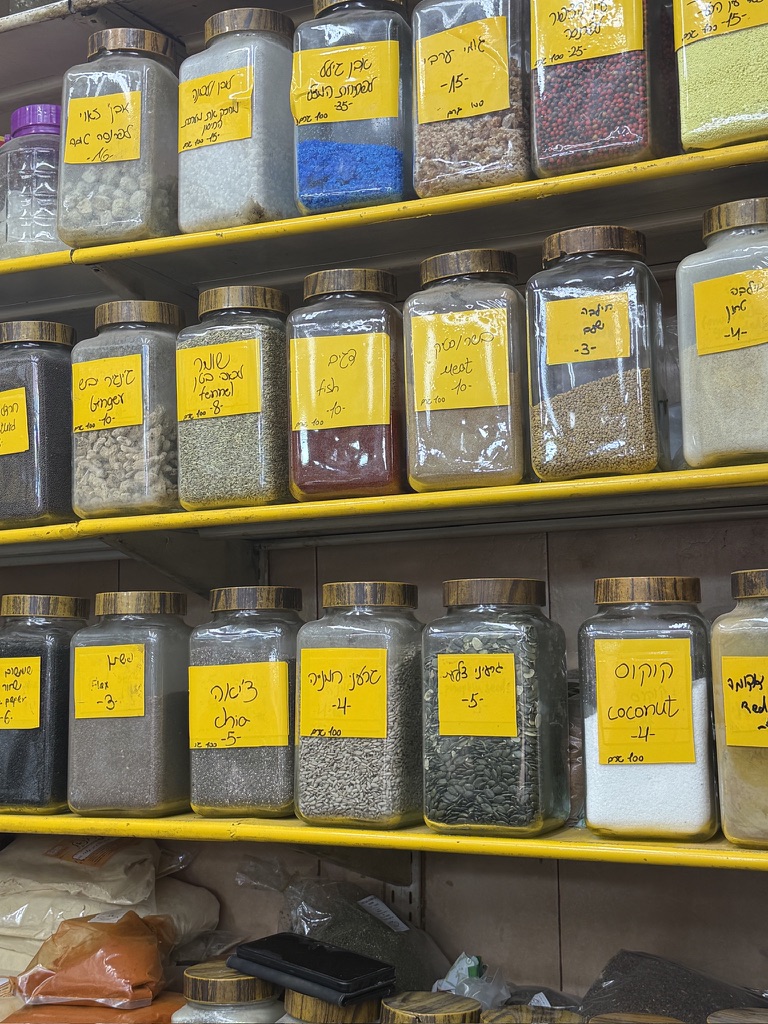
Here are a few of the best spice shops on the street:
Tavlinsky
One of the larger shops on Levinsky, with a wide selection of blends and single spices ground fresh daily.
Tavlinsky (תבלינסקי)
Address: Levinsky Street 57, Tel Aviv
Havshush
Havshush has roots going back to 1926, when Eliezer Havshush immigrated from Yemen. He opened his first shop in Jaffa in 1931, and after a devastating fire in 1947, the family relocated to Levinsky Market, establishing their home above the tiny shop. His son Aryeh grew up surrounded by spices and became the person every chef in Israel called when they couldn’t figure out what was missing from a dish. Aryeh passed away in 2024, and today his children run the shop.
Havshush (חבשוש)
Address: HaChalutzim Street 18, Tel Aviv
Arama
Called the “Queen of Grandma’s Remedies” since it opened in 1970, Arama built its reputation on exotic and medicinal teas, fresh spices, green coffee from South America, and fresh-ground poppy seeds alongside healing tonics and herbal blends. The Yemeni white coffee blend, infused with pepper, cardamom, and ginger, is a customer favorite. Master chef Yisrael Aharoni used to buy all his spices here.
Arama (ערמה)
Address: Levinsky Street 51, Tel Aviv
Cafe Atlas
Founded in 1924 by immigrants from Salonika, Cafe Atlas is technically a coffee and tea shop but also sells spices and healing plants, making it the oldest continuously operating business in the market. It carries a piece of Israeli political history too: Prime Minister Golda Meir had a specific coffee blend at Atlas, and when she moved to northern Tel Aviv, she made sure the cafe would continue to supply it.
Cafe Atlas (קפה אטלס)
Address: Levinsky Street 49, Tel Aviv
Nuts and Dried Fruits
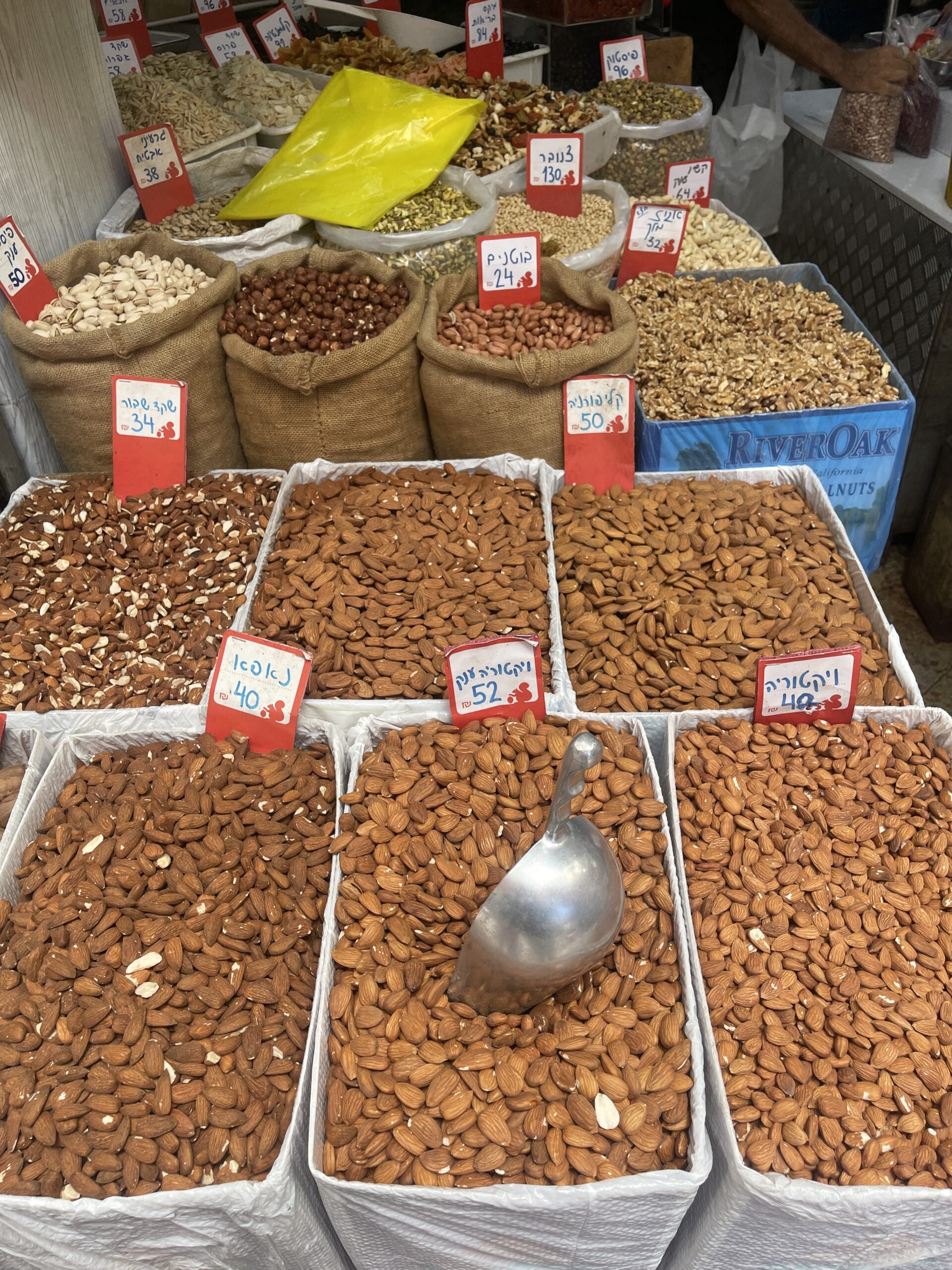
The nut and dried fruit shops are as much a part of Levinsky as the spice stalls, with bins of roasted cashews, almonds, pistachios, dried apricots, figs, and dates lining the sidewalk. Nuts by Moshe and Sons at Levinsky 51 has been here for over 40 years, and Shuk California at Levinsky 53 is right next door. Both are good for stocking up on snacks or picking up gifts that are easy to pack and travel well.
Nuts by Moshe and Sons (פיצוחי משה ובניו)
Address: Levinsky Street 51, Tel Aviv
Shuk California (שוק קליפורניה)
Address: Levinsky Street 53, Tel Aviv
Yom Tov Delicatessen
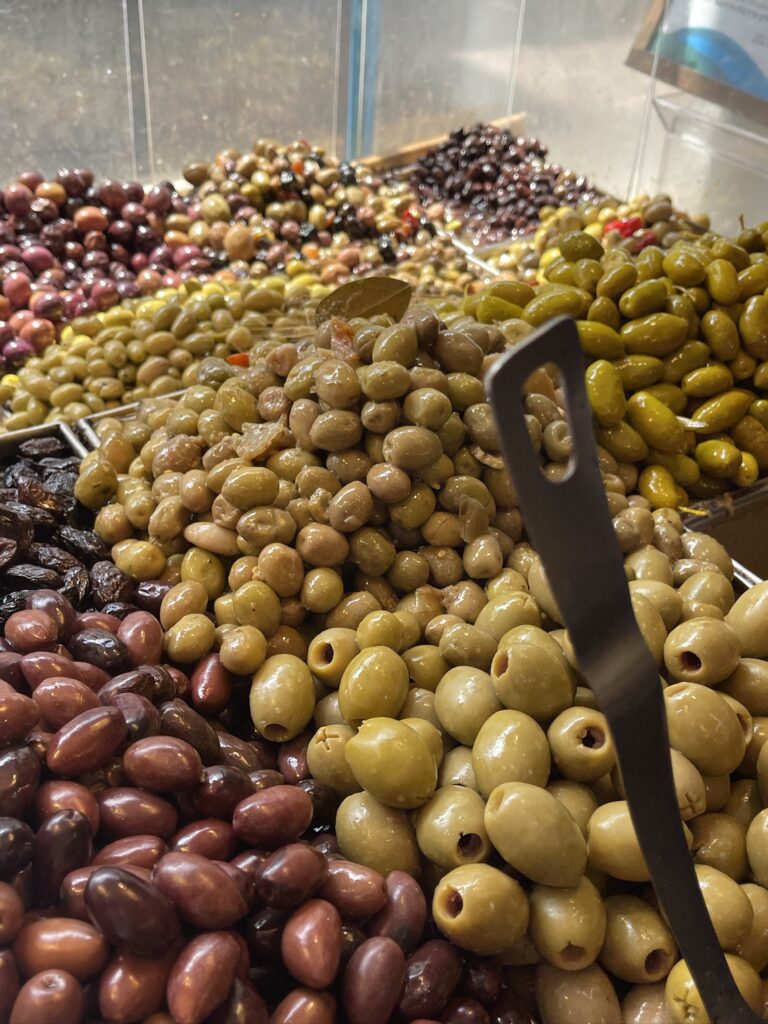
There’s a lot of history in this deli. The founder, Yom Tov Levi, learned his craft from sef mazitim (master chefs) in Turkey and originally established the business in Istanbul in 1947. He immigrated to Israel with his son Moshe in 1969 and reopened the delicatessen in Levinsky Market. Yom Tov Levi passed away in 2024 at nearly 100 years old, with his wife Esteria dying only weeks later. Today the deli is run by the third generation: his granddaughter Simcha, and grandsons Eitan and Yomi, who left school at 17 to keep the business going when his mother donated a kidney to his father and the family needed him. The display cases are packed with white cheeses, smoked fish, cured meats, stuffed dried fruits, olives in more varieties than you knew existed, jams, and specialty foods that all trace back to Istanbul.
Yom Tov hasn’t tried to modernize for tourists. It’s still a working deli where locals come to buy their weekly cheese and olives, and the conversations at the counter slip between Hebrew and Ladino. If you want to bring something home from Levinsky, this is the place to do it. I already have a full writeup of Yom Tov Delicatessen on the blog.
Yom Tov Delicatessen (יום טוב דליקטסן)
Address: Levinsky Street 43, Tel Aviv
Lupo Fish Deli
Lupo is a stop on every one of my Levinsky tours. Reuven Lupo came to Israel from Romania, where he’d been a barber by trade, and started curing and pickling fish out of a shed behind his house. He got good at it, the neighbors noticed, and before long the line outside his yard made it clear this was more than a hobby. He moved the operation to Tel Aviv in 1976, and the deli has been a Levinsky institution ever since. Today the business is run by his son Avi and grandson Roi, and they specialize in smoked and cured fish at a level you won’t find anywhere else in the market: mackerel (lakarda), Dutch matjes herring, herring in various cures, smoked tuna, cured salmon, and more. Alongside the fish you’ll find boutique cheeses (Israeli and imported), house-made pickles, and spreads. The address is technically Merchavia 6, tucked into the alley just off the main drag, and the line can get long. If you’re planning a Shabbat spread, Lupo puts together hosting platters of cheese, fish, olives, and delicacies. The place is kosher under Rabbanut supervision.
Lupo Fish Deli (לופו דגים)
Address: Merchavia Street 6, Tel Aviv
Chaim Raphael Delicatessen
Chaim Raphael is another piece of the Salonika story that runs through every corner of this market. Chaim Raphael was born in Thessaloniki in 1924 and deported to Auschwitz in 1943, where his mother, sisters, and one brother were murdered on arrival. During his imprisonment, an SS officer discovered Chaim had a harmonica and ordered him to play “Lili Marleen.” When guards began beating his father and Chaim stopped playing in distress, the officer commanded the beating to cease. He survived forced labor and death marches, and met his future wife Esther in Theresienstadt. They immigrated to Israel in 1946 and opened the shop in 1958 as a small grocery store, and it grew over the decades into a proper delicatessen. Today his sons run the business, and the deli still makes Turkish tarama salad from their grandmother’s recipe, whisking breadcrumbs and light pink fish roe into the same spreadable paste the way the family did back in Greece.
Chaim Raphael Delicatessen (חיים רפאל דליקטסן)
Address: Levinsky Street 36, Tel Aviv
Gita
Gita is part of a wave of elevated shipudiyot (skewer houses) that’s been sweeping Israel, and its location in Levinsky feels like a natural fit. This isn’t your standard shipudiya with chicken hearts on the grill. Gita does goose hearts, lamb asado, veal sweetbreads, and the salads and hummus are outstanding on their own. Each skewer arrives with tahina, schug, warm pita, olives, and house pickles, and the desserts (Bavarian cream, chocolate mousse, cheesecake) are surprisingly good.
Gita (גיטה)
Address: Levinsky Street 39, Tel Aviv
HaKatan
HaKatan is tiny, maybe ten seats, at 46 Levinsky Street. Chef Ido Kablan came up through Eyal Shani’s kitchens and opened this place to cook the kind of food he actually wanted to eat: fish, whatever the fishermen brought in that morning, prepared simply and served as small plates. The action starts around 11 AM when the cooks show up and begin breaking down fish and prepping for evening service. The menu changes weekly. You might get fish tartare on lahooh one visit and something completely different the next. Kablan’s Tunisian background shows up in the flavors, but he pulls from everywhere. One of the best fish restaurants in Tel Aviv, and easy to miss if you’re not looking for it.
HaKatan (הקטן)
Address: Levinsky Street 46, Tel Aviv
Sender
Sender at Levinsky 54 opened in 1948, the year the state was founded, and the menu hasn’t changed much since. The cholent is excellent, the chopped liver is one of the best I’ve had in Israel, and the schnitzel is amazing. Add kishke, tongue, chicken soup with kreplach and noodles, egg salads, and you’ve got the full picture. The restaurant started in Jaffa and moved to Levinsky around 1960, and today Zami Schreiber runs it, second or third generation depending on how you count. The walls are covered in photos of every Israeli who’s-who who ever ate here. It’s kosher and mid-priced, and it’s proof that Levinsky’s Ashkenazi history runs just as deep as its Sephardic and Persian roots.
Sender (סנדר)
Address: Levinsky Street 54, Tel Aviv
Persian Food
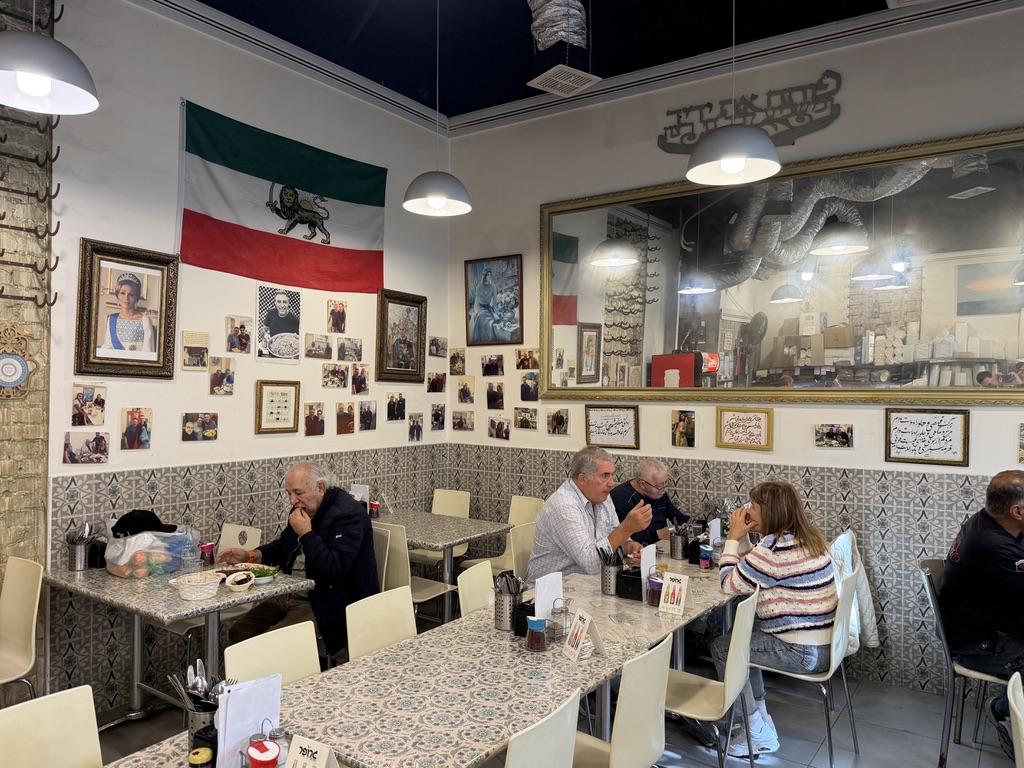
Persian Jews started arriving in the 1950s and again after the 1979 revolution, and they turned Levinsky into one of the best neighborhoods in Tel Aviv for Iranian food. If you know where to look, you can still find ingredients and products imported directly from Tehran on the shelves of shops along the market. Three restaurants in particular are worth knowing about.
Gourmet Sabzi at Levinsky 47 is run by Chef Bijan Barkadi, and there’s no printed menu. The dishes change daily based on what Bijan feels like cooking: Iranian stews, rice dishes, grilled meats, and you eat whatever shows up. The signature is Khoresht Sabzi, a slow-cooked herb stew with dried fenugreek, parsley, and cilantro that’s one of the most iconic dishes in Persian home cooking. You sit down, you eat what comes out.
Gourmet Sabzi (גורמה סבזי)
Address: Levinsky Street 47, Tel Aviv
Salimi
Family-owned and no frills, with a line at lunchtime most days. Simple, fragrant Iranian home cooking at prices that make you wonder how they do it.
Salimi (סלימי)
Address: Nahalat Binyamin Street 80, Tel Aviv
Shamshiri
Shamshiri rounds out the trio with its own take on the stews, rice dishes, and gondi (ground chicken and chickpea flour meatballs flavored with cardamom, a Jewish Persian classic). Between the three Persian restaurants, you could eat in Levinsky every day for a week and not repeat a dish.
Shamshiri (שמשירי)
Address: Nahalat Binyamin Street 99, Tel Aviv
Banh Mi and Onigiri
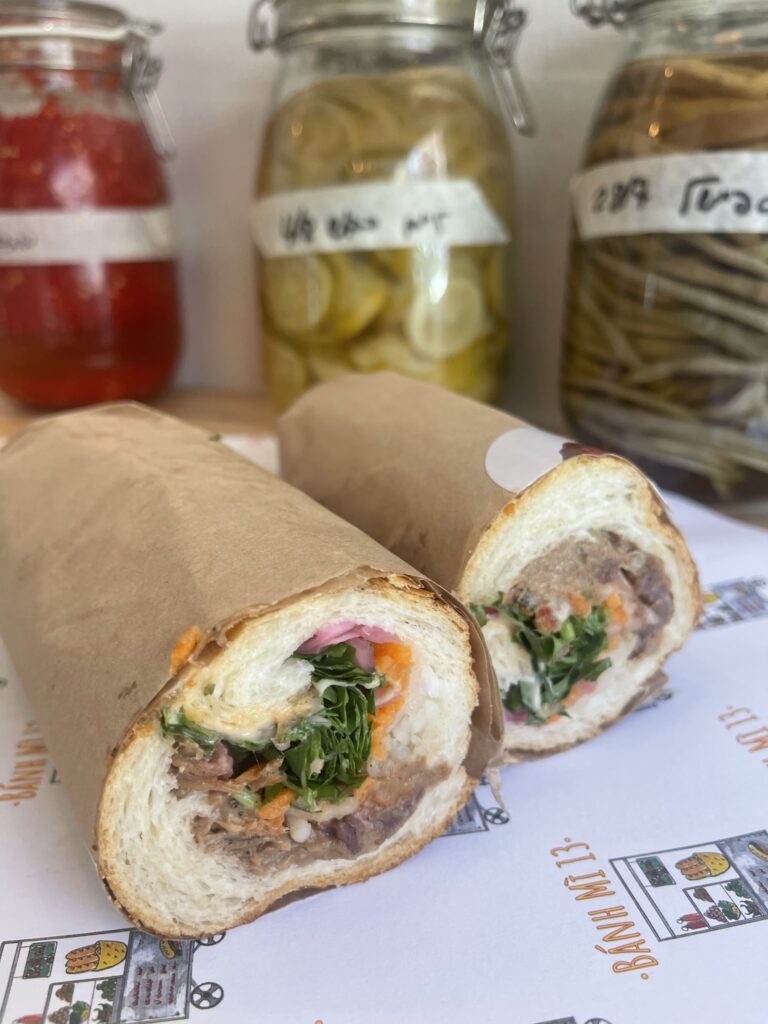
Levinsky keeps evolving. Alongside the bourekas and Persian stews, you’ll now find Banh Mi 13 making Vietnamese sandwiches and chicken pho in the shuk. The beef banh mi is the best thing on the menu, with an amazing pate, and the owners are some of the loveliest people in the market. I’m more likely to grab a sandwich here on my way home than anywhere else. Yapani is nearby doing Japanese onigiri, rice balls stuffed with fish or vegetable fillings for about 15 NIS each.
Banh Mi 13 (באן מי 13)
Address: Nahalat Binyamin Street 107, Tel Aviv
Yapani (יפני)
Address: Merchavia Street 3, Tel Aviv
Gazoz at Cafe Levinsky 41
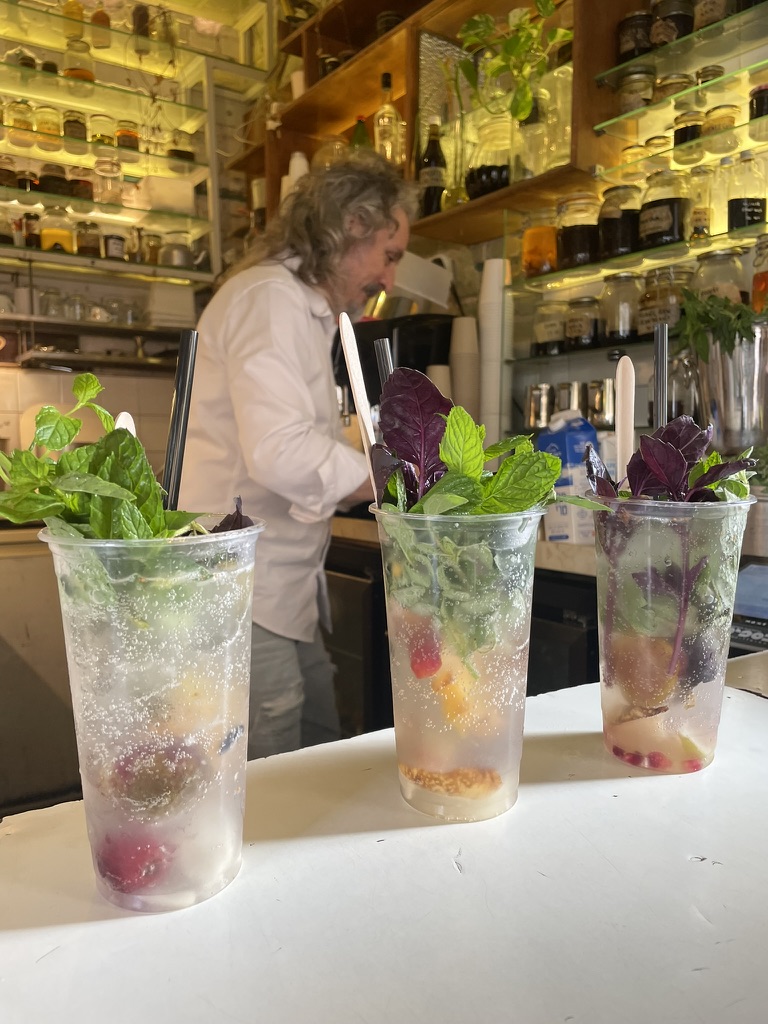
If Levinsky Market has a single drink that defines it, it’s gazoz, and Cafe Levinsky 41 is where you go to experience it. Gazoz is an old Israeli sparkling drink (the name comes from the French eau gazeuse) that nearly disappeared before being revived and reinvented as something closer to a craft cocktail, minus the alcohol.
At Levinsky 41, each gazoz is built by hand from house-made fruit syrups, fresh herbs, and whatever’s in season. Each glass is built in layers — fruit on the bottom, fresh herbs, house-made syrup, sparkling water on top.
Cafe Levinsky 41 (קפה לוינסקי 41)
Address: Levinsky Street 41, Tel Aviv
For the full story on gazoz and the cafe, I wrote a deep dive on Cafe Levinsky 41 and what gazoz actually is.
Coffee
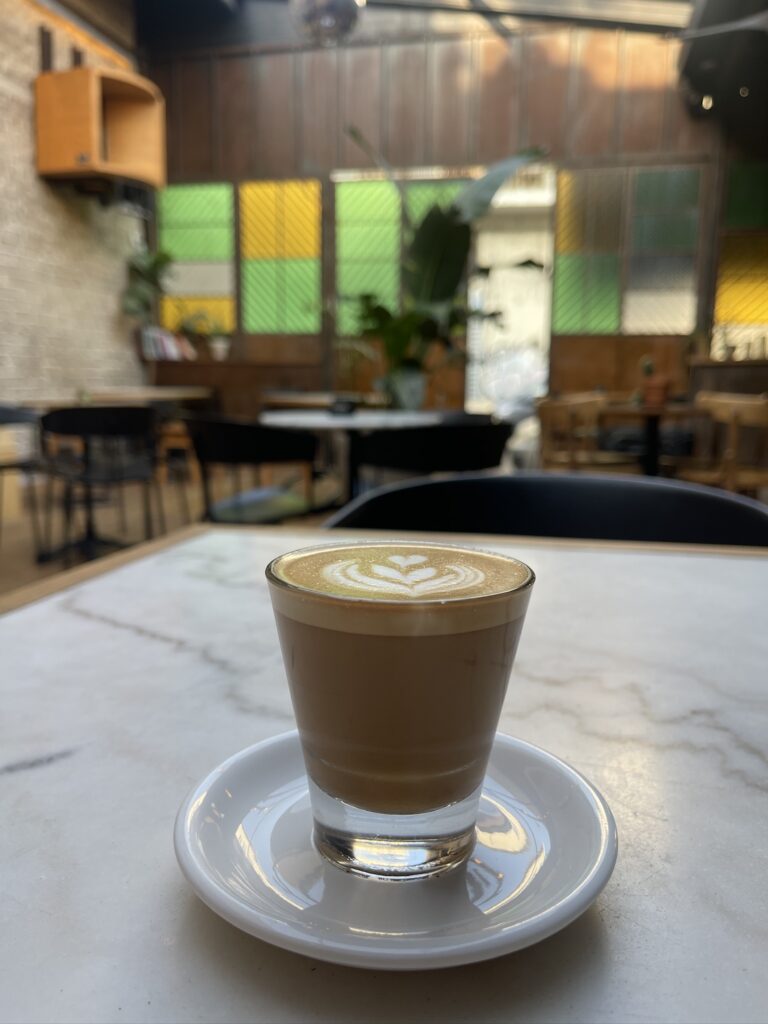
Levinsky has been a coffee neighborhood since long before Tel Aviv discovered pour-overs. Cafe Atlas (mentioned above in the spice section) also roasts coffee, with Sunday morning roasting sessions that are worth timing your visit around.
Cafelix
Cafelix roasts their own beans and has a loyal following among Tel Aviv’s coffee crowd.
Cafelix (קפליקס)
Address: Merchavia Street 6, Tel Aviv
Cafe Yaya
Cafe Yaya on Levinsky does good coffee and great shakes, and the crowd skews twenties and thirties.
Cafe Yaya (יאיא)
Address: Levinsky Street 42, Tel Aviv
Cafe Ada
My favorite cafe in the area. The coffee is amazing, the baristas are knowledgeable and love to talk about it, the playlists are the best in town, and most tables don’t allow laptops, so people actually talk to each other.
Cafe Ada (קפה עדה)
Address: Zevulun Street 9, Tel Aviv
F’ckin Sunday
Newer, spare design, a little pretentious, but the coffee is great and they make the city’s best matcha.
F’ckin Sunday (פאקין סאנדיי)
Address: Levinsky Street 61, Tel Aviv
Cafe Kaymak
Cafe Kaymak at Levinsky 49 is a vegetarian cafe and bar that’s been giving the market its hip edge for years. Good food, mismatched furniture, a decent wine list, and a crowd that’s half Florentin regulars and half people who wandered in from the market.
Cafe Kaymak (קפה קיימאק)
Address: Levinsky Street 49, Tel Aviv
Matti the Curser
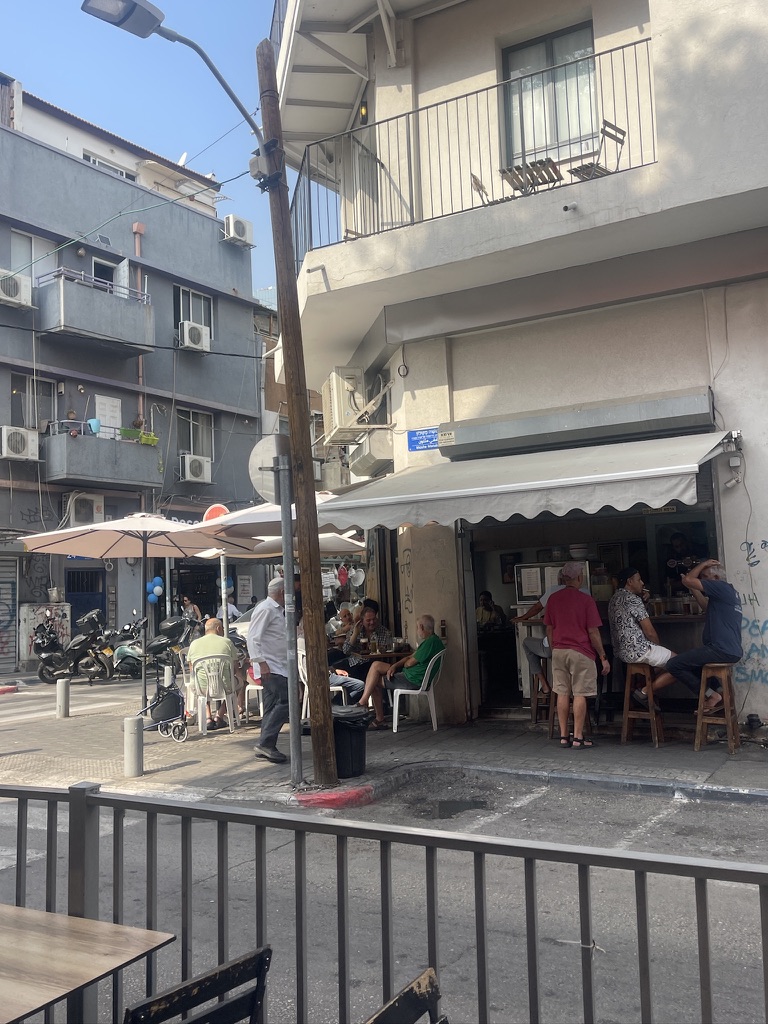
Matti the Curser (Mati Bar) was a Levinsky legend. Matityahu Landstein escaped the Warsaw Ghetto during the uprising and fought alongside partisans in the forests of Poland. He purchased the bar in 1973 and became famous for his colorful curses at customers, which only made people want to come more. He drank a bottle of vodka a day from his partisan years until his death at 90 in 2019. The bar drew Tel Aviv’s bohemian elite: poet Haim Gouri was a regular, as were musicians and writers. Today his grandson Shmulik runs the bar. The afternoons still belong to the kind of people who drink beer and argue about politics.
Matti’s Bar (מאטי המקלל)
Address: Matalon Street 41, Tel Aviv
The Florentin Neighborhood
Florentin is the neighborhood surrounding Levinsky Market in southern Tel Aviv, originally a working-class immigrant area that gradually attracted artists, musicians, and students drawn by cheap rent and the neighborhood’s character. The streets are covered in street art, the restaurants and bars skew local over touristy, and it still functions as a real residential neighborhood worth exploring on foot.
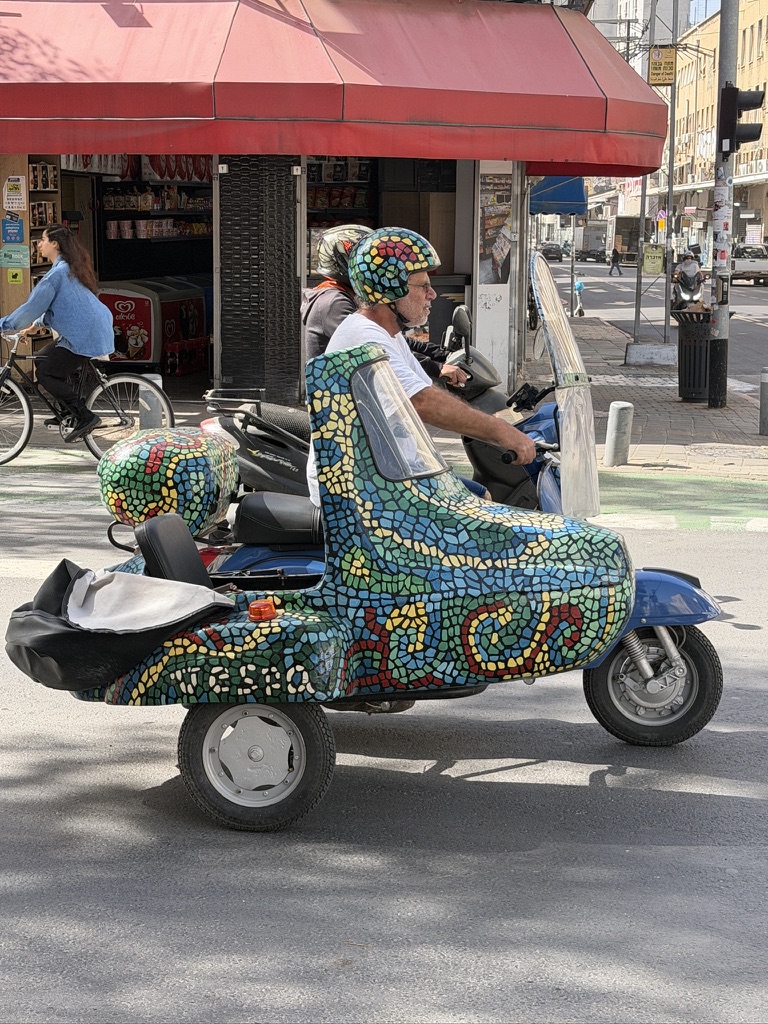
The streets around the market are covered in street art, the bars and restaurants skew local, and it still feels like a real neighborhood. If you have time after the market, walk the side streets. You’ll find murals, tiny restaurants, vinyl record shops, and coffee spots that don’t bother with English menus.
If you’re also visiting Jerusalem, I wrote a guide to what to eat at Mahane Yehuda Market that covers 11 spots, and if kashrut is a priority, my kosher food tour guide covers certifications, mehadrin sourcing, and how I build private tours around your level of observance. For a broader look at markets around the country, here’s my guide to the best markets in Israel.
Practical Information
Levinsky Market is open Sunday through Thursday, with most shops opening around 8:30 to 9:00 AM. Friday hours are shortened for Shabbat and the market is closed on Saturdays. The best time to visit is weekday mornings between 8:00 and 11:00 AM when bakeries are freshest. The market is about 15 minutes on foot from Rothschild Boulevard.
Hours
Most shops and bakeries open around 8:30 to 9:00 AM and close by late afternoon, Sunday through Thursday. Friday the market operates on shortened pre-Shabbat hours, typically closing by early afternoon. Saturday the market is closed.
The restaurants in and around the market keep slightly different hours. Some are open for dinner, especially the newer spots like Gita. Thursday evenings the surrounding Florentin neighborhood comes alive with bars and restaurants.
Best Time to Visit
Weekday mornings, between 8:00 and 11:00 AM, are ideal. The bakeries are at their freshest, the spice shops are fully stocked, and the vendors have time to talk.
Friday mornings are the classic Levinsky experience: the whole neighborhood is shopping for Shabbat and the bourekas lines stretch out the door. But the window is short (most places close by 1:00 or 2:00 PM), so get there early.
Getting There
Levinsky Market is in the Florentin neighborhood of southern Tel Aviv, roughly a 10-minute walk south of the Carmel Market and a 15-minute walk from Rothschild Boulevard. The nearest bus station is the Central Bus Station on Levinsky Street, and the area is well served by buses and taxis. From central Tel Aviv, it’s a short ride or a walk through Florentin, where most of the walls have street art on them.
What to Bring Home
The spice shops are the obvious answer, and a good za’atar blend, a bag of baharat, or saffron imported from Iran will last longer in your kitchen than a magnet on your fridge. Yom Tov Deli sells vacuum-packed cheeses and preserved goods that travel well. Dried fruits and nuts from the market are affordable, high quality, and easy to pack.
Kosher Information
Most food establishments in Levinsky Market hold kosher certification. The bourekas bakeries, delis, and many of the restaurants display their teudat kashrut (kosher certificate). Certification levels vary: some hold Rabbanut (standard rabbinate), others hold mehadrin (the strictest level). If you keep strict kosher, check the specific certification at each place. On my Levinsky Market food tour, I know the kashrut status of every stop and can build the route around your level of observance.
Frequently Asked Questions
What is Levinsky Market known for?
Levinsky Market is Tel Aviv’s historic spice and specialty foods market, located in the Florentin neighborhood. It’s known for its bourekas bakeries (Penso, Puni, and Bourekas Shel Ima), spice shops selling za’atar, baharat, sumac, and other Middle Eastern blends, artisanal gazoz drinks at Cafe Levinsky 41, traditional delis like Yom Tov and Lupo, Persian restaurants, chef-driven skewer houses, alongside the old-school vendors who’ve been here for decades, all reflecting the Greek, Turkish, Persian, Bulgarian, and Yemenite communities that built the market over the past century.
What are the best things to eat at Levinsky Market?
Start with bourekas at Penso (get the spinach), visit Yom Tov Deli for the kaymak stuffed dates, and try a gazoz at Cafe Levinsky 41. For sit-down meals, Gita serves chef-driven skewers and Gourmet Sabzi does home-style Persian food with no menu and daily-changing dishes. Lupo Fish Deli is a must for anyone who loves smoked and cured fish. Sabich from one of the street stands is essential if you’ve never tried it.
What are the Levinsky Market opening hours?
Most shops open between 8:30 and 9:00 AM, Sunday through Thursday, and close by late afternoon. Friday hours are shortened for Shabbat, with most places closing by early afternoon. Saturday the market is closed. Some restaurants in the area keep evening hours, especially on Thursdays.
Is Levinsky Market better than Carmel Market?
They’re different experiences. Carmel Market is bigger, louder, and more of a classic produce-and-everything market. Levinsky is smaller, more focused on specialty foods, spices, and bakeries, and it has more family-run shops that go back two or three generations. Carmel draws more tourists. Levinsky draws more locals. If you have time for both, do both, but if you want the food stories and the cultural depth, Levinsky is where I’d send you. I cover both in my guide to the best markets in Israel.
Can I take a food tour of Levinsky Market?
Yes. I run private food tours through Levinsky Market for couples, families, and small groups. The tour runs about 2.5 hours and covers the bakeries, spice shops, delis, and restaurants with the stories and history behind everything you eat. All food and drink included.
Is Levinsky Market kosher?
Most food establishments in the market hold kosher certification. Certifications vary by vendor, from Rabbanut (standard) to mehadrin (strictest). All the stops on my food tour are kosher certified, and I can build the route around specific kashrut requirements if needed.
How do I get to Levinsky Market from central Tel Aviv?
The market is about a 15-minute walk south from Rothschild Boulevard, or a 20-minute walk from Carmel Market. You can also take a taxi, bus, or scooter. The Central Bus Station is right on Levinsky Street. From the beach hotels, it’s about a 20-minute taxi ride.
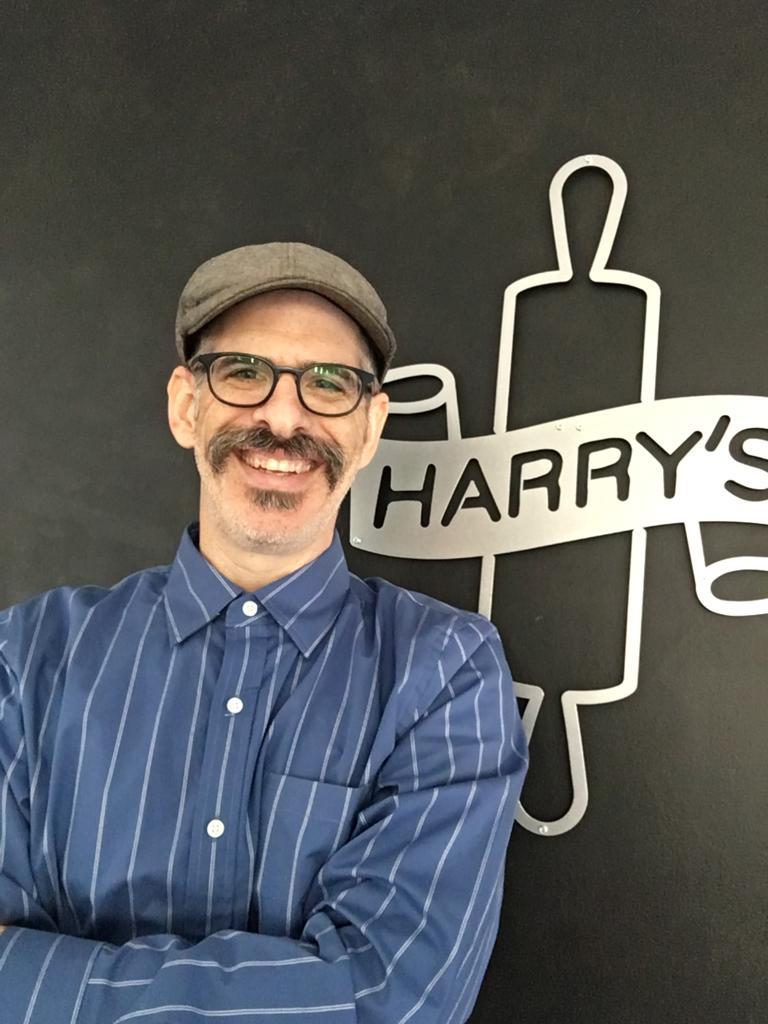
Harry Rubenstein is a pastry chef, food writer, and food tour guide based in Israel. A graduate of Bishulim Culinary Institute, he leads private food tours through Mahane Yehuda in Jerusalem and Levinsky Market in Tel Aviv. His writing on Jewish food history appears in The Nosher.
Read more about Harry →