Israel’s food markets aren’t just places to buy groceries. They’re living history – every stall tells a story of immigration, of families who brought recipes from Iraq, Tunisia, Yemen, Kurdistan, Morocco, and Greece, and planted them in the soil of a new country. Walk through any shuk in Israel and you’re walking through a century of culinary memory.
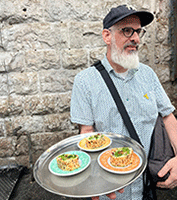
I’ve spent over twenty years in these markets – first as a customer, then as a culinary school student, and now as a food tour guide. Some of these shuks I visit weekly. Others I seek out on road trips when I want to taste something I can’t find anywhere else. Every market in Israel has its own personality, its own signature dishes, and its own cast of vendors who’ve been doing this for generations.
This guide covers eight of my favorites, from the well-known to the ones most visitors never hear about. If you’re planning a food trip to Israel, start here.
A note on scope: this guide is about shuks – traditional ingredient-and-street-food markets. I’m not covering gourmet halls like Sarona Market, craft fairs like Nahalat Binyamin, or flea markets like the Jaffa Flea Market. Those are great, but they’re a different kind of experience.
1. Mahane Yehuda Market, Jerusalem — The One Everyone Knows
| Quick Facts — Mahane Yehuda | |
|---|---|
| Location | Between Jaffa Street and Agripas Street, Jerusalem (adjacent to Nachlaot) |
| Founded | Late 1800s informally; formalized under British Mandate in the late 1920s |
| Size | 250+ vendors |
| Hours | Sun–Thu 8am–7pm, Fri 8am–3pm. Bars and restaurants open late. |
| Best day | Thursday for full selection; Friday morning for pre-Shabbat energy |
| Known for | Bourekas, kubbeh, halva, rugelach, Jerusalem mixed grill, fresh juices |
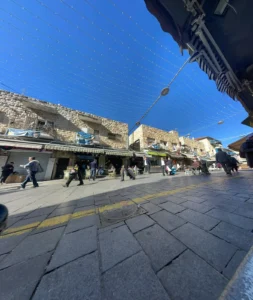
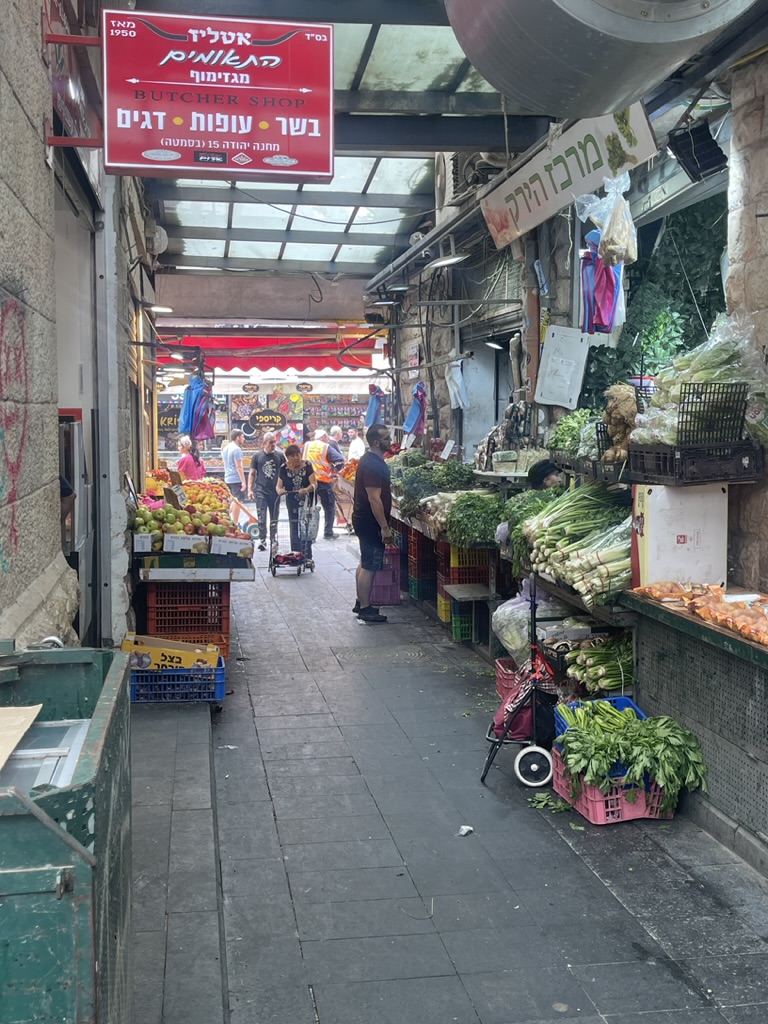
Mahane Yehuda is Jerusalem’s beating heart. Over 200,000 people pass through each week, and many of the spice and produce vendors are second- or third-generation stall owners whose families have been here since the market’s early days. The market sits at the crossroads of every community in Jerusalem — Sephardi, Ashkenazi, Kurdish, Iraqi, Ethiopian, and more — and the food reflects all of it.
What makes the shuk special isn’t just the food, though. It’s the layering. Arab farmers from nearby villages began selling produce on open land owned by the Valero family in the late 19th century. Under Ottoman rule, the market expanded haphazardly. Then came the British Mandate, which cleared the old stalls and built permanent ones with proper roofing in the late 1920s. In 1931, twenty traders built a new section to the west — it became known as the Iraqi Market after the Iraqi-Jewish merchants who set up shop there, and the name stuck. After 1948, waves of immigration from across the Middle East and North Africa filled every corner with new flavors.
What to Eat
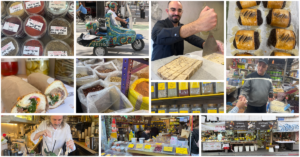
Start with kubbeh — the Kurdish-Jewish dumpling soup that’s become one of Jerusalem’s defining dishes. You’ll find it in the stalls tucked into the older parts of the market, served in beet broth or lemon broth depending on the family’s tradition. From there, try bourekas from any of the bakeries that have been turning them out since before you were born, and pick up a slab of halva from one of the sesame specialists — pistachio, chocolate, or classic tahini.
For a sit-down meal inside the market, Azura has been serving traditional Kurdish-Turkish home cooking since 1952, when its founder Ezra Shrefler — a Turkish-Jewish immigrant from Diyarbakir — opened a workers’ restaurant in the shuk. Their slow-cooked beef sofrito, kibbeh, and stuffed vegetables are worth the wait for a table.
In the mid-2000s, the market’s traditional fabric began to shift as the market began its transformation into a destination for foodies.
Taste Mahane Yehuda With a Local Guide
My private Mahane Yehuda food tour takes you behind the stalls — to the vendors, the stories, and the dishes most visitors walk right past.
2. Levinsky Market, Tel Aviv — The Market Tourists Miss
| Quick Facts — Levinsky Market | |
|---|---|
| Location | Levinsky Street, Florentin neighborhood, Tel Aviv |
| Founded | 1920s–1930s (Sephardic Jewish immigrants from Thessaloniki) |
| Size | Several blocks of specialty shops and stalls |
| Hours | Sun–Thu 8am–6pm, Fri 8am–3pm |
| Best day | Tuesday–Thursday for the widest selection |
| Known for | Spices, dried fruits, Sephardic pastries, Persian nuts, gazoz, halva |
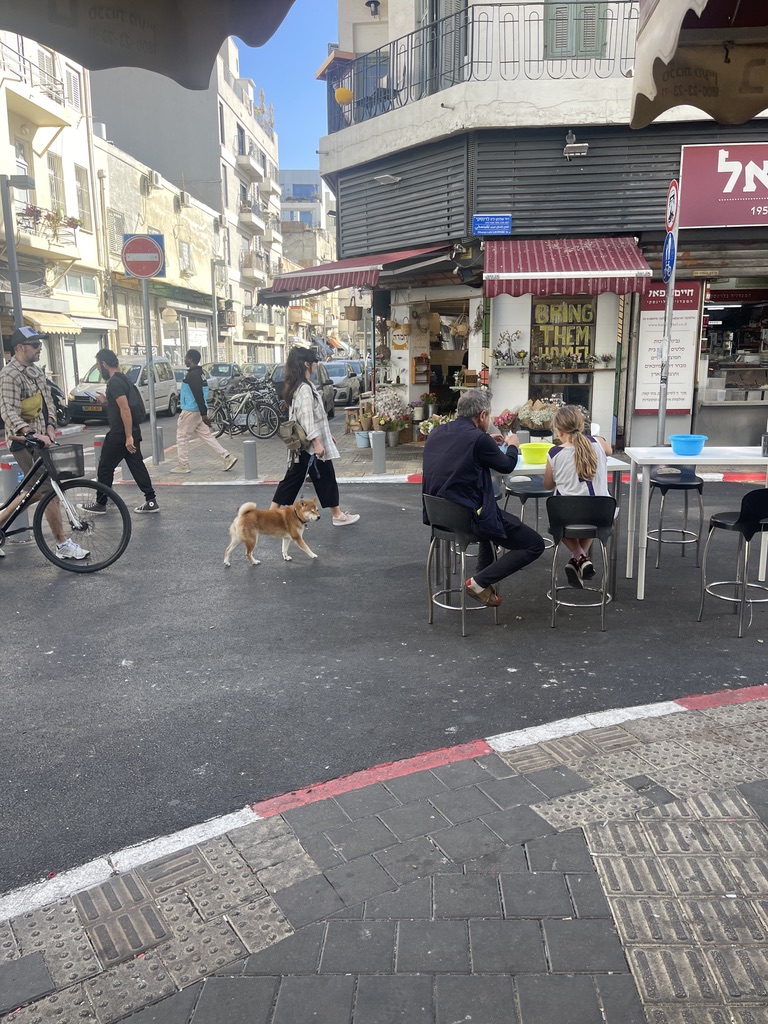
While most tourists in Tel Aviv head straight to the Carmel Market, locals know that Levinsky is where the real food is. This cluster of specialty shops in the Florentin neighborhood was built by Sephardic Jewish immigrants from Thessaloniki (Salonika) in the 1920s and 30s, and it still carries the flavor of that origin story — Balkan, Ottoman, Mediterranean, with layers of Iraqi, Yemenite, and North African influence added over the decades.
Levinsky isn’t a traditional produce market. It’s a street of specialists. One shop has been selling nothing but spices for three generations. Another does only dried fruits and nuts. There are family-run delis serving Turkish-Jewish cold cuts, Sephardic pastry shops turning out bourekas, and Persian dried fruit and nut specialists with bins stacked floor to ceiling.
What to Eat
The essential Levinsky experience starts with gazoz at Cafe Levinsky 41 — the tiny kiosk that single-handedly revived Israel’s forgotten sparkling drink. From there, walk the spice shops (the aromas alone are worth the trip), pick up bourekas from one of the Sephardic bakeries, and try the halva — Levinsky is famous for it, with varieties you won’t find anywhere else in the country.
The Yom Tov Delicatessen is a must-stop: a long-running Turkish-Jewish delicatessen that remains family-run, selling cured meats and prepared dishes that trace back to Istanbul.
Explore Levinsky Market With a Local
My private Levinsky food tour takes you through six generations of immigrant food stories — from the Sephardic founders to the latest wave of artisan vendors.
3. Carmel Market (Shuk HaCarmel), Tel Aviv — The Big, Loud Classic
| Quick Facts — Carmel Market | |
|---|---|
| Location | Between Allenby Street and Magen David Square, central Tel Aviv |
| Founded | 1920 |
| Size | Tel Aviv’s largest market — one long street plus side alleys |
| Hours | Sun–Fri, roughly 8am to sundown. Friday is busiest. |
| Best day | Tuesday or Wednesday for a local feel; Friday for the full circus |
| Known for | Fresh produce, Bourekas, sabich, brik, juice bars, halva, street food |
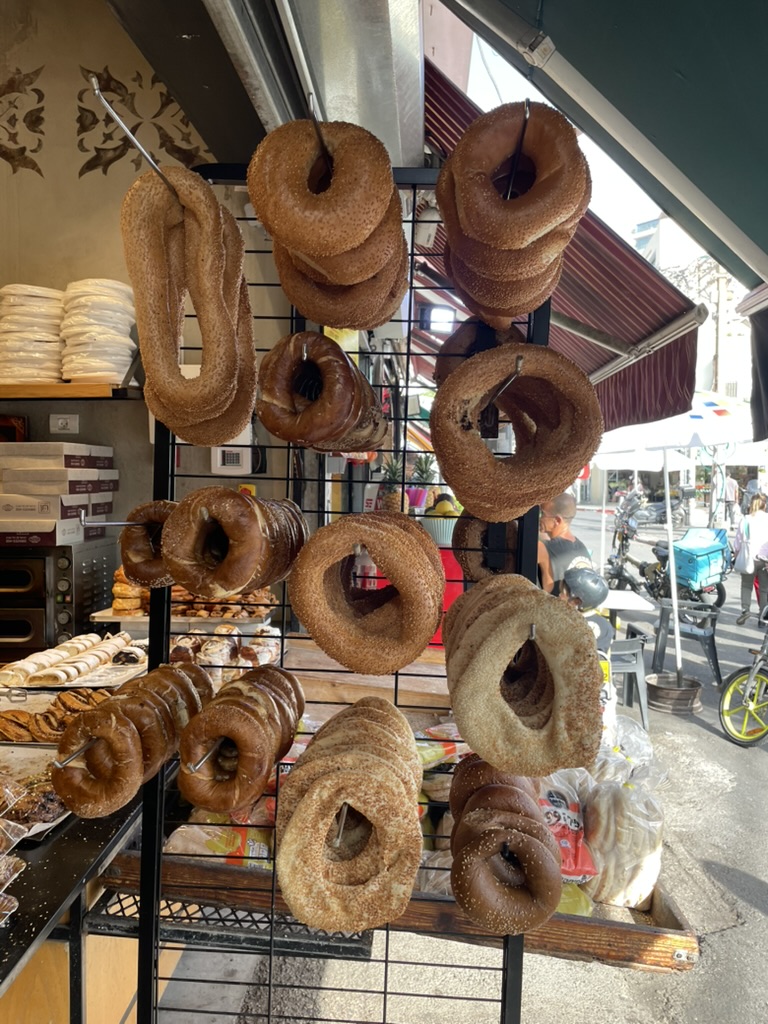
The Carmel Market is the shuk most visitors encounter first — it’s big, it’s central, it’s loud, and it’s impossible to miss. Running south from Magen David Square along roughly 450 meters of Carmel Street, Shuk HaCarmel has been Tel Aviv’s main market since 1920. It’s the city’s original melting pot, with stalls run by families whose roots stretch from North Africa to Eastern Europe to the Yemenite Quarter just next door.
The market’s origins are tied to the Kerem HaTeimanim (the Yemenite Quarter) neighborhood beside it. In the early 1920s, Russian Jewish immigrants began trading on this stretch of road, with the help of Zionist leader Arthur Ruppin. Mayor Meir Dizengoff saw the potential, formalized the layout, renamed it Shuk HaCarmel, and allowed permanent structures. By the 1930s the market was already a flashpoint — Arab farmers opened a competing market nearby, and tensions between Arab and Jewish vendors spilled into violence that continued through the War of Independence.
The Carmel survived it all. During Israel’s austerity period in the 1950s, the shuk became the best place to find fresh food that couldn’t be had through rations. Attempts by the city to relocate the market in the 1960s and 70s failed — locals wouldn’t let it move. The market even entered Israeli slang: the comedy trio HaGashash HaHiver coined the phrase “cheaper than the Carmel Market.” In 2004, a suicide bombing killed three people here. The shuk carried on. That resilience is the Carmel in a nutshell.
In recent years, the Carmel has gone through a new transformation. Boutique coffee bars, chef-driven food stalls, and gourmet delis have opened alongside the traditional produce vendors. The adjacent Nahalat Binyamin street — where artists and craftspeople sell on Tuesdays and Fridays — has merged with the market into a full-blown food and culture destination. And the old Kerem HaTeimanim quarter, with its narrow stone alleys and Yemenite restaurants, is just steps away.
What to Eat
Start at Bourekas Turki Original (HaCarmel 39) — a multi-generational stall that’s been here longer than most of the market’s current vendors. The bourekas are flaky, greasy in the best way, and gone by midday. A few steps up the street, HaBurika (HaCarmel 42) does Tunisian-style brik — thin, crispy pastry filled with egg and mashed potato, fried to order and served in pita with salad, tahini, and hot sauce. You’ll hear the owner shouting “burika burika burika!” before you see the stall.
Hummus HaCarmel (HaCarmel 11) is hidden behind the vegetable stalls in what looks like a synagogue — stained glass windows, Judaic texts on the walls, and a Torah scroll on display. The owner’s family ran a hummusiya in Kerem HaTeimanim for 60 years before moving into the market. Further down, Carmel 40 (HaCarmel 40) — the fish stall run by the Rostom seafood family — serves chef-quality grilled fish and their iconic fisherman’s sandwich, a crispy Turkish-style balik ekmek with whole sea bream, greens, and lemony aioli.
For something quick, Sabich Tchernikhovski (Allenby 45, at the market entrance) has been serving what many consider the best sabich in Tel Aviv since 2007 — fried eggplant, egg, potato, amba, all layered in pita. And HaMalabiya (Gdara 28, near the monastery) does one thing — malabi, the rose-scented milk pudding — in classic and vegan versions, with your choice of toppings.
The Carmel has also become a proving ground for Tel Aviv’s contemporary food scene. Angelino (Rabbi Akiva 20) rolls hand-made tacos on blue corn tortillas. OSU (Hillel HaZaken 18) does Japanese-American smash burgers with pickled toppings and udon noodles. Beer Bazaar (Yishurun 36) has been pouring Israeli craft beers since 2013. The traditional and the trendy exist side by side, and somehow it works.
The end of the day is its own experience: vendors slash prices to clear their stalls before closing, and you can walk away with bags of produce at steep discounts. And when you’ve had enough of the Carmel’s crowds, duck into one of the Yemenite restaurants in Kerem HaTeimanim for jachnun, kubaneh, and merakh ragel (foot soup) — quiet, authentic, and a world away from the tourist energy next door.
For a deeper dive into Tel Aviv’s food scene beyond the Carmel, check out my Levinsky Market food tour — a more intimate, less touristy alternative.
4. HaTikva Market, Tel Aviv — The Iraqi-Yemenite Soul of the City
| Quick Facts — HaTikva Market | |
|---|---|
| Location | HaTikva neighborhood, southeast Tel Aviv (main entrance from Etzel Street at HaTikva Street) |
| Founded | 1930s (Iraqi and Yemenite Jewish immigrants) |
| Size | Two main streets plus side alleys |
| Hours | Sun–Thu 6:30am–7pm, Fri 5:30am until ~2 hours before Shabbat |
| Best day | Friday morning — farmers’ market sets up alongside permanent stalls |
| Known for | Iraqi kebab, Yemenite bread (kubaneh, jachnun, saluf), faloodeh, lafa, kubba |
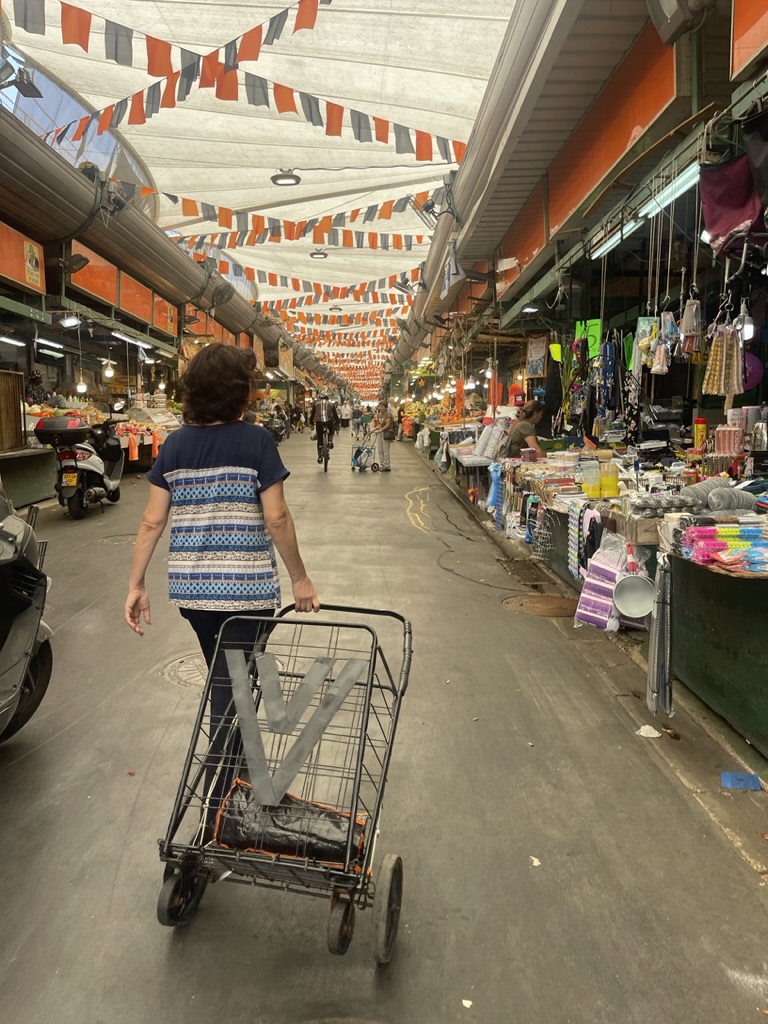
If Levinsky is the market tourists miss, HaTikva is the one they’ve never heard of. Tucked into the working-class HaTikva neighborhood in southeast Tel Aviv, this market has been running for close to ninety years — built by Iraqi and Yemenite Jewish immigrants in the 1930s, and still carrying their culinary DNA in every stall. This is the neighborhood that produced Ofra Haza, and the food here has the same kind of deep, unpolished soul.
HaTikva isn’t trying to charm you. There are no craft cocktail bars or Instagram-ready storefronts. What there is: family-run kebab joints that have been grilling on the same spot for fifty years, Yemenite bakeries turning out kubaneh at dawn, Iraqi lafa bread pulled from taboon ovens that have been firing since the 1980s, and spice merchants blending hawaji the way their grandparents did in Baghdad.
What to Eat
Start at HaSaluf, the Yemenite restaurant and bakery at the market’s main entrance. Yaakov Tzuberi has been running it for over twenty years, serving jachnun, kubaneh, saluf, lahuh, and soups that taste like a Yemenite grandmother’s kitchen. The kubaneh — slow-baked overnight, slightly sweet, like a Yemenite brioche — sells out every Friday morning.
From there, walk into the grill alley. HaTikva’s shipudiyot (kebab houses) are legendary — plates loaded with kebab, grilled onions, amba, hot sauce, and fresh Iraqi pita, at prices that feel like a time warp. One Aleppo-origin grill house has been in the same alley for over fifty years with its own butchery.
Don’t skip the faloodeh — a Persian iced drink made with rose water and rice noodles. One family-run stand has been making it here for decades — if the founder is around, you may see him still supervising the operation. And for spices, Naama Spices is a treasure chest of house blends — Yemenite hawaji for soups, Iraqi hawaji for baking, and amba powder you won’t find anywhere else.
HaTikva recently underwent a renovation, but the character hasn’t changed. This is still a market that feeds a neighborhood, not one that caters to visitors. That’s what makes it worth the trip.
5. Ramle Market — Where Everything Meets
| Quick Facts — Ramle Market | |
|---|---|
| Location | Central Ramle, near the Grand Mosque on King Solomon Blvd |
| Founded | Ottoman era (renovated under British Mandate) |
| Vibe | Mixed Israeli-Arab market, off the tourist trail |
| Hours | Sun–Fri. Wednesday is the big day (outdoor expansion). Friday for Shabbat shopping. |
| Best day | Wednesday — the traveling market sets up alongside the permanent stalls |
| Known for | Tunisian sandwiches, bourekas, hummus, Indian spices, bargain prices |
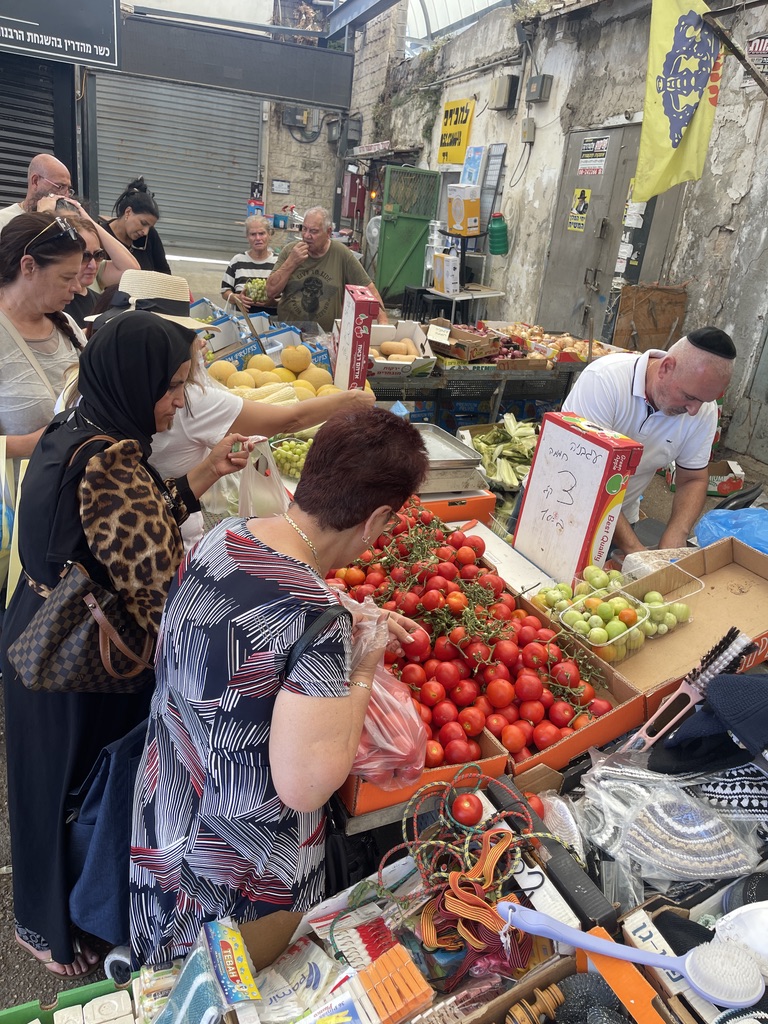
If you want to see what an Israeli market looked like before the renovation wave hit Jerusalem and Tel Aviv, go to Ramle. This is the market that time forgot — loud with vendor calls and Middle Eastern music, stacked with spices and produce, and completely free of tourists. Ramle’s shuk has roots in the Ottoman Empire, was renovated under the British Mandate, and has been running without interruption ever since.
What makes Ramle unique is its demographic: this is one of Israel’s truly mixed markets, with Jewish and Arab vendors side by side. The food reflects that — you’ll find Tunisian, Iraqi, Indian, and Arab Palestinian cuisines within a few steps of each other.
What to Eat
The market morning starts at Eli’s Tunisian sandwich stand — a baguette or fricassee bun stuffed with tuna salad, hard-boiled egg, sliced tomatoes, potatoes, matbucha, and spicy harissa. Simple ingredients, but the combination is unforgettable. In the alleys around the market, Hummus Khalil serves some of the best hummus in the country (not just Ramle — the country), and Maharaja is a vegetarian Indian restaurant and spice shop that’s become a destination in its own right.
On Fridays, head to the Paprika Indian spice shop, which serves cooked food alongside its retail operation. And don’t miss Bourekas Baba near the parking entrance — a multi-generational stand with Turkish-Izmir roots that’s been here for decades. Locals line up for them, and they sell out fast.
Ramle is also one of the cheapest markets in Israel. If you’re stocking a kitchen, this is where to do it.
6. Talpiot Market, Haifa — The Northern Gem
| Quick Facts — Talpiot Market | |
|---|---|
| Location | Sirkin Street, Hadar HaCarmel neighborhood, Haifa |
| Founded | 1940 (International/Bauhaus-style building by architect Moshe Gerstel) |
| Vibe | Indoor market with restaurants, galleries, and a brewery |
| Hours | Sun–Thu 8:00am–5:30pm, Fri 7:00am–3:30pm. Closed Saturday. |
| Best day | Thursday or Friday morning |
| Known for | Fresh fish from Haifa port, sabich, shawarma, boutique beer, Jezreel Valley produce |
Haifa’s Talpiot Market is the one I always recommend to people who’ve already done the Tel Aviv and Jerusalem circuit. Housed in a striking 1940 building designed by architect Moshe Gerstel in the International/Bauhaus style — his design was chosen from 96 competition entries — the market sits in the Hadar HaCarmel neighborhood and feels like it belongs in a different country entirely. Quieter, more curated, and with a food scene that reflects Haifa’s unique cultural mix of Jewish, Arab, Druze, and Bahai communities.
For decades, Talpiot was a straightforward produce market — a place where Haifa’s residents bought their fruit, vegetables, and fish. The building, with its preserved Bauhaus facade, was a local landmark but not a destination. That changed around 2015, when chef Ilan Ferron opened Talpiot Hamara, a restaurant built around the idea of cooking with ingredients sourced directly from the market stalls and local fishermen. Ferron’s arrival triggered a chain reaction: other restaurants, bars, cafes, and galleries followed, and within a few years the market had transformed into one of Haifa’s most exciting culinary neighborhoods.
The produce still comes from the farms of the Jezreel Valley, the Galilee, and the Shomron — some of the most fertile agricultural land in Israel. Fresh fish arrives daily from Haifa’s port, which means the seafood here is better than what you’ll find at any inland market. And the new wave hasn’t pushed out the old guard: traditional spice merchants, pickled vegetable vendors, and dried fruit stalls still anchor the market alongside the newcomers.
What to Eat
The sabich at Talpiot is legendary — fried eggplant, hard-boiled eggs, tahini, and amba (pickled mango sauce) in a pita, done right. Talpiot Hamara is the anchor restaurant — small plates of seafood (mussels marinara, fried calamari with ricotta, seasonal fish) served in the kind of setting that feels like a neighborhood secret. Arabesque, co-owned by Akram Abed and Idan Madev, serves modern Arab home cooking built on Amal’s family recipes — fresh market ingredients and zero pretension. Their motto: “100% home, no flattery.”
Bon Cha, a Thai restaurant that opened more recently, brought authentic Bangkok flavors to the market — the green curry is the standout. La Mexicana does tacos and burritos in a half-open courtyard with live music on Thursday nights. And Pizza Talpiot, run by chef Tomer Abergil, is considered one of the best Italian restaurants in Israel — serious pasta, gnocchi, and wood-fired pizza with a terrace view.
On the traditional side, stop by the on-site brewery for a craft beer, or pick up a slab of knafeh from Knafe Talpiot — fresh, warm, and with house-made ice cream. The market’s graffiti-covered metal shutters have become their own attraction, reminiscent of Mahane Yehuda’s street art. Thursday evenings and Friday mornings are when the market is most alive.
If you’re already in Haifa, Wadi Nisnas Market — in the Arab neighborhood between Hadar and the German Colony — is worth the walk. It’s smaller and more neighborhood-focused, but the hummus, knafeh, and fresh-baked flatbread are excellent, and the December Holiday of Holidays festival fills the streets with food stalls and art.
7. Petach Tikva Market — The Middle Eastern Time Capsule
| Quick Facts — Petach Tikva Market | |
|---|---|
| Location | Central Petach Tikva (10 km northeast of Tel Aviv) |
| Layout | Two long streets forming a Y-shape, partially covered |
| Vibe | Unrenovated Middle Eastern market — the real deal |
| Hours | Sun–Fri (vendors thin on Sundays). Covered, so open rain or shine. |
| Best day | Tuesday or Thursday. Friday evening for pre-Shabbat deals. |
| Known for | Yemenite bakeries, Iraqi food, fresh fish, Russian bread, rock-bottom prices |
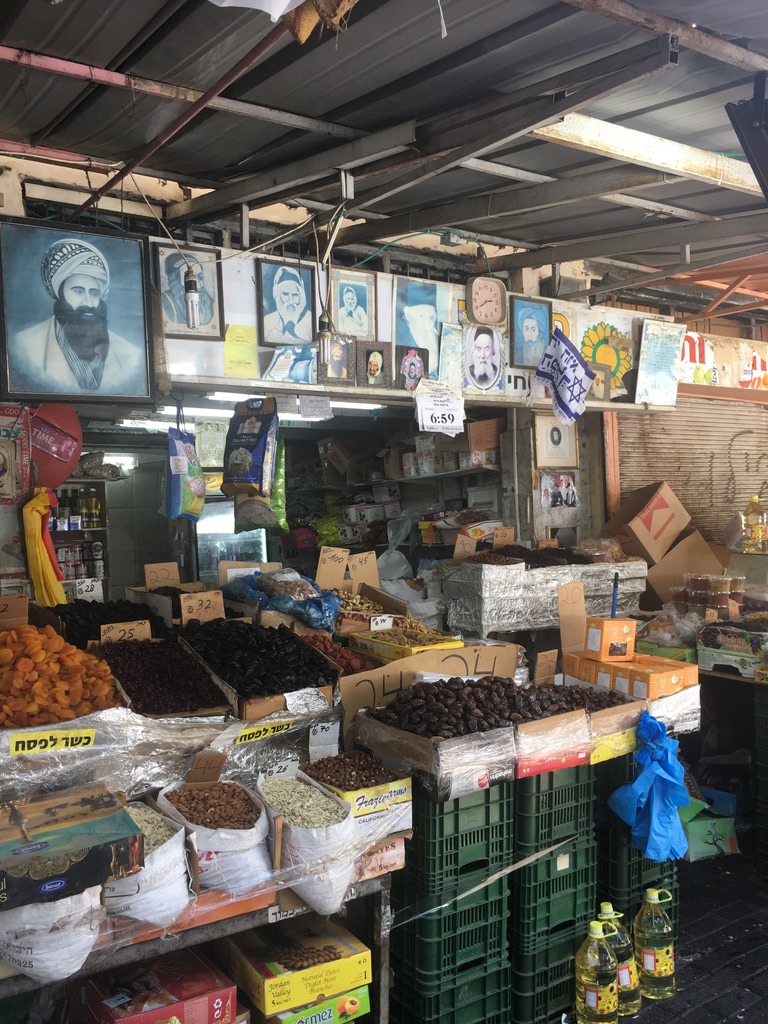
While most of Israel’s major markets have been adding third-wave coffee shops, cocktail pop-ups, and Instagram-friendly lighting — Petach Tikva’s shuk has stayed exactly where it is. This is a Middle Eastern market in the truest sense. Loud. Crowded. Unpolished. And the food is remarkable.
The market sits in the center of Petach Tikva, a city with a claim to history that predates Tel Aviv by decades. Petach Tikva — “Door of Hope” in Hebrew — was founded in 1878 as the first Jewish agricultural settlement in the Land of Israel, earning the title “Mother of the Moshavot.” The early settlers, Orthodox Jews from Jerusalem, drained swamps, fought malaria, and nearly failed before Baron Edmond de Rothschild intervened with funding and agricultural expertise in 1883. The city was officially recognized in 1937 and today is home to over 250,000 people.
The market reflects that layered history. Two covered streets form a Y-shape, lined with butchers, fishmongers, spice sellers, and bakeries. The surrounding blocks add another layer of restaurants and specialty shops. Waves of immigration — Iraqi, Yemenite, Russian, Ethiopian — each left their mark on the stalls. It’s not a market that’s trying to attract tourists. It’s trying to feed a city, and it does that exceptionally well.
What to Eat
The Yemenite bakery at the entrance is the first stop. Yemenite bread — kubaneh, malawach, jachnun — is one of Israel’s great contributions to the global food canon, and this is the place to get it fresh. From there, explore the Iraqi food stalls, which serve dishes you genuinely cannot find anywhere else outside of an Iraqi-Jewish grandmother’s kitchen — kubba, sambusak, and tbit (Iraqi Shabbat stew) with the baharat spice blend that’s been mixed the same way for generations.
The freshly baked burek stalls are worth seeking out — hot puff pastry stuffed with potato or cheese, pulled from the oven while you wait. The fishmongers and butchers in and around the shuk are considered some of the best in the greater Tel Aviv area, and the prices are consistently lower than what you’d pay at any supermarket. Russian bakeries sell dense, fragrant black bread. And on Friday afternoons, as vendors race to close before Shabbat, prices drop sharply — come hungry and bring bags.
Petach Tikva’s shuk is also entirely covered, which means it’s one of the few markets you can visit comfortably in any weather — rain, hamsin, or the middle of an August afternoon.
8. Netanya Market — North African Soul on the Coast
| Quick Facts — Netanya Market | |
|---|---|
| Location | City center, Netanya (coastal city north of Tel Aviv) |
| Founded | Late 1950s (by North African Jewish immigrants from Libya and Tunisia) |
| Vibe | Coastal market with strong Tunisian-Libyan character |
| Hours | Primarily Tuesday and Friday. Friday is the big day. |
| Best day | Friday morning — peak pre-Shabbat energy |
| Known for | Burika (brik), Tunisian food, fresh coastal fish, seasonal fruits |
Netanya’s market carries the soul of North African Jewry in every stall. Founded in the late 1950s by immigrants from Libya and Tunisia, the shuk was later shaped by waves of Russian Jewish immigration in the 1990s — you’ll still see signs in Hebrew and Russian side by side. More recently, the city’s growing French-Jewish community has added another layer, with French signage now appearing alongside the others. The result is a market that feels distinctly different from anything in Jerusalem or Tel Aviv — more Mediterranean, more relaxed, with a coastal breeze and the kind of North African street food that’s becoming harder to find in Israel’s bigger cities.
Netanya itself is a coastal city north of Tel Aviv that has always been a stronghold of Mizrahi and North African culture. The market is where that culture is most visible — in the spice shops that smell like Tunis, the butchers who prepare meat the Tripolitanian way, and the bakeries turning out traditional pastries for Shabbat. It’s not a large market, but what it lacks in size it makes up for in specificity. If you want to taste the food of the North African Jewish diaspora in its most authentic Israeli form, this is where to come.
What to Eat
The essential stop is Herzl’s Burika — a tiny stand that’s been in the same family for over 60 years, now run by Eli, the third generation. Burika (brik) is a traditional Tunisian and Tripolitanian fast food: paper-thin malsouka dough wrapped around a filling of egg, tuna, or potato and deep-fried until shattering-crisp. The craft of making the dough itself — rolling it razor-thin without tearing — is a disappearing art, mostly passed down by experienced Tunisian cooks. In the 1970s and 80s, brik stands were as common as falafel stands in Israel. Most have disappeared. Herzl’s is still here, still making it the same way, and the queue tells you everything.
The history of brik stretches back centuries — some food historians trace it to southern Tunisia’s Jewish communities, possibly 500 years old. Others attribute it to the Ottoman Turks, whose borek may be the ancestor. Either way, it arrived in Israel with Tunisian Jewish immigrants and became one of the country’s iconic street foods before fading from most markets. Finding it fresh from the fryer at Herzl’s feels like eating a piece of that disappearing history.
Beyond the burika, explore the market’s selection of Tunisian sandwiches, seasonal coastal produce, and prepared Shabbat foods on Fridays. The market doesn’t have the polish of Mahane Yehuda or the trendiness of the Carmel — and that’s exactly the point. Come on a Friday morning for the full pre-Shabbat energy, when vendors are stacking their stalls with challah, salads, and slow-cooked Shabbat dishes for the neighborhood.
Which Market Should You Visit? A Quick Comparison
| Market | City | Best For | Popular With Tourists? | Don’t Miss |
|---|---|---|---|---|
| Mahane Yehuda | Jerusalem | All-rounder — food, nightlife, culture | Very popular | Fried kubbe at Mordoch |
| Levinsky | Tel Aviv | Specialty foods, spices, artisan vendors | Some | Gazoz |
| Carmel | Tel Aviv | Big market experience, street food, produce | Very popular | Sabich |
| HaTikva | Tel Aviv | Iraqi and Yemenite food, grill culture | Rare | Kebab |
| Ramle | Ramle | Authentic mixed market, cheap eats | Rare (best with a guide) | Tunisian sandwich |
| Talpiot | Haifa | Seafood, Bauhaus architecture, local vibe | Growing | Kanafe |
| Petach Tikva | Petach Tikva | Unrenovated Middle Eastern market, Yemenite food | Rare | Yemenite soup |
| Netanya | Netanya | North African food, coastal character | Rare | Burika |
My honest advice: if you’re visiting Israel for the first time, do Mahane Yehuda and one Tel Aviv market (Levinsky if you’re a food person, Carmel if you want the big experience). If you’re coming back and want to go deeper, HaTikva is Tel Aviv’s best-kept food secret — the Iraqi and Yemenite food there is unmatched. For something no tourist will ever see, add Ramle or Petach Tikva to your list. And if you’re heading north to Haifa anyway, Talpiot is worth the detour.
Want a Guide? I Run Private Food Tours.
I lead private food tours through Mahane Yehuda (Jerusalem), Levinsky Market (Tel Aviv), and Ramle. No groups, no scripts — just real food and the stories behind it.
Frequently Asked Questions
Harry Rubenstein is a pastry chef, food writer, and food tour guide based in Israel. A graduate of Bishulim Culinary Institute, he leads private food tours through Mahane Yehuda in Jerusalem and Levinsky Market in Tel Aviv. His writing on Jewish food history appears in The Nosher.
Read more about Harry →