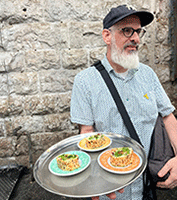
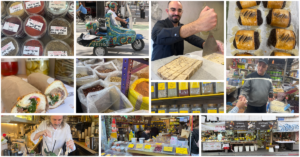
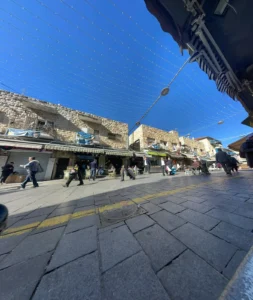
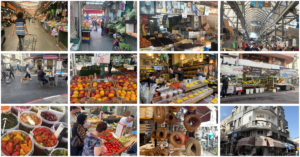
I’ve been leading private food tours through Levinsky Market since 2017, and bourekas are where every tour starts, mainly because the bakeries are right there at the entrance and the fresh trays coming out of the oven make the decision for you. Over the years, I’ve watched hundreds of guests take their first bite of a Levinsky Market boureka, and the reaction when they realize this is nothing like anything they’ve tried at home is one of my favorite parts of the tour.
Levinsky Market has three legendary bourekas bakeries, each with a different story and a different style: Penso, Puni, and Bourekas Shel Ima. I eat at all three regularly, and I’m going to walk you through each one, covering what they make, what to order, and which one is right for you. Whether you’re planning a trip to Tel Aviv or just trying to understand why Israelis are so obsessed with these stuffed pastries (also spelled burekas, more on that later), this is the guide.
In This Guide
- What Are Bourekas?
- The Bourekas Shape Code
- How to Eat Bourekas Like an Israeli
- Penso: The Istanbul Legacy
- Bourekas Shel Ima
- Puni: The Polish Adaptation
- Which Bakery Should You Visit?
- Practical Info
- FAQ
What Are Bourekas?
Bourekas (בורקס) are stuffed pastries made from layers of flaky dough wrapped around a savory filling, most commonly cheese, potato, spinach, or mushroom. They’re baked until golden and eaten hot, usually with an egg and a pickle on the side. If you’ve had Turkish borek, you’ll recognize the family resemblance, because bourekas are the Israeli branch of the tree.
The story starts in the Ottoman Empire. Sephardic Jews living across Turkey, Greece, and the Balkans adopted the borek tradition from their neighbors and made it their own, and when those communities immigrated to Israel in the 1940s and 1950s, many of them arriving from Salonika, Istanbul, and Izmir, they brought their recipes with them. The Salonika immigrants who built Levinsky Market are a big part of that story. By the 1960s, bourekas had spread from immigrant kitchens to bakeries and street stalls across the country.
Today, bourekas are Israel’s most popular street food alongside falafel. You’ll find them in every bus station, every corner bakery, and every office kitchen on a Thursday afternoon, but the best bourekas in Tel Aviv, the ones worth planning your morning around, are still in Levinsky Market, where the tradition took root.
One quick note on spelling: you’ll see “bourekas,” “burekas,” and “borekas” used interchangeably. They’re all the same thing. “Bourekas” is the most common English spelling, and it’s what I’ll use here, but if you search for “burekas tel aviv” you’ll find the same bakeries.
The Bourekas Shape Code
In Israel, the shape of a boureka tells you what’s inside. This isn’t random. It’s a system that developed so customers (and kosher-observant eaters who need to distinguish dairy from pareve fillings) could identify what they’re buying at a glance.
The standard code:
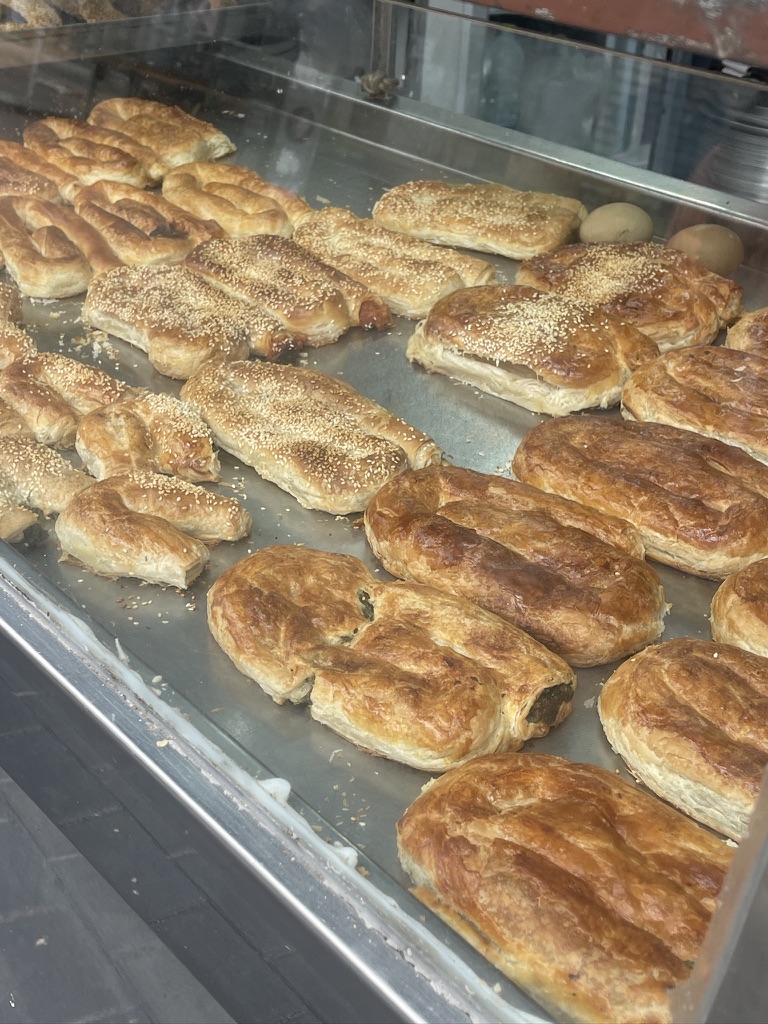
- Triangle — cheese (usually salty white cheese or a cheese blend)
- Rectangle / square — potato
- Round or spiral (coiled) — spinach
- Half-moon / crescent — mushroom
In practice, every bakery has its own variations and house specialties that don’t follow the rules exactly. At Penso, you’ll find shapes and fillings that reflect their Turkish heritage, and at Puni, the shapes lean more Eastern European. The code is a starting point, not a strict law, which is why it helps to know what each specific bakery does well before you order.
If you want to look like you know what you’re doing, just point at what you want and say “echad” (one) or “shnayim” (two). Nobody’s going to quiz you on the system.
How to Eat Bourekas Like an Israeli
Walk into any boureka bakery in Israel and you’ll see the same thing behind the counter or on a small table: a tray of hard-boiled eggs, a bowl of pickled cucumbers, a dish of grated tomato and a healthy dab of schug. These aren’t optional sides, they’re the ritual. Eating a boureka without the accompaniments is like eating sushi without soy sauce: technically possible, but you’re missing the point.
The Accompaniments
Haminado egg — These are eggs that have been slow-cooked for hours, sometimes overnight, until the whites turn creamy tan and the flavor goes deep and almost nutty. In Sephardic tradition, haminado eggs cook inside the Shabbat stew (hamin or cholent) from Friday afternoon until Saturday lunch. Bourekas bakeries serve them peeled and quartered, and you eat them alongside your boureka, alternating bites. The richness of the egg with the salt of the cheese filling is one of the great combinations in Israeli street food.
Pickled cucumbers — Sharp, vinegary, and cold. They cut through the butteriness of the pastry and reset your palate between bites.
Grated tomato — Fresh tomato, grated on the coarse side of a box grater until it’s a rough pulp. You spoon it over the boureka or dip into it, and the acidity and freshness balance the heaviness of the dough.
Schug (s’chug) — A fiery Yemeni hot sauce made from green or red chilies, garlic, and spices. A little goes a long way. Ask for “schug yarok” (green schug) unless you want the red, which is hotter.
The Ritual
Here’s how Israelis do it: you order your boureka (or two, or three, because nobody orders just one), grab a plate, take an egg, take some pickles, and put a spoonful of grated tomato on the side. You tear the boureka open while it’s still hot, add schug if you like heat, and eat everything together. No fork needed, it’s street food and hands are fine.
Friday mornings are when this ritual reaches its peak. The bakeries in Levinsky Market are packed by 9 AM, with families, construction workers, and office employees who took the morning off all lining up for bourekas before Shabbat. If you can time your visit for a Friday morning, do it. Just get there early, because the best fillings sell out.
Penso: The Istanbul Legacy
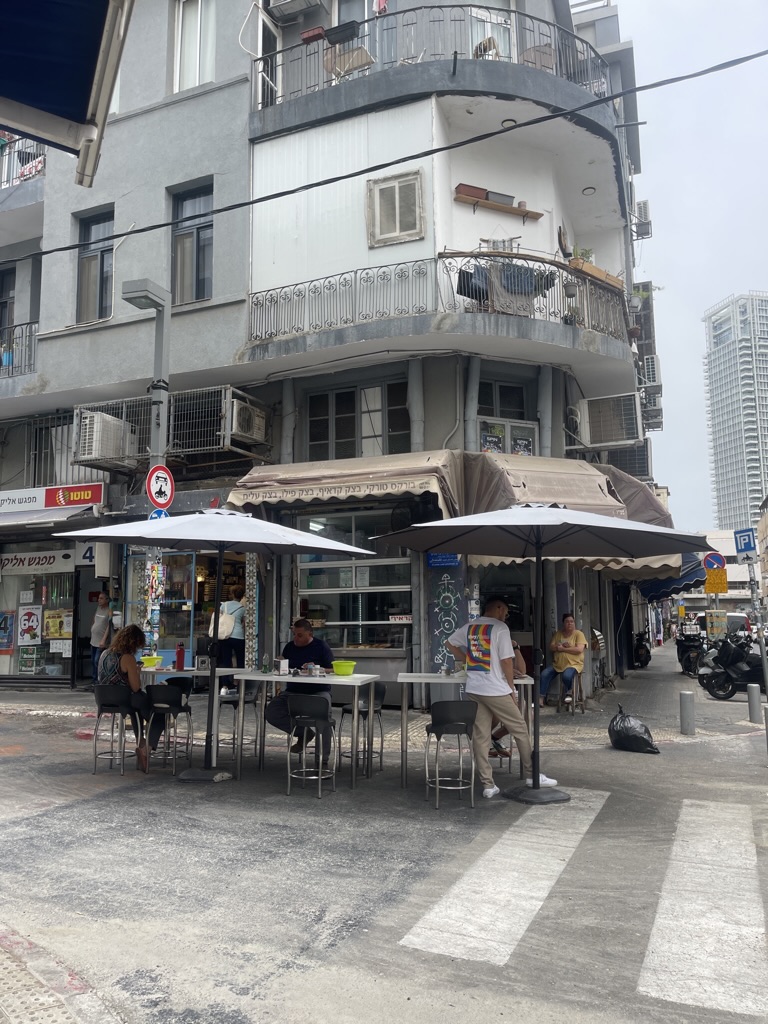
Penso is the bakery I take every single tour group to, and it’s the one that tends to leave the deepest impression.
The Penso family’s story begins in Istanbul, where three generations of bakers carried recipes that trace back to the Sephardic Jewish community of Turkey. When the family came to Israel, they set up shop in Levinsky Market, the same neighborhood where thousands of other Sephardic and Ladino-speaking families from Salonika, Istanbul, and the Balkans were rebuilding their lives. The bakery became an anchor, and it’s still there, still family-run, still turning out bourekas that taste like they belong in a different century.
What Makes Penso Special
The dough. Penso uses a traditional hand-stretched phyllo-style dough for many of their bourekas, thinner and more delicate than the standard puff pastry you’ll find at most Israeli bakeries. When it comes out of the oven, the layers shatter, and you hear it crack when you bite through.
Their kashkaval cheese boureka is the signature. Kashkaval is a semi-hard yellow cheese common in Turkish and Balkan cuisine, salty, sharp, with a slight tang. Wrapped in that thin dough and baked until the cheese melts and the top blisters golden, it’s about as close to a perfect boureka as I’ve found anywhere.
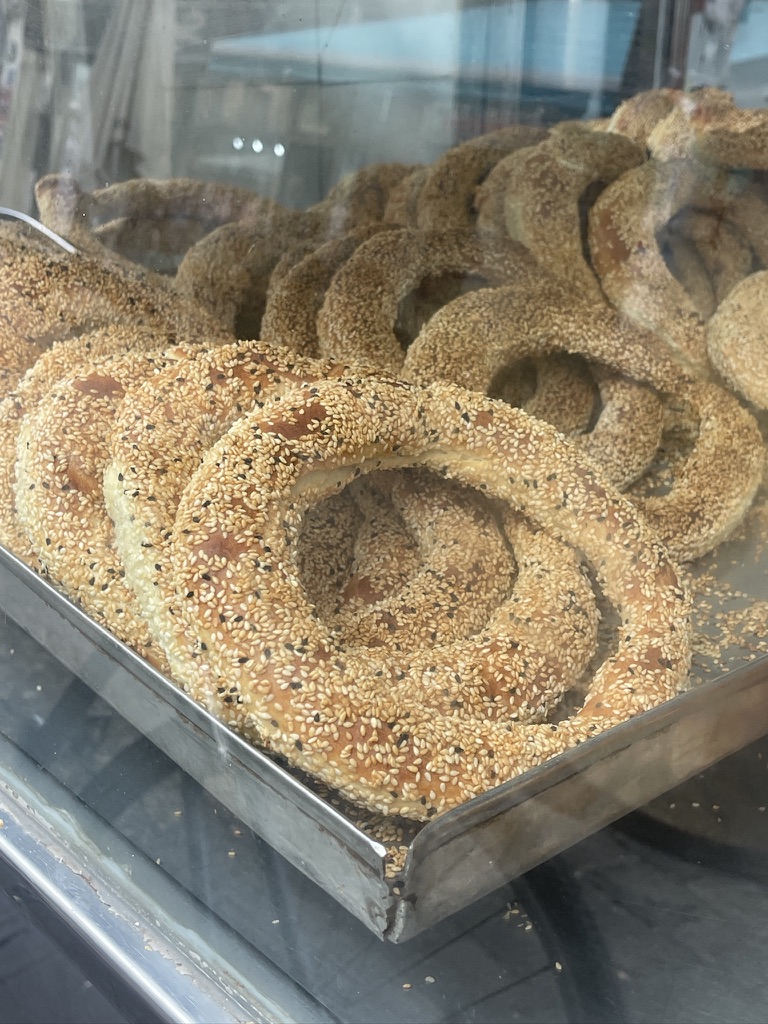
Beyond bourekas, Penso also makes simit (Turkish sesame bread rings) and other Sephardic baked goods that reflect their Istanbul roots, but the bourekas are why you’re here.
What to Order at Penso
- Kashkaval cheese boureka (the essential order)
- Cheese and potato boureka (the crowd-pleaser)
- Simit (if you want to add a sesame bread ring to the mix)
Prices run 12-15 NIS per boureka, depending on size and filling. Cash is easiest, though some vendors now take cards. A boureka, an egg, and a coffee will run you under 30 NIS, which is one of the best breakfast deals in Tel Aviv.
Penso Bourekas
Levinsky Street 43, Tel Aviv
Open Sunday–Friday mornings (closed Shabbat)
Bourekas Shel Ima: Mom’s Bourekas
The name says everything you need to know. “Bourekas Shel Ima” translates to “Mom’s Bourekas,” and that’s exactly the feeling they deliver.
Where Penso leans into its Turkish-Sephardic heritage, Bourekas Shel Ima represents the everyday Israeli boureka experience. This is the kind of bakery that neighborhood regulars visit three times a week without thinking about it, with consistently good bourekas made fresh and sold fast.
What Makes Bourekas Shel Ima Special
The fillings here tend to be generous. The dough is a more classic Israeli puff pastry style, not as delicate as Penso’s hand-stretched phyllo, but buttery and substantial, the kind that holds up when you load it with cheese and potato. The cheese blend they use has a homestyle quality, salty and creamy, the kind of filling that reminds Israeli customers of the bourekas their mothers made for Friday morning breakfast.
There’s usually a good variety of fillings available: cheese, potato, spinach, and sometimes mushroom or mixed combinations. The turnover is fast, which means you’re almost always getting something that came out of the oven recently.
What to Order at Bourekas Shel Ima
- Cheese boureka (their bread and butter, literally)
- Whatever just came out of the oven (ask, they’ll tell you)
Prices are similar to the other Levinsky bakeries, so expect to pay 10-14 NIS per boureka.
Bourekas Shel Ima
Levinsky Street 46, Tel Aviv
Open Sunday–Friday mornings (closed Shabbat)
Puni: The Polish Adaptation
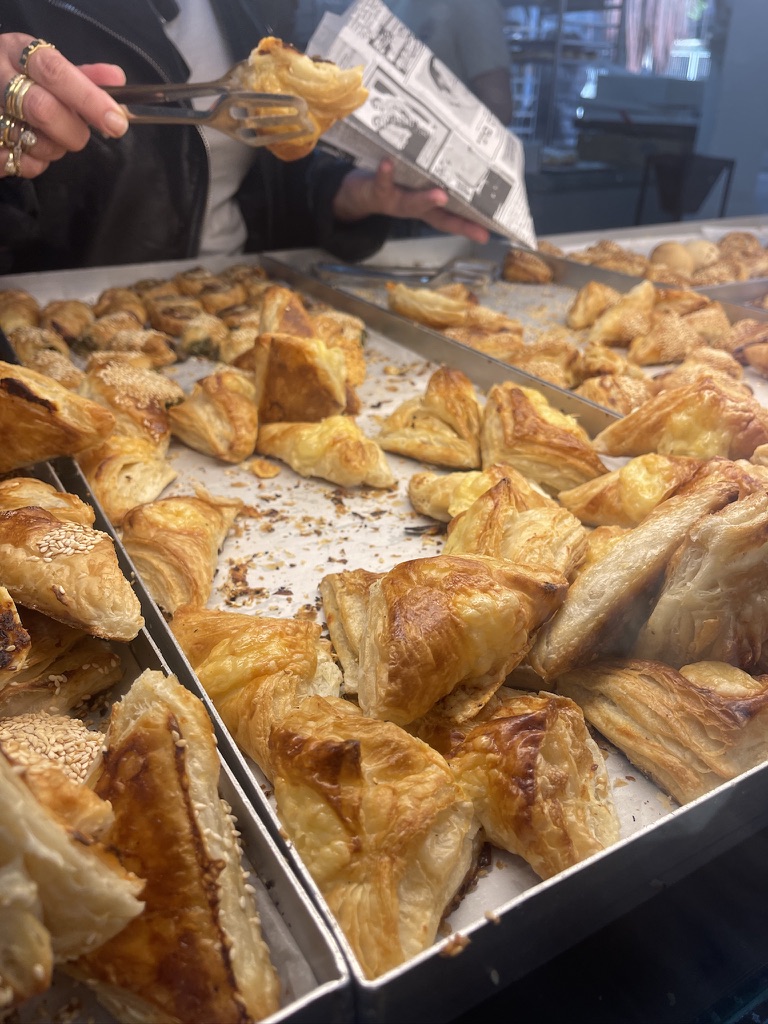
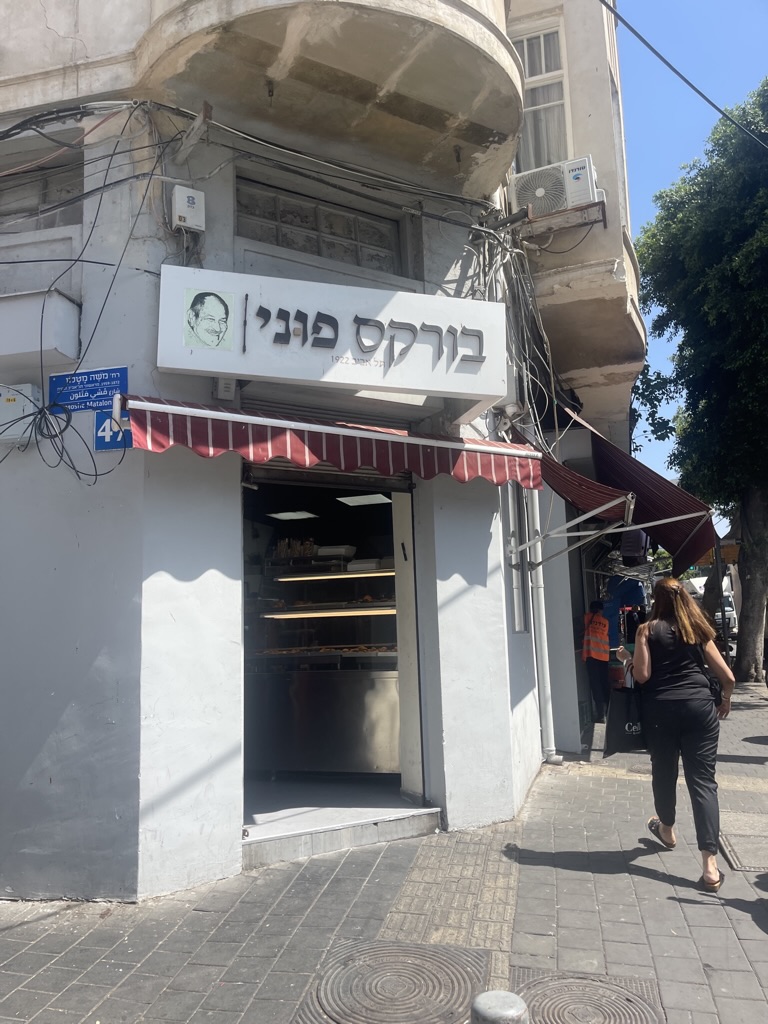
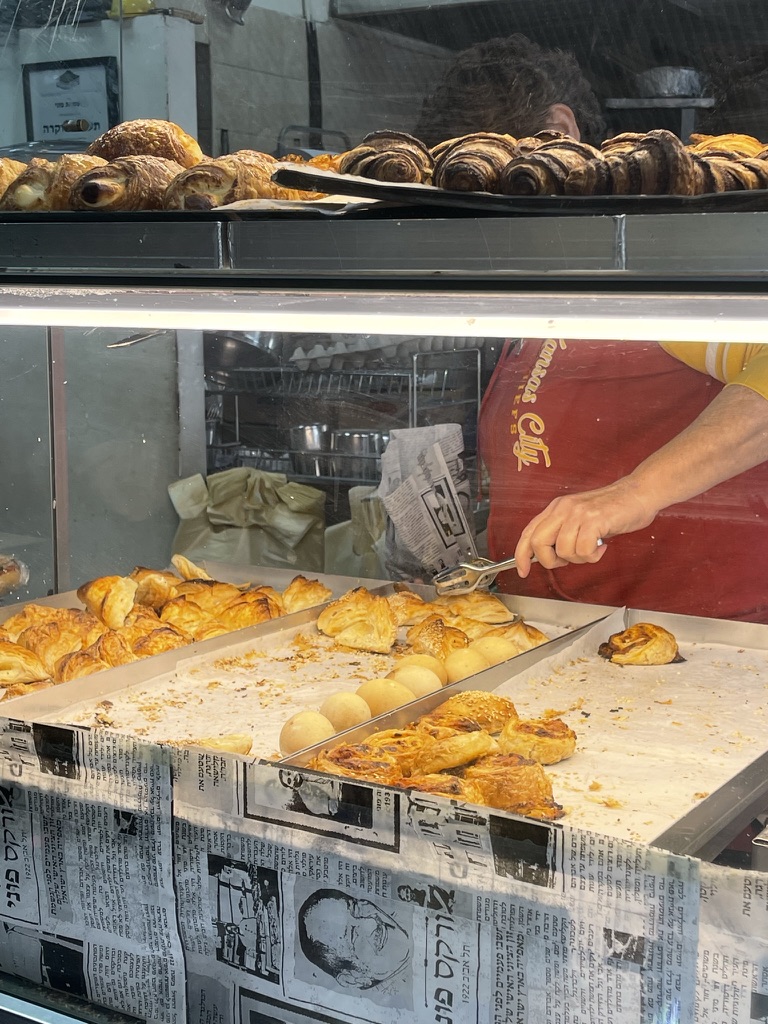
Puni’s story is about adaptation, about immigrants learning to speak their new neighbors’ culinary language. The bakery traces back to 1922, when Shahar Puni’s great-great-grandparents immigrated from Białystok, Poland. A relative in Neve Tzedek set them up with a small shop where they baked bread the way they had back home. Early success ended during the 1929 Arab riots, when neighborhood disputes forced them to relocate to the developing Florentin neighborhood, surrounded by Balkan immigrants from Greece, Turkey, and Bulgaria.
The family brought their oven with them and lived cramped upstairs (three rooms, seven children) while running the shop below. The local demand wasn’t for Polish bread, though. It was for bourekas. As the only oven in the area, Puni adapted a Bulgarian baker’s recipe, but the original was too large and too greasy. They modified it: smaller, so you could eat it without a plate, and with less fat so it wouldn’t leave your hands slick. That adapted formula, born from practical necessity rather than culinary ambition, hasn’t changed in over a century.
Today the bakery is run by Shahar Puni, 33, the fourth generation behind the counter. He took over after his father’s death, and he’s described the transition as stepping into “very big shoes,” initially reluctant but now fully committed.
What Makes Puni Special
During Israel’s austerity period in the 1950s, the bakery found a new role in the neighborhood. Families received government ration coupons for eggs and flour but still wanted cakes, so they’d bring their supplies to Puni for baking. Nothing got wasted: leftover bread became croutons or breadcrumbs, and extra cream got churned into butter. That frugality ethic shaped the bakery’s identity as much as the bourekas themselves.
At its peak, the business supported five families, with Shahar’s grandfather and five brothers all working there. The surrounding neighborhood was the country’s commercial center at the time, and Tuesdays brought businesses from across Israel to place wholesale orders. With production kitchens on parallel streets and no time for conversation between the shop and the kitchen, the Punis developed an intercom ring code: one ring meant cheese bourekas, two meant potato, three meant spinach. The kitchen would know exactly what to prepare without a word.
Puni uses olive oil instead of butter or margarine, which makes for a lighter, less heavy pastry. The bourekas come out crispy and brown on the outside with generous fillings. They maintain deep relationships with their neighbors, too. For decades they’ve worked with Havshush Spices nearby, grinding almonds for them while buying sesame and other goods in return. Today the next generation runs both businesses, but their families have known each other for decades.
Address: 24 HaAliya Street (corner of Matalon)
What to Order at Puni
- Bulgarian cheese boureka (the classic)
- Spinach boureka, vegan (one of their most popular)
- Kashkaval boureka (to compare against Penso’s version)
- Potato or mushroom boureka with pickles
They also offer eggplant bourekas and various vegan options, plus frozen bourekas you can take home and bake yourself. Prices at Puni run 10-13 NIS for a boureka.
Which Bakery Should You Visit?
All three, if you have the time. They’re within a few minutes’ walk of each other in Levinsky Market. But if you need to choose:
Go to Penso if you want the best single boureka in the market. The kashkaval cheese boureka with that hand-stretched dough is the one I recommend to everyone. If you only have time for one bakery, this is it.
Go to Bourekas Shel Ima if you want the authentic everyday Israeli experience, with excellent bourekas, generous fillings, and a line of locals who’ve been coming here for years.
Go to Puni if you’re interested in the history. Walking into a bakery that’s been operating since the 1920s, through the British Mandate, the founding of the state, and every war and economic boom since, connects you to Tel Aviv’s past in a way that a newer establishment can’t.
Go to all three if you’re on my Levinsky Market food tour. We hit them all.
Practical Info for Visiting
Prices
Bourekas at all three bakeries run between 10-15 NIS per piece (roughly $3-4 USD). Add a haminado egg for a few shekels more, and a Turkish coffee for 8-12 NIS. You can eat an extremely satisfying breakfast for under 40 NIS at any of these places.
Hours and Best Time to Visit
All three bakeries open early, typically by 7:00 or 7:30 AM, and operate through the afternoon, Sunday through Thursday. Friday mornings they’re open for pre-Shabbat hours, usually closing by early afternoon. Saturday they’re closed.
Best time: Arrive between 8:00 and 10:00 AM. The bourekas are freshest, the selection is fullest, and the bakeries haven’t run out of anything yet. By noon on a busy day, the most popular fillings, especially the cheese varieties, can sell out.
Friday mornings are the classic time to eat bourekas in Levinsky Market. The whole neighborhood is buzzing with pre-Shabbat energy. Lines are longer, but the atmosphere is worth it. If you’re visiting on a Friday, get there by 9:00 AM.
What Sells Out First
Cheese bourekas, always cheese. At Penso, the kashkaval cheese bourekas go fast, and at all three bakeries, the cheese fillings outsell everything else by a wide margin. If you want cheese, go early.
Ordering Tips
Don’t overthink it. Point at what looks good, hold up fingers for how many, and say “bevakasha” (please). The staff at these bakeries have been serving tourists alongside locals for decades, and they’ll understand you. If you want the accompaniments, just say “im beitza” (with egg) and they’ll set you up with the full plate.
Getting There
Levinsky Market is in the Florentin neighborhood of southern Tel Aviv, about a 10-minute walk south of the Carmel Market. The bakeries are clustered near the market entrance on Levinsky Street. From central Tel Aviv, it’s a short taxi or bus ride. The nearest light rail station (when fully operational) is a walkable distance.
Combine Your Visit
Bourekas are just the beginning. Levinsky Market is one of the best markets in Israel for food exploration. After your bourekas, walk the spice shops, try the halvah, grab an artisanal gazoz at Cafe Levinsky 41, visit the Yom Tov Delicatessen for Bulgarian cheese and charcuterie, and explore the rest of the neighborhood. If you’re also visiting Jerusalem, I wrote a guide to what to eat at Mahane Yehuda Market that covers 11 spots, and a separate guide to eating kosher in Jerusalem if kashrut is a priority.
Frequently Asked Questions About Bourekas
What are bourekas?
Bourekas (בורקס) are stuffed pastries made from flaky dough, either puff pastry, phyllo, or a hand-stretched dough, wrapped around a savory filling and baked until golden. Common fillings include cheese, potato, spinach, and mushroom. Bourekas originated in the Ottoman Empire and were brought to Israel by Sephardic Jewish immigrants from Turkey, Greece, and the Balkans in the mid-20th century. They’re now considered Israel’s most popular street food alongside falafel, eaten at every meal from breakfast to late-night snacks.
What is the most popular bourekas filling in Israel?
Cheese is by far the most popular bourekas filling in Israel. The most common varieties use salty white cheeses, cheese blends, or kashkaval (a semi-hard yellow cheese with Turkish and Balkan origins). Potato is the second most popular, followed by spinach and mushroom. At Levinsky Market bakeries, the cheese bourekas consistently sell out first.
How much do bourekas cost in Tel Aviv?
A single boureka at Levinsky Market bakeries costs between 10-15 NIS (roughly $3-4 USD), depending on the size and filling. A full boureka breakfast with two bourekas, a hard-boiled egg, pickles, and Turkish coffee typically runs under 40 NIS. Bourekas are one of the most affordable and filling breakfast options in Tel Aviv.
What do bourekas shapes mean?
In Israel, bourekas shapes traditionally indicate the filling inside. Triangular bourekas contain cheese, rectangular or square bourekas contain potato, round or spiral-shaped bourekas contain spinach, and half-moon or crescent shapes indicate mushroom. This shape code developed partly for practical reasons and partly so kosher-observant customers could distinguish dairy fillings from pareve (non-dairy) options. Individual bakeries may have their own variations.
Are any bourekas vegan?
Some bourekas are vegan-friendly, though bourekas typically have egg wash on top, so always ask.Potato bourekas made with oil-based dough (rather than butter-based puff pastry) and filled only with potato, onion, and spices contain no animal products. Spinach bourekas without cheese can also be vegan. However, many bourekas bakeries use cheese in multiple fillings, so always ask the specific bakery about their ingredients if you follow a vegan diet. At Levinsky Market, the potato bourekas are your safest bet, but confirm the dough ingredients.
Where are the best bourekas in Levinsky Market?
The three best bourekas bakeries in Levinsky Market are Penso, Puni, and Bourekas Shel Ima. Penso is known for its hand-stretched phyllo dough and kashkaval cheese bourekas, carrying on a Turkish-Sephardic baking tradition spanning three generations. Puni has been baking since the 1920s, making it one of the oldest bakeries in Tel Aviv. Bourekas Shel Ima (“Mom’s Bourekas”) serves generous, homestyle bourekas with a loyal local following. All three are within walking distance of each other in the market.
What is the difference between bourekas and burekas?
There is no difference. Bourekas and burekas are the same pastry, just with different English spellings. “Bourekas” is more common in English food writing, while “burekas” appears frequently in Israeli-English contexts. You’ll also see “borekas” and “boreka.” The Hebrew spelling is בורקס. All refer to the same stuffed pastry. The related Turkish pastry is spelled “borek” (or “burek”), which is the ancestor of the Israeli version.
Taste All Three on a Levinsky Market Food Tour
I’ve been eating bourekas at these three bakeries for close to a decade, and I know which fillings to order on which day, which bakery just pulled a fresh tray out of the oven, and which combinations of accompaniments work best with which fillings.
My Levinsky Market food tour is a 2.5-hour private tour for couples, families, and small groups. All food and drink included. We start with bourekas, and you’ll taste the differences between these bakeries side by side, learn the shape code, and eat them the way Israelis do, with eggs and pickles and schug. Then we keep going: spice shops, halvah, gazoz, and all the stories that connect Levinsky Market to the broader history of food and immigration in Israel.
If you’ve read this far and you’re hungry, good. Come eat with me in Tel Aviv.
Check availability for a Levinsky Market food tour
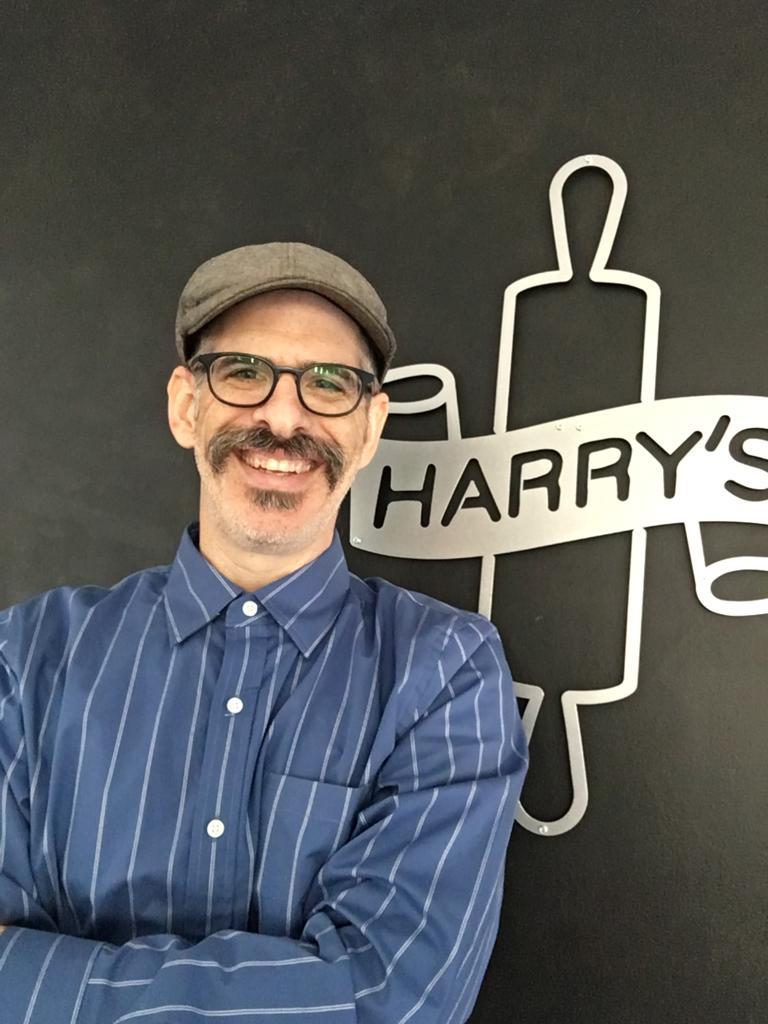
Harry Rubenstein is a pastry chef, food writer, and food tour guide based in Israel. A graduate of Bishulim Culinary Institute, he leads private food tours through Mahane Yehuda in Jerusalem and Levinsky Market in Tel Aviv. His writing on Jewish food history appears in The Nosher.
Read more about Harry →